Quranic Answer
In today's modern world, despite remarkable scientific and technological advancements and unprecedented access to information, many individuals find themselves facing a profound crisis of meaning and emptiness. This crisis is not exclusive to specific societies but manifests in various aspects of individual and social life, from philosophical confusion to existential depression and anxiety. In this context, the Holy Quran, as the divine word and a comprehensive guide for life, offers a potent antidote to this crisis. By providing a coherent, purposeful, and holistic worldview, the Quran helps individuals rediscover their place in existence and find deep meaning in their being. The first and perhaps most significant Quranic solution to combat the crisis of meaning is its clarification of the purpose and ultimate goal of creation. In the modern world, humans sometimes perceive themselves as mere products of biological accidents, which fuels feelings of aimlessness and emptiness. However, the Quran explicitly states that humanity was not created in vain: “And I did not create the jinn and mankind except to worship Me.” (Adh-Dhariyat: 56). This verse clarifies that the primary purpose of human creation is the worship and servitude of Allah. This servitude is not confined to seclusion and isolation but encompasses all dimensions of life, from seeking knowledge and performing righteous deeds to serving humanity and establishing justice. This understanding of purpose bestows high direction and profound meaning upon human life, liberating individuals from bewilderment. The second Quranic solution is its emphasis on Tawhid, the Oneness of God. In today's world, where diverse information and philosophies occupy the human mind, Quranic monotheism provides unity and coherence to an individual's worldview. By understanding that everything originates from a single source and returns to Him, individuals are freed from intellectual fragmentation and countless worries. Tawhid grants peace of mind and reminds individuals that there is an eternal refuge and an absolute power upon whom they can rely in any circumstance. This inner certainty reduces existential anxieties stemming from human inability to control all matters. The third role of the Quran is to provide practical and ethical guidance for daily life. In today's fast-paced world, people often become confused in their choices and moral decisions. The Quran, with its clear verses and comprehensive commandments, offers explicit criteria for right and wrong, good and evil, and paths to true salvation. This guidance includes principles for human relationships, financial management, work ethics, social justice, and even personal hygiene. This ethical framework gives structure and direction to an individual's life, saving them from moral promiscuity that often leads to emptiness and regret. By adhering to these commandments, individuals develop a greater sense of responsibility towards themselves, society, and their Creator. The fourth contribution of the Quran is its elucidation of the concept of the Hereafter and life after death. In the modern world, materialistic perspectives often limit life to this transient earthly existence, which can lead to feelings of meaninglessness when confronting death and an inability to find reasons for suffering and hardship. The Quran, by emphasizing that worldly life is fleeting and the true abode is the Hereafter, bestows eternal value upon human actions. “And this worldly life is nothing but diversion and amusement. But indeed, the home of the Hereafter - that is the [true] life, if only they knew.” (Al-Ankabut: 64). This perspective instills hope in individuals and provides them with a lofty motivation to perform righteous deeds in this world and prepare provisions for the eternal abode. The understanding that every suffering in this world can be compensated in the Hereafter helps individuals cope with challenges and accept destiny. The fifth Quranic solution emphasizes Dhikr (remembrance of Allah). In today's noisy and busy world, individuals easily become disconnected from their true selves and their connection with their Creator. The Quran reminds believers that true tranquility is found in the remembrance of Allah: “Those who have believed and whose hearts are assured by the remembrance of Allah. Unquestionably, by the remembrance of Allah hearts are assured.” (Ar-Ra'd: 28). The remembrance of Allah includes prayer, recitation of the Quran, supplication, and contemplation of divine verses. These acts strengthen an individual's connection with the source of meaning and peace, helping them find moments for reflection and connection to truth amidst the chaos of modern life. This deep connection gives individuals a sense of worth and support, freeing them from feelings of loneliness and emptiness. Ultimately, the Quran is not merely a religious book but a complete roadmap for finding meaning, purpose, and peace in the most intricate paths of modern life. This divine book, by connecting humanity to its Creator and providing a comprehensive framework for existence, helps individuals escape the dead-end of nihilism and experience a life full of purpose and contentment.
Related Verses
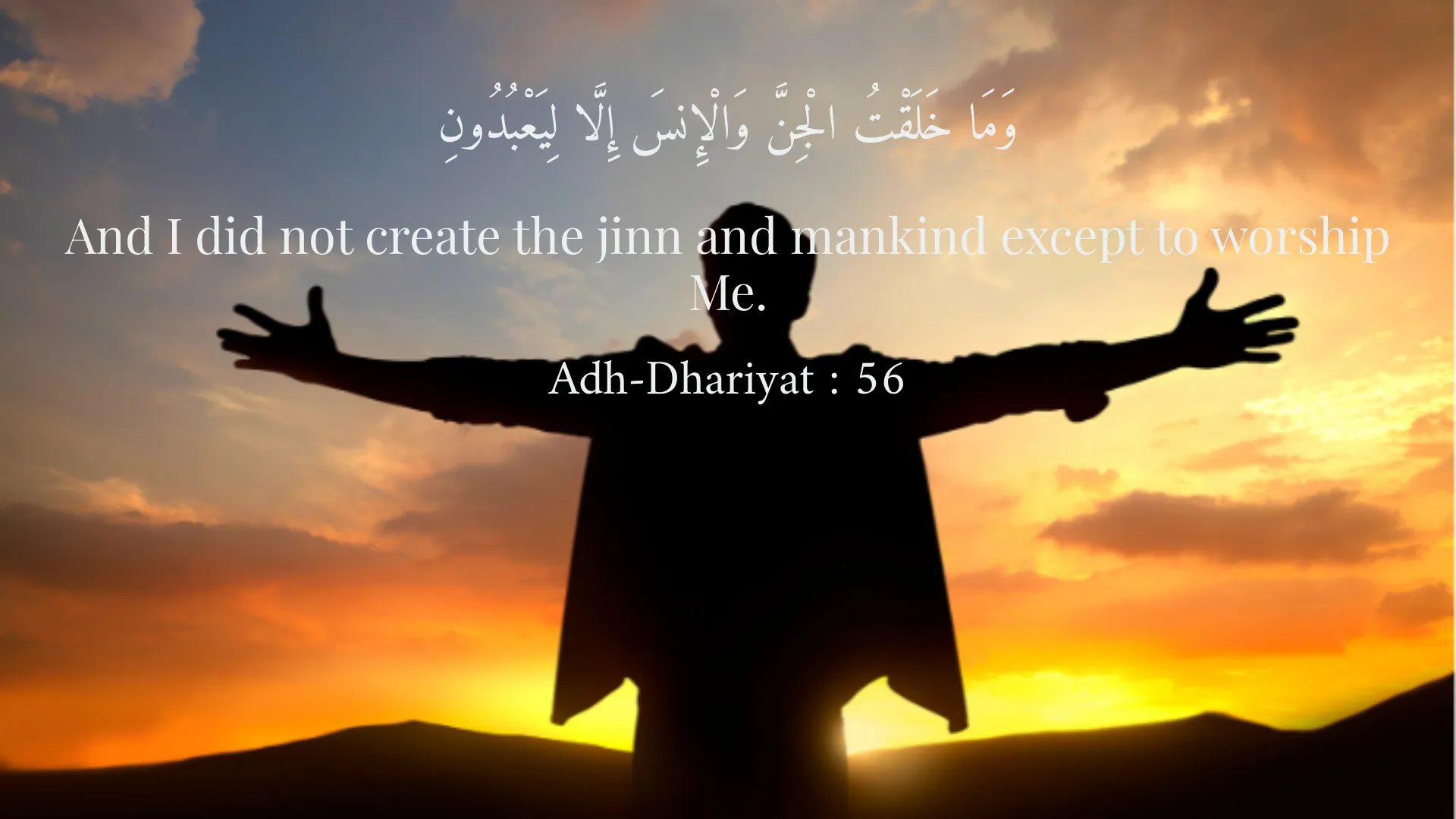
وَمَا خَلَقْتُ الْجِنَّ وَالْإِنسَ إِلَّا لِيَعْبُدُونِ
And I did not create the jinn and mankind except to worship Me.
Adh-Dhariyat : 56
الَّذِينَ آمَنُوا وَتَطْمَئِنُّ قُلُوبُهُم بِذِكْرِ اللَّهِ ۗ أَلَا بِذِكْرِ اللَّهِ تَطْمَئِنُّ الْقُلُوبُ
Those who have believed and whose hearts are assured by the remembrance of Allah. Unquestionably, by the remembrance of Allah hearts are assured.
Ar-Ra'd : 28
وَمَا هَٰذِهِ الْحَيَاةُ الدُّنْيَا إِلَّا لَهْوٌ وَلَعِبٌ ۚ وَإِنَّ الدَّارَ الْآخِرَةَ لَهِيَ الْحَيَوَانُ ۚ لَوْ كَانُوا يَعْلَمُونَ
And this worldly life is nothing but diversion and amusement. But indeed, the home of the Hereafter - that is the [true] life, if only they knew.
Al-Ankabut : 64
Short Story
They say that in days of old, there was a man, greatly bewildered and distressed, who fluttered through the markets of the world like a homeless sparrow, seeking tirelessly but finding no gem of meaning. Though he had indulged in every worldly pleasure, his heart remained restless. One day, he came upon an old sage who sat quietly, observing people with a calm demeanor. The distressed man asked the sage: “O wise elder, this clamorous world has engulfed me, and no matter how much I run, I reach no destination. How can I transform this bewilderment into tranquility?” The sage smiled and said: “O young man, you are like a ship with sails hoisted, but no compass. Your destination lies beyond these boundless waves. There is a Book, which like a compass, shows the way, and like a light in the darkness, illuminates the heart. Whenever your heart is filled with emptiness, open its pages and listen to the whispers of its verses, for there you will find both the purpose of creation and the promise of true peace. That Book is the Divine Word, a guide for the lost and a giver of meaning to the lives of lovers.” Upon hearing these words, the man sought out that Book, and when he found it and devoted his heart to it, he saw that meaninglessness departed from his life, and he found an enlightened heart and a tranquil soul, like a tree whose roots are firmly planted in the soil of faith.