Quranic Answer
The Holy Quran, the luminous and guiding word of God, is not merely a book of worship; it serves as a comprehensive and complete guide for all aspects of human life, especially in the realm of daily ethical decision-making. This divine book, by presenting principles, values, and practical examples, offers an unparalleled guide for living a virtuous and righteous life. One of the most significant ways the Quran assists in this regard is by fostering 'Taqwa,' which translates to God-consciousness or piety. The Quran repeatedly emphasizes the importance of Taqwa, considering it the criterion for human superiority. When a person considers God's presence in every moment of their life, knowing that every action is recorded and that they will be held accountable, they naturally exercise greater caution in their choices and strive to choose a path that is pleasing to God. This sense of responsibility before God is the greatest support for making sound ethical decisions and prevents individuals from committing errors and injustices. For instance, in a business transaction, if an individual acts with Taqwa, they would never resort to deception, short-changing, or concealing defects in goods, because they know that God is aware of their innermost thoughts and actions, and every deed, no matter how small, will be weighed in the divine scales. Beyond Taqwa, the Quran specifically places strong emphasis on principles such as 'Adl' (justice) and 'Ihsan' (excellence/benevolence). Adl signifies placing everything in its rightful place and treating others fairly, even if those others are one's enemies or have wronged them in some way. The Quran states: "O you who have believed, be persistently Qawwameen (maintainers of justice), witnesses for Allah, even if it be against yourselves or parents and relatives. Whether one is rich or poor, Allah is more worthy of both. So follow not [personal] inclination, lest you deviate. And if you distort [your testimony] or refuse [to give it], then indeed Allah is ever, with what you do, Acquainted." (An-Nisa: 135). This verse clearly illustrates that justice must be applied regardless of bias, animosity, or personal interests. In daily life, this principle is crucial in family relationships, social interactions, professional conduct, and even in how one judges others. For example, in family disputes, a Quranic individual, instead of unconditionally siding with relatives, seeks justice and truth, striving to return rights to their rightful owners. Ihsan, on the other hand, means performing good deeds beyond what is merely just; it involves doing something in the best possible manner and treating others with generosity and kindness. This principle manifests in interactions with the needy, orphans, neighbors, parents, and even animals. The Holy Quran vehemently emphasizes kindness to parents, placing it immediately after monotheism: "And your Lord has decreed that you not worship except Him, and to parents, good treatment." (Al-Isra: 23). These clear Quranic directives provide practical guidance for confronting ethical challenges and making difficult choices. Furthermore, the Quran strongly emphasizes 'Sidq' (truthfulness) and 'Amanah' (trustworthiness). Lying and betrayal of trust are major sins severely condemned in the Quran. These teachings are highly significant in professional, social, and even in expressing one's opinions. A Muslim, inspired by the Quran, abandons falsehood even in jest or when it seemingly brings personal benefit. Trustworthiness encompasses not only safeguarding others' property but also preserving secrets, fulfilling responsibilities, and even contributing to the well-being of society. In the realm of communication, the Quran stresses 'avoiding backbiting,' 'not slandering,' 'not ridiculing others,' and 'having a good opinion of others.' These teachings contribute to creating a healthy, secure, and respectful environment. Instead of backbiting, the Quran advises benevolent and constructive counsel, without causing disgrace. When facing others' mistakes, the Quran introduces the principle of 'Afw and Ghafr' (forgiveness and pardon) and advises responding to evil with good to eliminate enmity: "And not equal are the good deed and the bad deed. Repel [evil] by that which is better; then suddenly, he to whom between you and him was enmity [will become] as though he was a devoted friend." (Fussilat: 34). This proactive approach to goodness and forgiveness plays a vital role in resolving disputes and mending relationships. Finally, the Quran, by emphasizing 'moderation' and avoiding extremism, guides us in ethical decision-making. This book describes the Islamic Ummah as the 'middle nation' (Ummah Wasat), which pursues the path of moderation in all affairs. This principle means avoiding any form of fanaticism or laxity in action and belief. In economic matters, the Quran neither endorses absolute poverty nor limitless accumulation of wealth. Instead, it calls for charity, helping the needy, and avoiding extravagance and waste. In social matters, it neither advocates reclusion and isolation nor moral laxity and abandoning ethical principles. These teachings provide a comprehensive framework for every ethical decision. In any difficult situation, by referring to the verses of the Quran and reflecting on their meanings, an individual can discern the correct path. The Quran not only gives explicit commands but also, by narrating the stories of prophets and past nations, illustrates the consequences of good and bad deeds, thereby teaching practical and lasting lessons for ethical choices in daily life. Thus, the Quran, by cultivating the spirit of God-consciousness, justice, benevolence, truthfulness, and moderation, actively helps in shaping and guiding our ethical decisions at every moment of life.
Related Verses
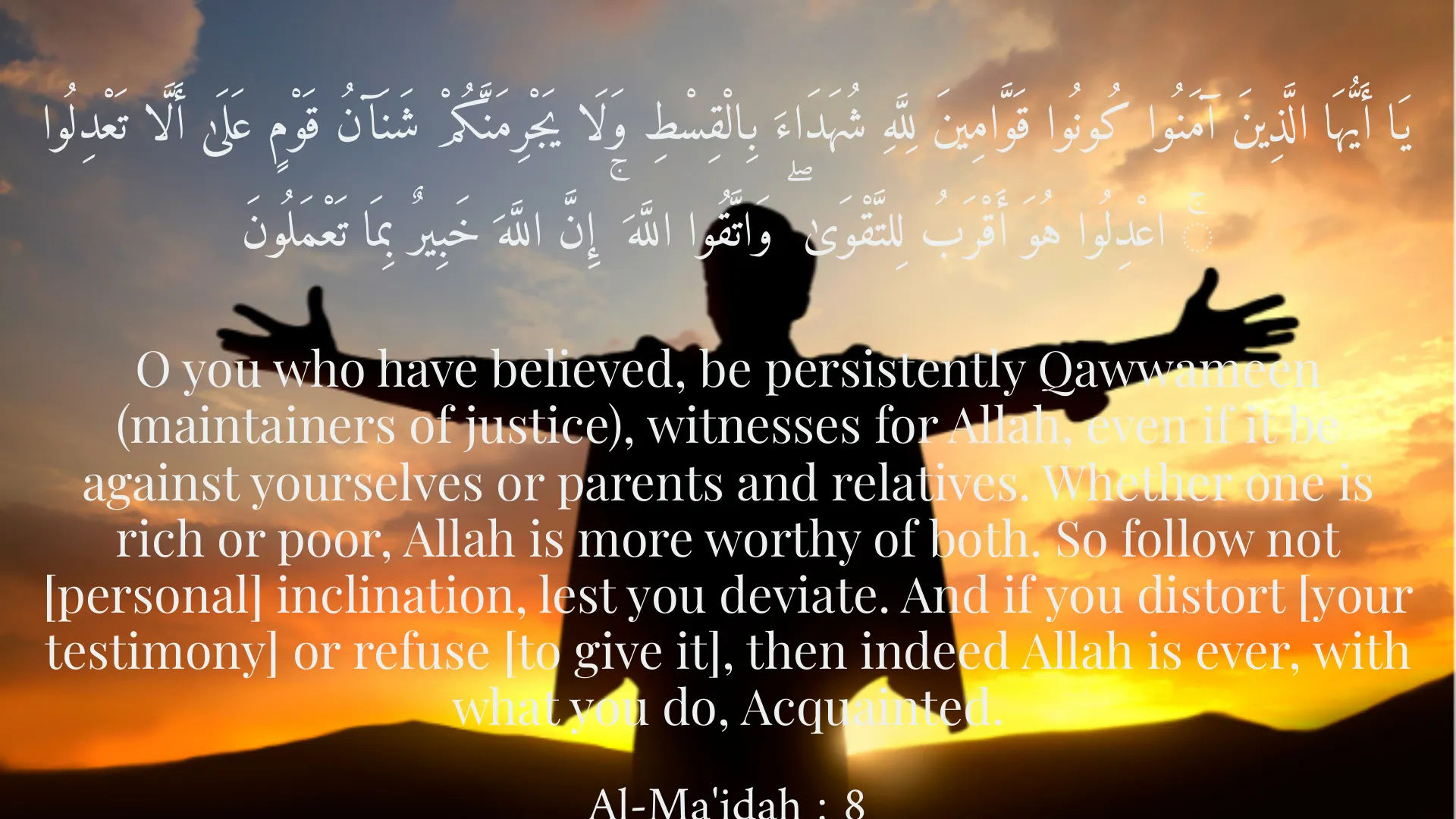
يَا أَيُّهَا الَّذِينَ آمَنُوا كُونُوا قَوَّامِينَ لِلَّهِ شُهَدَاءَ بِالْقِسْطِ وَلَا يَجْرِمَنَّكُمْ شَنَآنُ قَوْمٍ عَلَىٰ أَلَّا تَعْدِلُوا ۚ اعْدِلُوا هُوَ أَقْرَبُ لِلتَّقْوَىٰ ۖ وَاتَّقُوا اللَّهَ ۚ إِنَّ اللَّهَ خَبِيرٌ بِمَا تَعْمَلُونَ
O you who have believed, be persistently Qawwameen (maintainers of justice), witnesses for Allah, even if it be against yourselves or parents and relatives. Whether one is rich or poor, Allah is more worthy of both. So follow not [personal] inclination, lest you deviate. And if you distort [your testimony] or refuse [to give it], then indeed Allah is ever, with what you do, Acquainted.
Al-Ma'idah : 8
وَقَضَىٰ رَبُّكَ أَلَّا تَعْبُدُوا إِلَّا إِيَّاهُ وَبِالْوَالِدَيْنِ إِحْسَانًا ۚ إِمَّا يَبْلُغَنَّ عِندَكَ الْكِبَرَ أَحَدُهُمَا أَوْ كِلَاهُمَا فَلَا تَقُل لَّهُمَا أُفٍّ وَلَا تَنْهَرْهُمَا وَقُل لَّهُمَا قَوْلًا كَرِيمًا
And your Lord has decreed that you not worship except Him, and to parents, good treatment. Whether one or both of them reach old age [while] with you, say not to them [so much as], 'uff,' and do not repel them but speak to them a noble word.
Al-Isra : 23
وَلَا تَسْتَوِي الْحَسَنَةُ وَلَا السَّيِّئَةُ ۚ ادْفَعْ بِالَّتِي هِيَ أَحْسَنُ فَإِذَا الَّذِي بَيْنَكَ وَبَيْنَهُ عَدَاوَةٌ كَأَنَّهُ وَلِيٌّ حَمِيمٌ
And not equal are the good deed and the bad deed. Repel [evil] by that which is better; then suddenly, he to whom between you and him was enmity [will become] as though he was a devoted friend.
Fussilat : 34
Short Story
It is narrated in Sa'di's Gulistan that a just king once dreamt that an angel told him: "Your kingship is founded on justice, but do you always act with justice?" The king awoke and pondered. He recalled a day when a poor man had come to his court, and due to lack of documentation, a judgment had been issued in favor of a wealthy man. The king said to himself: "Perhaps the Quran reminded me that even if there is no clear evidence, the right is with the oppressed." From then on, the king paid even more attention to the spirit of justice and benevolence in his decisions, and instead of relying merely on appearances, he delved deeper to discover the truth and aid the weak, for he knew he was accountable before his Lord. Thus, his realm flourished with good repute and tranquility, and people regarded him as a just and pious king.