Quranic Answer
In today's fast-paced and complex world, saturated with conflicting information and shifting lifestyle paradigms, finding and maintaining a stable and meaningful identity can become a significant challenge. Many individuals, at various ages, experience identity crises: periods of confusion, feelings of emptiness, uncertainty about their place in the world, and doubts about life's values and goals. In such circumstances, the Holy Quran, as a divine guide and a comprehensive book, serves as a beacon of light, illuminating the path and providing strong foundations for the formation and stabilization of human identity. The Quran not only answers fundamental questions about existence, purpose, and the meaning of life but also offers practical and profound solutions for overcoming these crises and achieving inner peace and identity stability. One of the most significant ways the Quran helps is by defining the foundational human identity. The Quran specifies our identity not through transient material titles but through our true position in the cosmic order. It introduces us not merely as material beings but as 'Abd' (servant) and 'Khalifa' (vicegerent) of Allah. The concept of 'Ubudiyah' (servitude) in the Quran, contrary to popular misconceptions, does not imply slavery or humiliation; rather, it signifies the pinnacle of freedom and dignity. When a person understands that they are a servant, and only a servant, of the One God—the Self-Sufficient, Wise, Merciful, and Powerful Creator—they are liberated from all false and self-imposed forms of servitude, whether to money, power, fame, trends, or even the opinions of others. This understanding forms the backbone of one's identity and mitigates the turmoil of identity crises. A person's true identity lies in serving the Almighty and earning His pleasure, not in gratifying fleeting and changeable worldly desires, which are often the source of identity crises. This pure servitude grants an unparalleled sense of purpose; one knows that their existence is not aimless, and every breath they take can be a step towards divine proximity. This perspective eradicates feelings of emptiness and meaninglessness, bestowing a divine hue upon life. Alongside 'Ubudiyah', the Quran also introduces the concept of 'Khilafah' (vicegerency); humans as representatives and stewards of Allah on Earth. This role entails immense responsibilities, including developing the earth, establishing justice and equity, and serving humanity. This responsibility imbues an individual's life with a sublime purpose and meaning, preventing them from succumbing to selfishness and transient worldly pleasures. When an individual realizes that their role is not merely material survival but a noble one in the cosmic order, the sense of emptiness and meaninglessness often present in identity crises gives way to enthusiasm and responsibility. This awareness that Allah has entrusted them and made them guardians of His secrets and blessings adds depth and authenticity to one's identity, making them independent of external validation. Another Quranic solution for resolving identity crises is the reminder of the divine 'Fitra' (innate disposition). The Quran emphasizes that humans are created with an inherent inclination towards monotheism, goodness, justice, and beauty. Identity crises often result from straying from this pure disposition and attempting to conform to alien and incongruous patterns and values. The Quran reminds us that our true identity resides in this pure fitra. Returning to religion is, in essence, returning to one's true self. This awareness reduces wandering and the effort to conform to false and external identities. Modern society and media, by promoting consumerism, fame-seeking, and mere hedonism, can alienate individuals from their fitra and exacerbate identity crises. The Quran offers the solution in returning to this divine root and nourishing the soul with truth—a truth embedded in human nature and blossoming only with the remembrance of God. The Quran itself acts as 'Huda' (guidance) and 'Noor' (light) in confronting these crises. In a world where information and choices are abundant and bewildering, the Quran provides a constant standard and an enduring truth. This stability helps consolidate identity because by relying on unchanging divine principles and values, one can build a stable and coherent identity for themselves. The stories of prophets and past nations in the Quran offer human archetypes with whom individuals can identify and learn from their experiences. This contributes to the formation of a healthy and balanced identity, showing the individual that they are not alone in their struggles and challenges. Furthermore, the Quran emphasizes the importance of 'Sabr' (patience) and 'Tawakkul' (reliance on Allah) in facing life's challenges and tribulations. Identity crises often emerge following failures, major life changes, or painful experiences. The Quran teaches us that this world is a test and that difficulties are opportunities for growth and closeness to God. This perspective changes an individual's view of problems, giving them deeper meaning. Sabr—which in the Quran means active perseverance and steadfastness in the path of truth—and Tawakkul—deep trust in divine providence—are Quranic tools for navigating these crises. If an individual's identity is defined by their connection to Allah, they will have a point of reliance and hope even in the darkest moments and will not deviate from the main path. This faith in divine decree gives a person peace, ensuring their identity remains unshaken even in critical situations. Finally, the Quran introduces the concept of the 'Ummah Wahidah' (unified community). Humans are social beings, and belonging to a group is a significant part of their identity. The Quran emphasizes that believers, regardless of race or nationality, are members of one large family. This sense of belonging eliminates the feelings of loneliness and rootlessness often present during identity crises. The individual knows they are part of a faith community united by shared Islamic values and that supports them. This sense of belonging helps strengthen individual identity within the framework of a healthy collective identity. The Quran's emphasis on the afterlife also plays a crucial role in stabilizing identity; by reminding us that worldly life is transient and there is a higher purpose, human identity is liberated from dependence on fleeting worldly achievements and becomes established on eternal foundations. This leads to inner peace and assurance, preventing the individual from defining themselves based on superficial and changing societal criteria. In summary, the Holy Quran, by providing a comprehensive definition of humanity, reminding us of the divine fitra, acting as a constant guide, teaching patience and reliance on Allah, and emphasizing collective identity and an afterlife perspective, helps us in the best possible way to face identity crises. This divine book not only offers answers to our fundamental existential questions but also provides a path to building a stable, meaningful, and peaceful identity, based on a deep connection with the Creator of existence and human mission. This identity makes an individual resilient against the tempests of time and guides them towards true happiness.
Related Verses
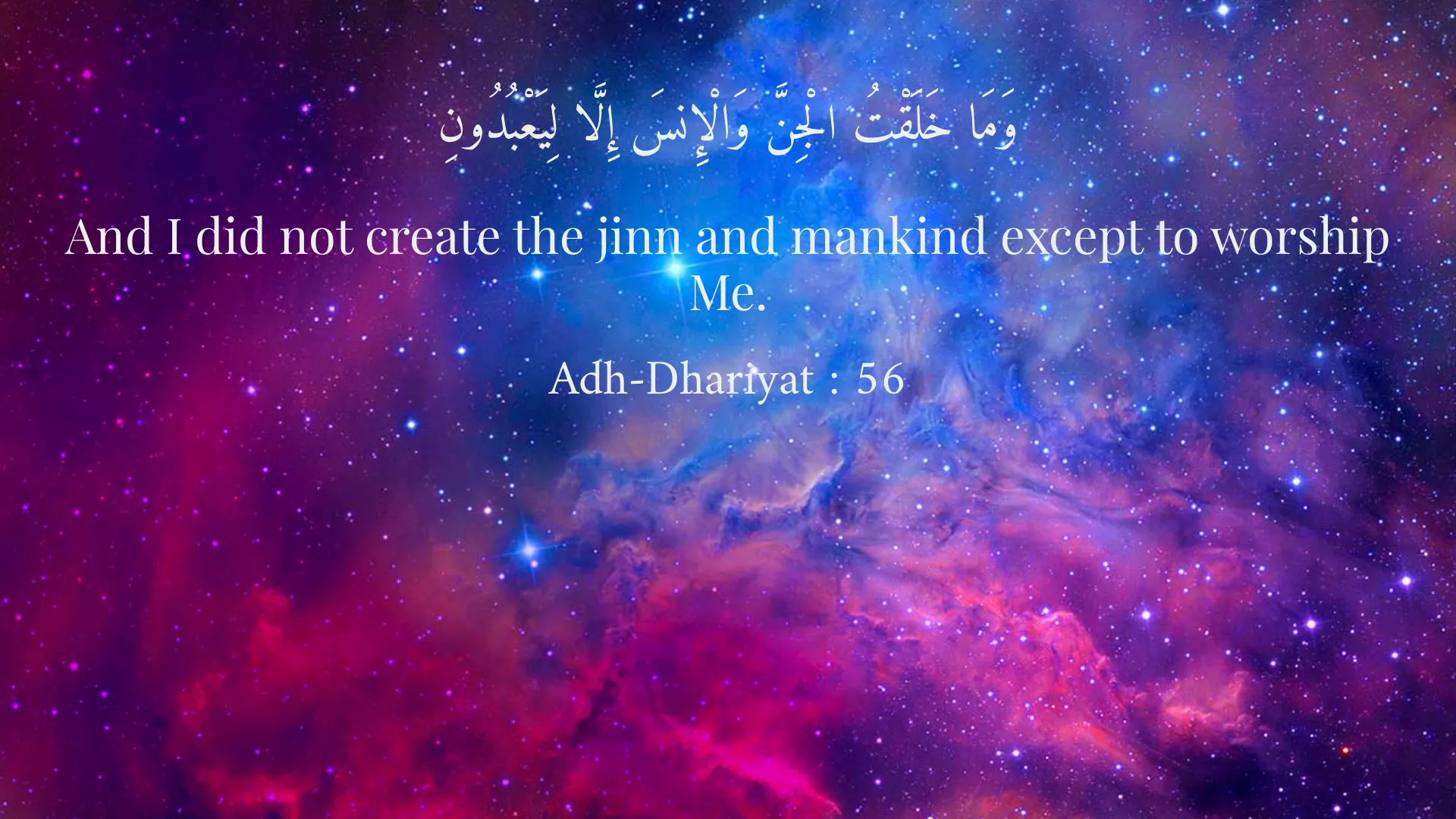
وَمَا خَلَقْتُ الْجِنَّ وَالْإِنسَ إِلَّا لِيَعْبُدُونِ
And I did not create the jinn and mankind except to worship Me.
Adh-Dhariyat : 56
فَأَقِمْ وَجْهَكَ لِلدِّينِ حَنِيفًا ۚ فِطْرَتَ اللَّهِ الَّتِي فَطَرَ النَّاسَ عَلَيْهَا ۚ لَا تَبْدِيلَ لِخَلْقِ اللَّهِ ۚ ذَٰلِكَ الدِّينُ الْقَيِّمُ وَلَٰكِنَّ أَكْثَرَ النَّاسِ لَا يَعْلَمُونَ
So direct your face toward the religion, inclining to truth. [Adhere to] the fitra of Allah upon which He has created [all] people. No change should there be in the creation of Allah. That is the correct religion, but most of the people do not know.
Ar-Rum : 30
وَلَا تَكُونُوا كَالَّذِينَ نَسُوا اللَّهَ فَأَنسَاهُمْ أَنفُسَهُمْ ۚ أُولَٰئِكَ هُمُ الْفَاسِقُونَ
And be not like those who forgot Allah, so He made them forget themselves. Those are the defiantly disobedient.
Al-Hashr : 19
Short Story
It is told that in ancient times, in a bustling city, lived a restless and bewildered youth. Amidst the clamor of differing opinions and beliefs, he had lost himself. At times he would follow one path, then another, without knowing what he sought. One day, he encountered an old and wise sage and asked him, 'O Sage, show me a way to find myself, for I feel like a stranger in this world.' The sage smiled and said, 'Young man, you have sought yourself in a mirror of worldly desires. Turn your heart and soul towards the Creator of existence, for He is your Originator. Then you will see that you are not what the worldly market portrays, but rather a mirror of divine beauty and a vicegerent on earth. Once you recognize yourself in relation to your Cherisher, you will never be lost, and your path will become clear.' The youth heeded the sage's words, turned his heart towards God, and thereafter, found a clear mirror of his true self in the light of faith, freeing himself from bewilderment, and a true tranquility enveloped his being.