Quranic Answer
In today's world, where the pace of life has become overwhelming and endless information bombards us constantly, many individuals feel aimlessly lost in this whirlpool. Material concerns, relentless competition, and the pressure for superficial achievements can divert individuals from their true path, leading to emptiness and anxiety. Amidst this, the Holy Quran, as a divine guide and a radiant light, offers powerful tools for maintaining tranquility, focus, and finding meaning within this chaos. This sacred book, with its profound and practical teachings, helps individuals to have a stable and secure anchor amidst the speed and complexities of life, ensuring they do not stray from their divine path. One of the most significant ways the Quran assists us in this regard is by defining and reminding us of the ultimate purpose of life. In the modern world, secondary and material goals can become so magnified and prominent that we might forget the ultimate and sublime purpose of creation. The Quran explicitly states that the purpose of human creation is the worship and servitude of God, not the accumulation of wealth and status or immersion in fleeting pleasures. This perspective provides meaning and direction to human life. When we understand that every moment of our lives is part of a larger journey towards God, we are no longer enslaved by trivial and worthless goals. This constant reminder helps individuals re-evaluate their priorities and avoid any excess or negligence in worldly affairs. This insight acts like a compass that, even in the stormiest seas, shows the right path and prevents our life's ship from drifting aimlessly on the waves. The second Quranic tool for coping with the fast pace of life is the emphasis on Dhikr, or the remembrance of God. The Quran repeatedly invites believers to the constant remembrance of God and links the tranquility of hearts to it. In today's noisy world, where the mind is constantly occupied with external matters, the remembrance of God acts like an anchor that keeps the human soul in place, preventing mental and spiritual turbulence. Dhikr can take various forms, such as prayer (Salat), recitation of the Quran, supplication (Dua), or even contemplation of the grandeur of creation. This constant reminder helps individuals emerge from heedlessness and unawareness of themselves and their Lord. When the heart finds peace in the remembrance of God, focus and mental clarity increase, and decisions in the face of life's challenges become wiser and more judicious. This inner peace serves as a strong shield against external stresses and the onslaught of information, saving individuals from getting lost in life's intricate twists and turns. Furthermore, the Quran emphasizes the importance of patience (Sabr) and prayer (Salat) as two fundamental pillars for facing difficulties and hardships. Life in a fast-paced world is often accompanied by pressures, failures, and disappointments. The Quran teaches us that patience and perseverance are not merely moral virtues but practical tools for resilience in the face of adversity. Prayer, as a direct and daily connection with God, is a source of spiritual energy and emotional calm. This brief pause from worldly activities provides an opportunity for reflection, rejuvenation, and focusing on the true purpose of life. The repetition of prayer throughout the day gives individuals a regular rhythm and prevents them from being completely engrossed in worldly tasks. This rhythm creates a spiritual discipline that helps individuals maintain their connection with the center of existence even in daily hustle and bustle, ensuring they do not deviate from their main path. Moreover, the Quran promotes the principle of moderation and balance (Wasatiyyah) in all aspects of life. This divine book teaches us neither to immerse ourselves completely in the world nor to abandon it entirely. Instead, we should take our share of this world while not forgetting the Hereafter. This balance prevents extremism in work, study, or worldly pleasures that can lead individuals astray. A balance between work and rest, family and society, and this world and the Hereafter helps individuals lead a healthy, stable, and meaningful life. This equilibrium protects against burnout, anxiety stemming from fruitless competition, and feelings of emptiness, allowing one to navigate the modern world with greater peace of mind. Finally, by encouraging reflection and contemplation (Tafakkur and Tadabbur) on divine signs, both in the book of creation and in the verses of the Quran, the Quran helps individuals enhance their insight and awareness. This contemplation allows individuals to move beyond a superficial view of life and grasp the depth and complexities of existence. When one reflects on the grandeur of creation and the power of God in creation, worldly problems seem small and insignificant. This insight frees individuals from unnecessary worries and empowers them to view the events around them with a broader and more calming perspective. Consequently, the Quran is not merely a religious text but a comprehensive guide for life in any time and place, providing enduring principles and teachings that protect individuals from the storms of the fast-paced world and lead them to the shore of tranquility and salvation.
Related Verses
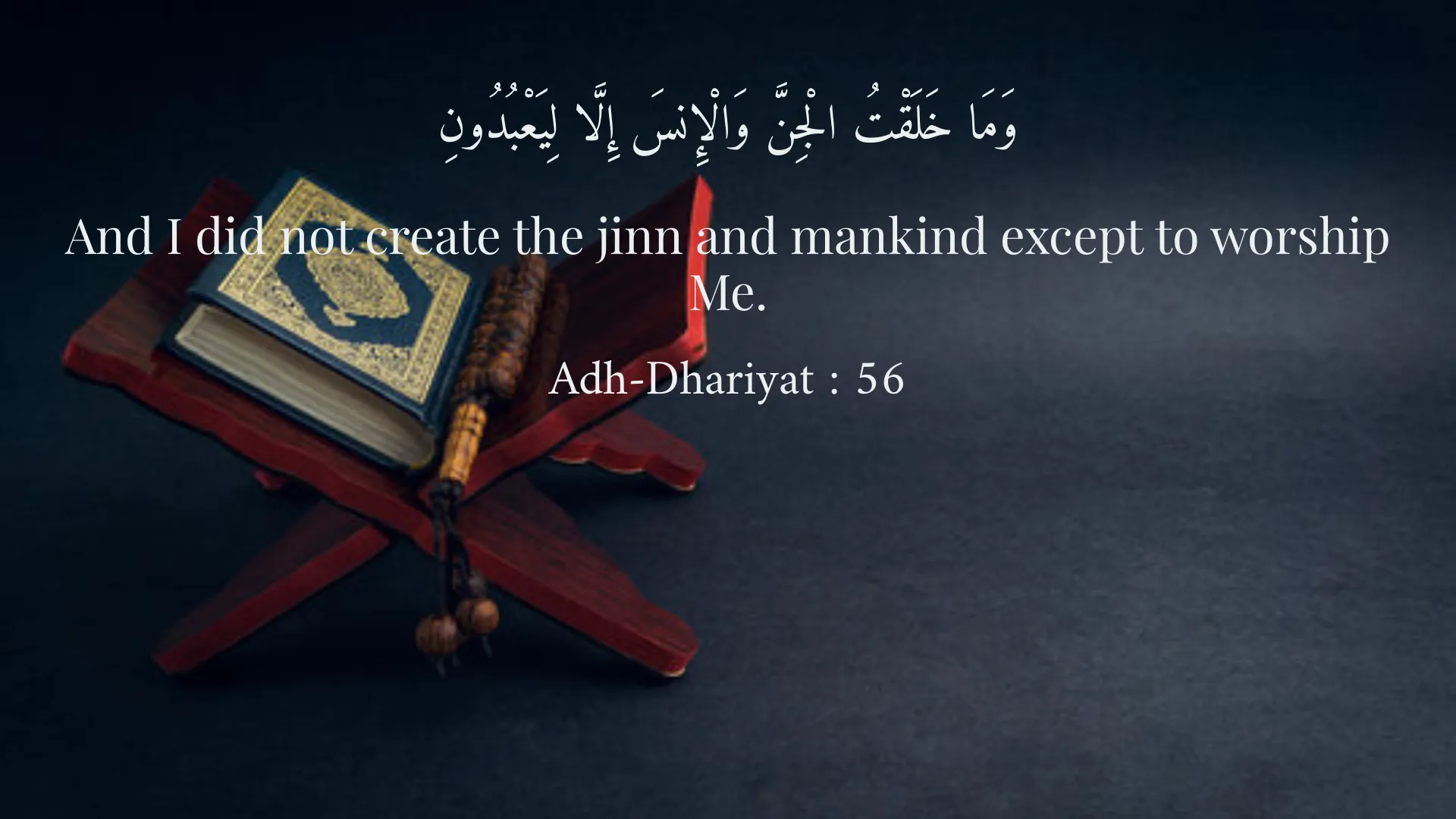
وَمَا خَلَقْتُ الْجِنَّ وَالْإِنسَ إِلَّا لِيَعْبُدُونِ
And I did not create the jinn and mankind except to worship Me.
Adh-Dhariyat : 56
الَّذِينَ آمَنُوا وَتَطْمَئِنُّ قُلُوبُهُم بِذِكْرِ اللَّهِ ۗ أَلَا بِذِكْرِ اللَّهِ تَطْمَئِنُّ الْقُلُوبُ
Those who have believed and whose hearts are assured by the remembrance of Allah. Unquestionably, by the remembrance of Allah hearts are assured.
Ar-Ra'd : 28
يَا أَيُّهَا الَّذِينَ آمَنُوا اسْتَعِينُوا بِالصَّبْرِ وَالصَّلَاةِ ۚ إِنَّ اللَّهَ مَعَ الصَّابِرِينَ
O you who have believed, seek help through patience and prayer. Indeed, Allah is with the patient.
Al-Baqarah : 153
Short Story
It is narrated in Saadi's Gulistan that a just king saw a wise man living peacefully and contentedly in a corner of the bazaar, showing no signs of haste or anxiety, while merchants and people around him were frantically engaged in accumulating wealth and trade. The king asked him, "O wise man, in this tumultuous world, how is it that you seem so calm and carefree?" The wise man smiled and replied, "O King, whoever knows where they came from and where they will return, and understands that this world is merely a bridge, not the destination, will no longer lose themselves in its clamor. I have not attached my heart to what is perishable, but have fixed my gaze on what is eternal. This is why, in this fast-paced bazaar of the world, I am neither enslaved by its speed nor worried about losing apparent opportunities. For the true opportunity is only to connect with one's origin." The king took heed of his words and understood that true peace lies in knowing one's purpose and letting go of worldly attachments, not in accelerating the affairs of life.