Quranic Answer
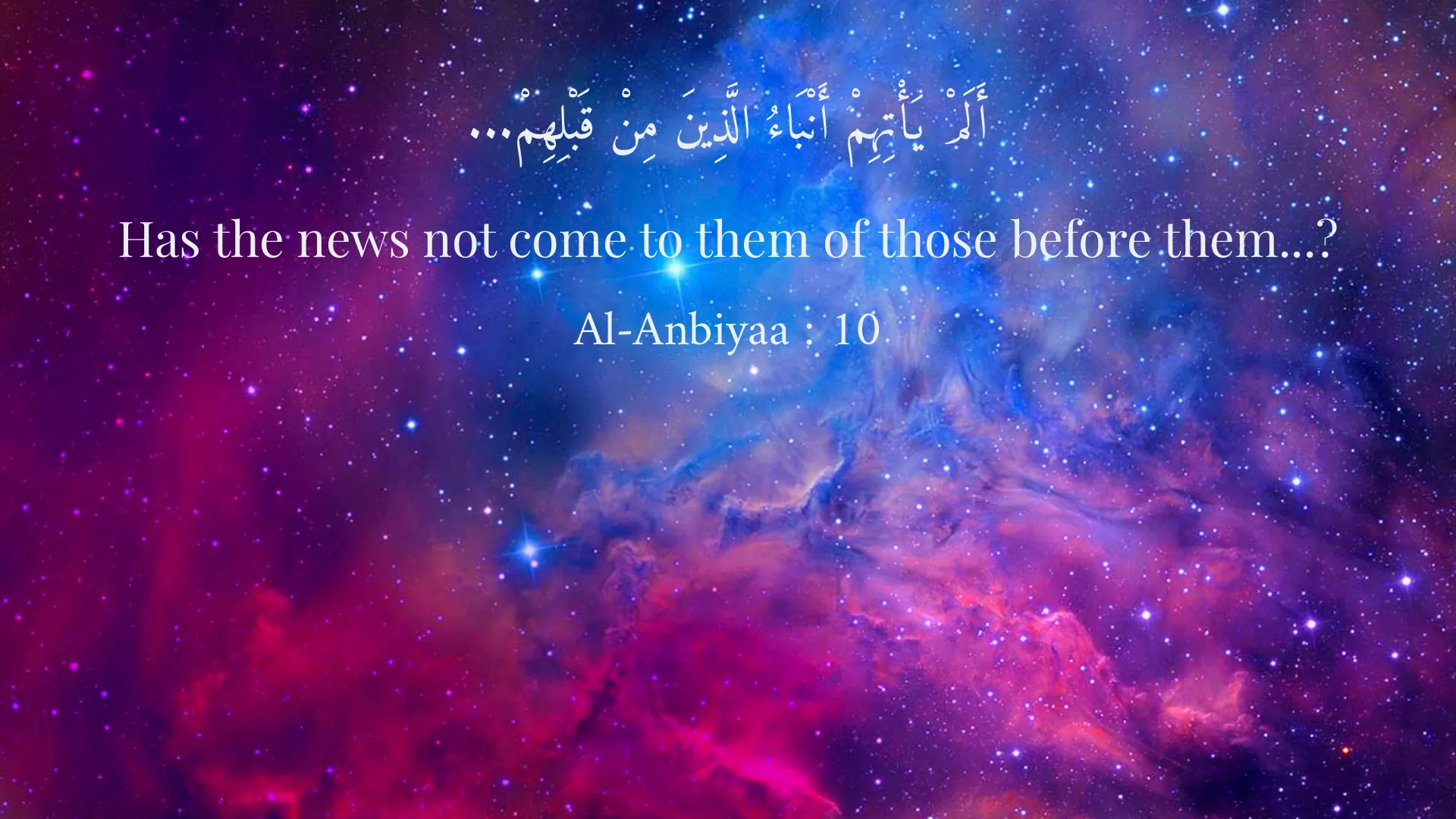
The Holy Quran emphasizes the significance of foresight as an essential aspect of human life and decision-making. This notion of foresight—the ability to anticipate the outcomes of one's actions—is critical in navigating the complexities of existence. The Quran invites humanity to contemplate the past, learn valuable lessons, and apply this knowledge to present and future circumstances. This act of reflection not only shapes individual lives but also dictates communal and societal progress, acting as a moral compass for believers. In Surah Al-Anbiyaa, verse 10, Allah states: "Has the news not come to them of those before them?" This verse serves as a powerful reminder for individuals to reflect upon the events that have unfolded among previous nations. By doing so, believers are encouraged to learn from historical events, examining the rise and fall of communities as a testament to the importance of foresight. History is replete with examples of thriving civilizations that ultimately perished due to their inability to foresee the consequences of their actions. In essence, the Quran is steering believers to recognize patterns in history, imploring them to derive wisdom from the past. Such reflections can imbue a sense of responsibility among individuals, urging them to be proactive in shaping their destinies. Furthermore, Surah Al-Imran, verse 139 conveys a message of hope and resilience. It states, "And do not grieve and do not be sad, for you will be the uppermost if you are indeed believers." In times of adversity, this verse serves as an anchor for individuals, reminding them that maintaining a positive outlook is crucial. The Quran encourages believers to keep a perspective that transcends immediate challenges, reinforcing the idea that foresight is intertwined with faith and trust in Allah's plan. By fostering optimism in the face of trials and tribulations, individuals can navigate difficulties with stronger resolve, ultimately leading to personal and communal victories. The multifaceted concept of foresight does not solely pertain to anticipating future events but also includes harvesting lessons from past experiences to better inform one's approach to current situations. This necessitates possessing a reflective mindset, one that allows individuals to critically analyze their decisions and actions. In Surah At-Taghabun, verse 16, Allah further emphasizes this notion: "So fear Allah as much as you can…" This urging highlights the imperative of being conscious of Allah in every aspect of life. Maintaining this consciousness encourages believers to consider the repercussions of their choices, whether in personal, familial, or social contexts. Indeed, foresight involves being aware of the potential ramifications of one’s actions. The Quran inculcates the importance of deliberation and reflection in various matters, ranging from familial relationships to economic transactions. For instance, in the sphere of family life, foresight encourages individuals to nurture their relationships thoughtfully, ensuring they cultivate an environment of love and respect. By predicting how their actions might affect their loved ones, believers can foster harmonious relationships built on mutual understanding. In social contexts, foresight plays a pivotal role in community well-being. The Quran encourages believers to engage in charitable acts, advocate for justice, and strive towards socio-economic equity. By understanding the long-term impacts of their contributions, individuals can foster environments where all members flourish. This foresight demands a collective responsibility, igniting a sense of duty among believers to work collaboratively toward a better future. On an economic level, foresight is equally paramount. The Quran advocates for ethical financial dealings and cautions against exploitative practices. By foreseeing the consequences of their economic behaviors, individuals can create systems that promote fairness and justicia. Surah Al-Baqarah illustrates this principle well, urging believers to lend money without imposing harsh terms or interest rates. This projection of love and sacrifice finds its roots in the deeper understanding that economic stability benefits society as a whole, deterring individual greed or avarice. Moreover, the concept of foresight in the Quran also extends to spiritual growth. Believers are encouraged to engage in self-assessment, constantly reflecting on their actions to align themselves more closely with divine guidance. By being conscious of their spiritual elevation, individuals work towards self-improvement, thereby fulfilling their potential as virtuous beings. Spiritual foresight empowers believers to make strides in their personal and communal relationships, ensuring they remain steadfast in their duties towards their faith. In essence, the Quran's call to foresight is an overarching narrative that persists throughout its verses. The act of reflecting on the past, remaining hopeful for the future, and maintaining mindfulness of Allah creates a holistic framework for living. This is not merely a call to individual reflection; rather, it is an invitation to collective accountability. The guidance imbued within the pages of the Quran transcends time, urging believers across generations to understand that foresight is a living principle—the foundation upon which communities can build thriving futures. As individuals engage with these divine texts and internalize these lessons, the potential for growth becomes limitless. The Quran subtly yet powerfully affirms that foresight is indeed one of the essential principles of life. By embodying this trait, believers can navigate life with purpose, contributing to a world that reflects harmony, justice, and compassion.
Related Verses
أَلَمْ يَأْتِهِمْ أَنْبَاءُ الَّذِينَ مِنْ قَبْلِهِمْ...
Has the news not come to them of those before them...?
Al-Anbiyaa : 10
وَلَا تَهِنُوا وَلَا تَحْزَنْوا وَأَنتُمُ الْأَعْلَوْنَ...
And do not weaken and do not grieve, for you will be superior...
Al-Imran : 139
فَاتَّقُوا اللَّهَ مَا اسْتَطَعْتُمْ...
So fear Allah as much as you can...
At-Taghabun : 16
Short Story
Once upon a time, there was a man named Hossein who always contemplated his life. One day, he decided to dedicate a day for reflection to find the right path in life. That day, after reading the Quran, he realized the mistakes he had made in his past and how much he could improve his life. Hossein decided to always think about his future and learn from his past experiences. From that day on, he moved forward in his life with greater foresight.