Quranic Answer
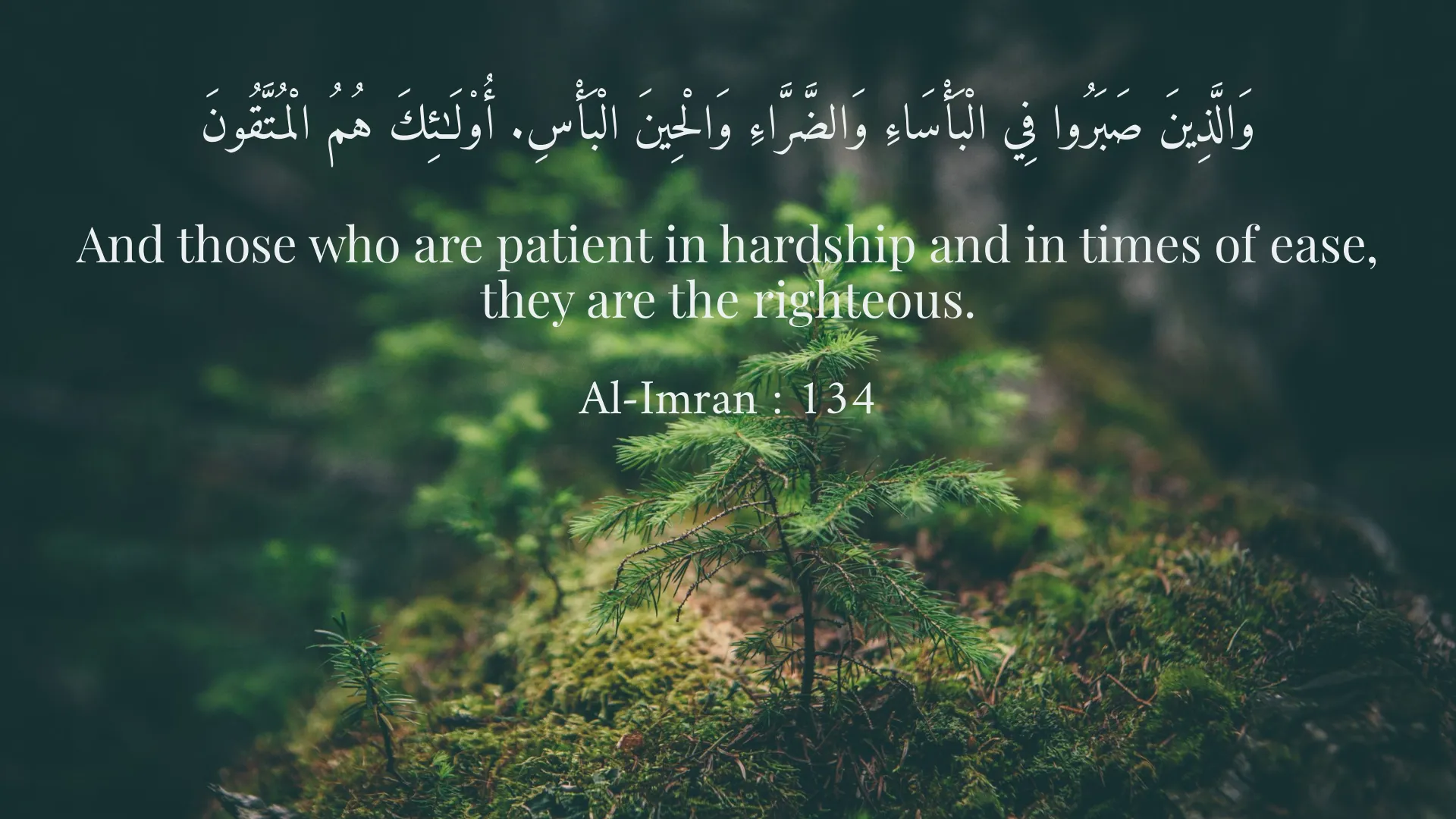
The Holy Quran, as the sacred text of Islam, emphasizes the importance of forbearance and patience in various verses, urging believers to embody these moral qualities in their daily lives. Among these exhortations, Surah Al-Imran, verse 134 stands out, where Allah describes patience and forbearance as essential characteristics of a true believer. The verse states, 'And those who are patient in hardship and in times of ease, and who spend, are the ones who will be rewarded.' This profound declaration highlights that patience and forbearance are not merely admirable traits, but fundamental elements that shape the lives of the faithful. The concept of patience (Sabr) in Islam extends beyond mere endurance; it encompasses a proactive approach toward life’s various adversities and challenges. The transformation of immediate negative experiences into opportunities for growth and learning is a central theme within the Islamic text. This tenet illustrates how patience is intertwined with the fundamental belief in providence, where every hardship is perceived as a test from Allah—instead of a punishment. In this regard, the Holy Quran serves as a source of strength and guidance, encouraging believers to confront their difficulties with calm and resolve. Furthermore, in Surah Al-Mu'minun, verse 96, Allah instructs the believers, 'Repel evil with that which is best.' This directive is significant as it calls for a proactive response to adversity, urging Muslims to not only endure difficulties but to transform challenging situations through goodness and kindness. The practical translation of forbearance in everyday life is invaluable; it cultivates better human relationships and fosters an atmosphere of empathy and cooperation amidst societal challenges. In everyday situations, one may often encounter individuals who exhibit unpleasant behaviors, which can lead to frustration or conflict. During these moments, the teachings of the Quran regarding forbearance and patience become paramount. By embracing these virtues, we learn to control our emotions and respond not with hostility, but with understanding and compassion. This practice not only aids in resolving conflicts amicably but also serves as a catalyst for personal growth and character development. Moreover, forbearance and patience become essential when dealing with the complexities of human interactions. In a world rife with discord, misunderstandings, and challenges, responding to negativity with kindness requires a conscious effort. It is an act of spiritual discipline that highlights the believer’s commitment to uphold Islamic ethics consistently. This commitment to high moral standards during hardships ultimately leads to the cultivation of a more robust, harmonious community. Furthermore, the teachings of the Quran recognize that life is fraught with challenges, and the acknowledgement of this reality empowers believers. The Holy Quran insists on the importance of accepting life's trials, asserting that through forbearance and patience, individuals can traverse obstacles and attain true happiness. Happiness in Islamic thought is not simply the absence of hardship but the fulfillment of spiritual and moral responsibilities, transforming every challenge into a step towards spiritual elevation. The emphasis on patience and forbearance extends beyond individual growth; it also embodies the wish for a cohesive and harmonious society. When individuals practice patience, they contribute to the well-being of the community as a whole. The community flourishes when its members embody these moral principles, fostering an environment of mutual support and understanding. Such a community becomes a reflection of the teachings of the Quran, standing as a testament to the power of forbearance in action. Furthermore, the impact of forbearance on mental health cannot be overstated. In a society where impatience often prevails due to quick fixes and instant gratification, the teachings of the Quran provide a counter-narrative. Patience is correlated with lower levels of anxiety and stress, promoting mental well-being. The Quranic exhortations encourage believers to cultivate resilience, ultimately leading to a healthier and more balanced life. In conclusion, the Quran's perspective on patience and forbearance serves as a comprehensive guide for believers. It calls upon individuals to embrace these virtues not just in moments of trial, but also in the fabric of their daily interactions. By doing so, they not only strengthen their own character but also contribute positively to the wider community. The message is clear: through patience and forbearance, believers can navigate the complexities of life, reflecting the high ethical standards envisaged by Islam. In a world where immediate reactions and impulsive behaviors are the norm, the Quran’s call for patience and forbearance offers a profound pathway toward both personal and collective peace and fulfillment.
Related Verses
وَالَّذِينَ صَبَرُوا فِي الْبَأْسَاءِ وَالضَّرَّاءِ وَالْحِينَ الْبَأْسِ. أُو۟لَـٰئِكَ هُمُ الْمُتَّقُونَ
And those who are patient in hardship and in times of ease, they are the righteous.
Al-Imran : 134
فَادْفَعْ بِالَّتِي هِيَ أَحْسَنُ ۖ إِذَا الَّذِي بَيْنَكَ وَبَيْنَهُ عَدَاوَةٌ كَأَنَّهُ وَلِيٌّ حَمِيمٌ
But respond to the evil deed with one that is better; then one where there is enmity between you and him will be as though he was a devoted friend.
Al-Mu'minun : 96
Short Story
Once upon a time in a small village, there lived a man named Hassan. Hassan always lived with patience and forbearance, facing challenges with a smile and kindness. One day, a neighbor spoke rudely to him. Remembering the verses of the Quran, Hassan decided to respond with kindness and respect. His actions not only helped him establish a friendly relationship with his neighbor but also inspired others to adopt patience and forbearance in their lives.