Quranic Answer
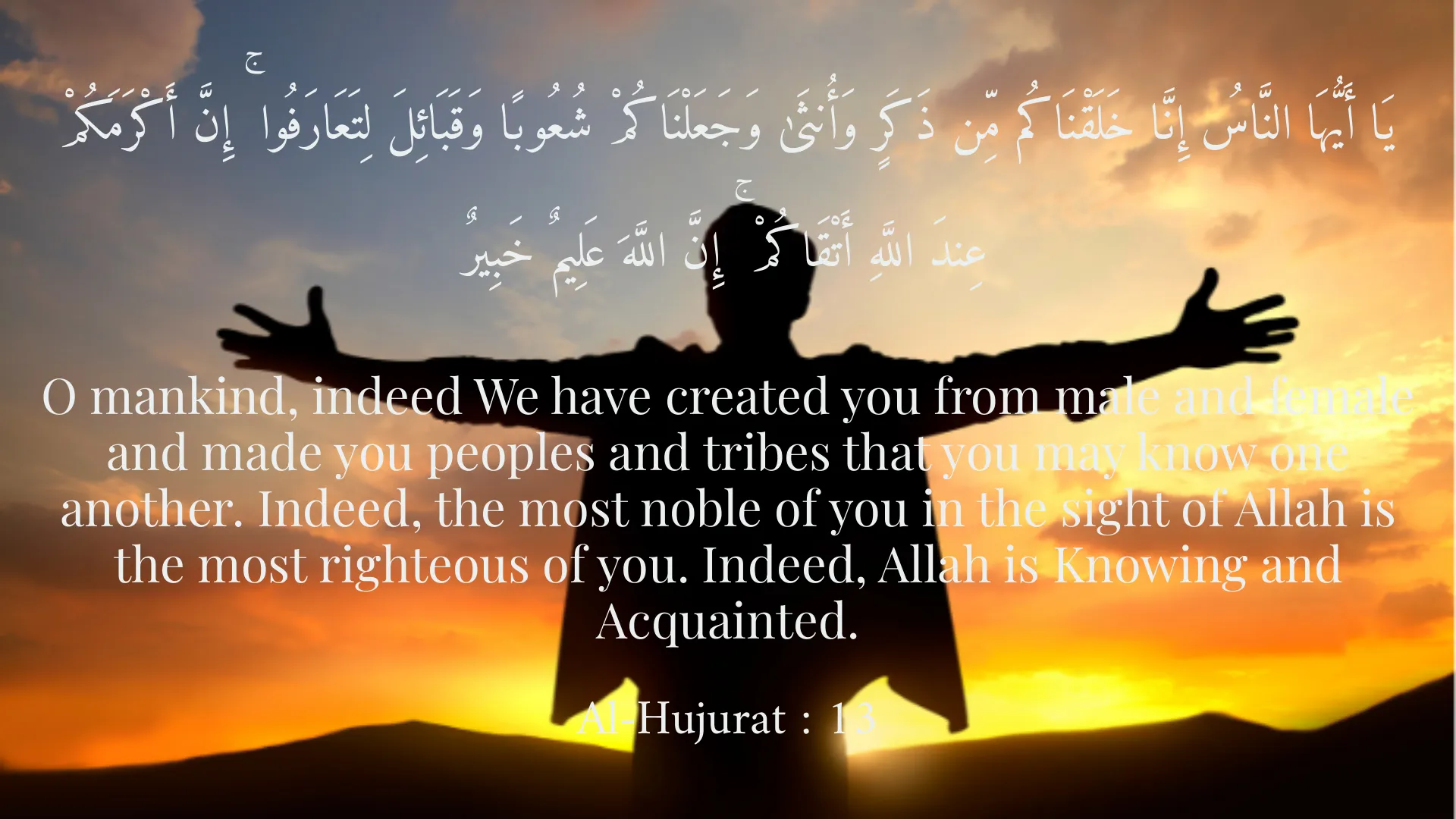
The Holy Quran, as a divine guide, is far more than just a collection of laws; it is a charter for the elevated human life, fundamentally and profoundly laying the groundwork for empathy, understanding, and peaceful coexistence among all human beings, irrespective of race, language, or culture. The Quran's invitation to intercultural empathy is not a superficial recommendation, but rather an intrinsic part of its teachings, built upon the unity of creation and the inherent dignity of humankind. With its comprehensive view of existence, this divine book regards humanity as one large family whose members, despite apparent and cultural differences, share a common origin and a unified purpose in life. The starting point of this invitation is the emphasis on the common origin of humanity. Verse 13 of Surah Al-Hujurat clearly states: “O mankind, indeed We have created you from male and female and made you peoples and tribes that you may know one another. Indeed, the most noble of you in the sight of Allah is the most righteous of you. Indeed, Allah is Knowing and Acquainted.” This verse dismantles the foundations of any racial or cultural superiority, providing a solid basis for mutual recognition and empathy. The purpose of this diversity in tribes and nations is “to know one another” (li-ta'arafu). Ta'aruf goes beyond mere superficial acquaintance; it signifies deepening mutual understanding, exchanging knowledge and experiences, and appreciating diverse values. This verse teaches us that diversity is not a source of division but an opportunity for cultural enrichment and human perfection. When the purpose of having different peoples is “ta'aruf,” it means we must actively seek to understand and comprehend the other, rather than distancing ourselves or judging them. True empathy forms when we can put ourselves in another's shoes and see the world from their perspective, even if their beliefs and ways of life differ from ours. Furthermore, the Quran emphasizes the inherent dignity of all human beings, as stated in Surah Al-Isra, verse 70: “And We have certainly honored the children of Adam.” This divinely bestowed dignity applies to all humans, without any qualifiers of race, religion, or culture. This fundamental principle prevents any form of humiliation, discrimination, or condescending attitude towards other cultures or nations. When all human beings possess divine dignity, any judgment or mistreatment based on superficial differences means disregarding this inherent dignity. Intercultural empathy requires recognizing this shared dignity and respecting every individual as a divine creation. The Quran also repeatedly stresses the importance of justice. Verse 8 of Surah Al-Ma'idah urges believers not to let the hatred of a people lead them to injustice: “And let not the hatred of a people prevent you from being just. Be just; that is nearer to righteousness.” This command demonstrates the pinnacle of commitment to ethical and human principles that transcend cultural and religious boundaries. If we are obligated to be just towards those who harbor enmity towards us, then, by extension, we must treat those who are culturally different from us with fairness and equity. Justice is a foundation for mutual trust and coexistence, and true empathy cannot exist without it. This is because justice means upholding the rights of all individuals, regardless of their affiliations, and it provides the understanding that all human beings, regardless of their culture, deserve equal respect and rights. The emphasis on peace and avoidance of conflict is another Quranic theme that contributes to intercultural empathy. The Quran encourages believers to respond to evil with good (Surah Fussilat, verse 34). This approach not only prevents the escalation of hostilities but can also create a basis for changing hearts and fostering understanding. When we look at others with goodwill and seek peaceful resolutions to conflicts, there is a greater possibility for building bridges between cultures. This approach is critically important, especially in today's world, which is rife with cultural misunderstandings and prejudices. The Quran calls for dialogue and tolerance, not isolation and confrontation. Moreover, the Quran teaches us that there is no compulsion in religion (Surah Al-Baqarah, verse 256). This fundamental principle guarantees respect for freedom of belief and avoidance of imposing beliefs. When there is no compulsion in religion, an open space is created for respecting others' beliefs and choices, even if they differ from our own. This principle forms the basis of intercultural empathy, as empathy means understanding and accepting differences, not necessarily agreeing with them. It is in such an environment that different cultures can live side by side, learn from each other, and contribute to human enrichment. Finally, Quranic teachings emphasize the importance of the unity of the Muslim Ummah and extending this to the unity of humanity. Although the Quran primarily addresses believers, its messages about justice, human dignity, and peace have universal dimensions. Muslims, as representatives of this message, are obligated to demonstrate these principles through their interactions with other cultures and nations. This empathy and mutual understanding pave the way for reducing prejudices, tearing down barriers, and building a more peaceful world. Therefore, with its comprehensive and inclusive teachings, the Quran is not merely a spiritual guide but a roadmap for living in a diverse and multicultural world where empathy is the cornerstone of human peace and prosperity. This empathy, transcending linguistic and geographical boundaries, connects human beings to one another and creates a just and compassionate society. This connection is not only a religious duty but an urgent necessity for humanity today to escape the trap of baseless prejudices and conflicts. By emphasizing shared human commonalities, the Quran transforms empathy into an existential necessity for everyone to experience shared life together while respecting differences.
Related Verses
يَا أَيُّهَا النَّاسُ إِنَّا خَلَقْنَاكُم مِّن ذَكَرٍ وَأُنثَىٰ وَجَعَلْنَاكُمْ شُعُوبًا وَقَبَائِلَ لِتَعَارَفُوا ۚ إِنَّ أَكْرَمَكُمْ عِندَ اللَّهِ أَتْقَاكُمْ ۚ إِنَّ اللَّهَ عَلِيمٌ خَبِيرٌ
O mankind, indeed We have created you from male and female and made you peoples and tribes that you may know one another. Indeed, the most noble of you in the sight of Allah is the most righteous of you. Indeed, Allah is Knowing and Acquainted.
Al-Hujurat : 13
يَا أَيُّهَا النَّاسُ اتَّقُوا رَبَّكُمُ الَّذِي خَلَقَكُم مِّن نَّفْسٍ وَاحِدَةٍ وَخَلَقَ مِنْهَا زَوْجَهَا وَبَثَّ مِنْهُمَا رِجَالًا كَثِيرًا وَنِسَاءً ۚ وَاتَّقُوا اللَّهَ الَّذِي تَسَاءَلُونَ بِهِ وَالْأَرْحَامَ ۚ إِنَّ اللَّهَ كَانَ عَلَيْكُمْ رَقِيبًا
O mankind, fear your Lord, who created you from one soul and created from it its mate and dispersed from both of them many men and women. And fear Allah, through whom you ask one another, and the wombs. Indeed Allah is ever, over you, an Observer.
An-Nisa : 1
يَا أَيُّهَا الَّذِينَ آمَنُوا كُونُوا قَوَّامِينَ لِلَّهِ شُهَدَاءَ بِالْقِسْطِ ۖ وَلَا يَجْرِمَنَّكُمْ شَنَآنُ قَوْمٍ عَلَىٰ أَلَّا تَعْدِلُوا ۚ اعْدِلُوا هُوَ أَقْرَبُ لِلتَّقْوَىٰ ۖ وَاتَّقُوا اللَّهَ ۚ إِنَّ اللَّهَ خَبِيرٌ بِمَا تَعْمَلُونَ
O you who have believed, be persistently standing firm for Allah, witnesses in justice, and do not let the hatred of a people prevent you from being just. Be just; that is nearer to righteousness. And fear Allah; indeed, Allah is Acquainted with what you do.
Al-Ma'idah : 8
Short Story
It is narrated that Sheikh Sa'di of Shiraz, during his travels, arrived in a land whose people differed from others in appearance and dress. His companions said to him, "Look at them, their customs and ways are strange." Sa'di, with a smile, replied, "One must open their eyes not to clothes and customs, but to the essence of humanity. Every person inwardly desires goodness and seeks peace. If we know hearts, we will find no stranger; for we all spring from one source and move towards one purpose, though our paths may differ." And so it was that with tolerance and understanding, they opened a door to friendship and discovered beauty in differences.