Quranic Answer
The Holy Quran, a book of guidance and light, not only shows us the path to external salvation but also, with eloquent and profound expression, invites us on an inner journey; a journey to discover ourselves and gain a deeper understanding of our being. This invitation to self-awareness and inner knowledge is a fundamental pillar of the divine message and helps us comprehend our true place in existence and our relationship with the One Creator. This divine book, through various methods, directs our minds and hearts towards contemplation and reflection on the creation of man and the intricacies of his soul and psyche. One of the most significant ways the Quran invites to self-awareness is by emphasizing the "Ayat al-Anfus," or the divine signs within oneself. The Quran repeatedly reminds humanity that to find truth and know the Creator, one does not merely need to look outside themselves; rather, one must also reflect upon the depths of their own being. The complex structure of the human body, the subtleties of the soul, emotions, thoughts, and extraordinary human capabilities are all signs of God's boundless power and wisdom. When we ponder the manner of our own creation, from a tiny cell to becoming a being with consciousness and will, we realize the greatness of a Creator who fashioned us with such precision and wisdom. This inward gaze is the first step towards self-knowledge, as it acquaints us with our capabilities and limitations and reveals our dependence on the source of existence. The Quran asks us not to be mere consumers, oblivious to ourselves, but to be truly "perceptive" and aware of what transpires within us. Another invitation to self-awareness in the Quran comes through its articulation of the purpose of human creation. When we understand why we were created – for the worship of God and vicegerency on Earth – our identity and existential mission take shape. This understanding of purpose gives meaning to human life and prompts individuals to question their actions, intentions, and overall existence. If a person views themselves merely as an accidental or purposeless being, they will never fathom the depth of their own essence. However, by embracing their role as a responsible servant and a trustworthy vicegerent, they achieve a deeper self-awareness. This perspective compels individuals to reflect on their responsibilities towards themselves, society, and the world, leading to a better understanding of their inherent worth and dignity. Moreover, the concept of "Fitra" (innate disposition) is one of the Quran's powerful tools for inviting inner knowledge. The Quran states that humanity is created with a pure nature and an inherent inclination towards God's oneness and truth. Sins and deviations are layers that cover this pure Fitra. Therefore, self-awareness in the Quran means returning to this original, pristine nature and removing the dust from it. By contemplating within themselves and observing the anxieties and disharmonies that arise from distancing themselves from truth, people realize the necessity of returning to their Fitra. This return requires recognizing one's strengths and weaknesses, carnal and divine inclinations, and striving for self-purification (Tazkiyah al-Nafs). Tazkiyah al-Nafs, repeatedly mentioned in the Quran, is practically the process of self-awareness and inner cleansing to achieve true knowledge. This purification involves struggling against undesirable traits such as arrogance, envy, miserliness, and backbiting, and cultivating moral virtues like humility, generosity, patience, and gratitude. Furthermore, by emphasizing the concept of the Day of Judgment (Ma'ad) and accountability, the Quran invites individuals to self-awareness and vigilance over their actions. When we know that every action, even the smallest, is recorded and that we will be held accountable for it, we instinctively become careful about our intentions and behaviors. This anticipation of the Day of Judgment acts as an inner mirror, compelling us to constantly evaluate ourselves and ask: Am I on the right path? Are my intentions pure? This continuous self-questioning is one of the deepest forms of self-awareness that leads to inner correction and growth. In essence, self-awareness in the Quran is not merely theoretical knowledge but practical and transformative knowledge that results in changes in human behavior and character. In summary, the Quran invites us to self-awareness and inner knowledge to understand the deepest layers of our being. This invitation occurs through reflecting on the divine signs within ourselves, understanding the noble purpose of our creation, returning to our pure and divine Fitra, purifying the soul, and preparing for the Day of Judgment. This self-awareness not only brings us inner peace and contentment but also strengthens our connection with the Creator of the universe, paving the way for a meaningful and purposeful life. The Quran is like a light that illuminates the darkest corners of our existence and guides us towards the best version of ourselves. This process of self-knowledge is continuous and lifelong, and the more we reflect on the divine verses, the more depth of our being we will discover, and the higher understanding of divine wisdom and mercy we will attain.
Related Verses
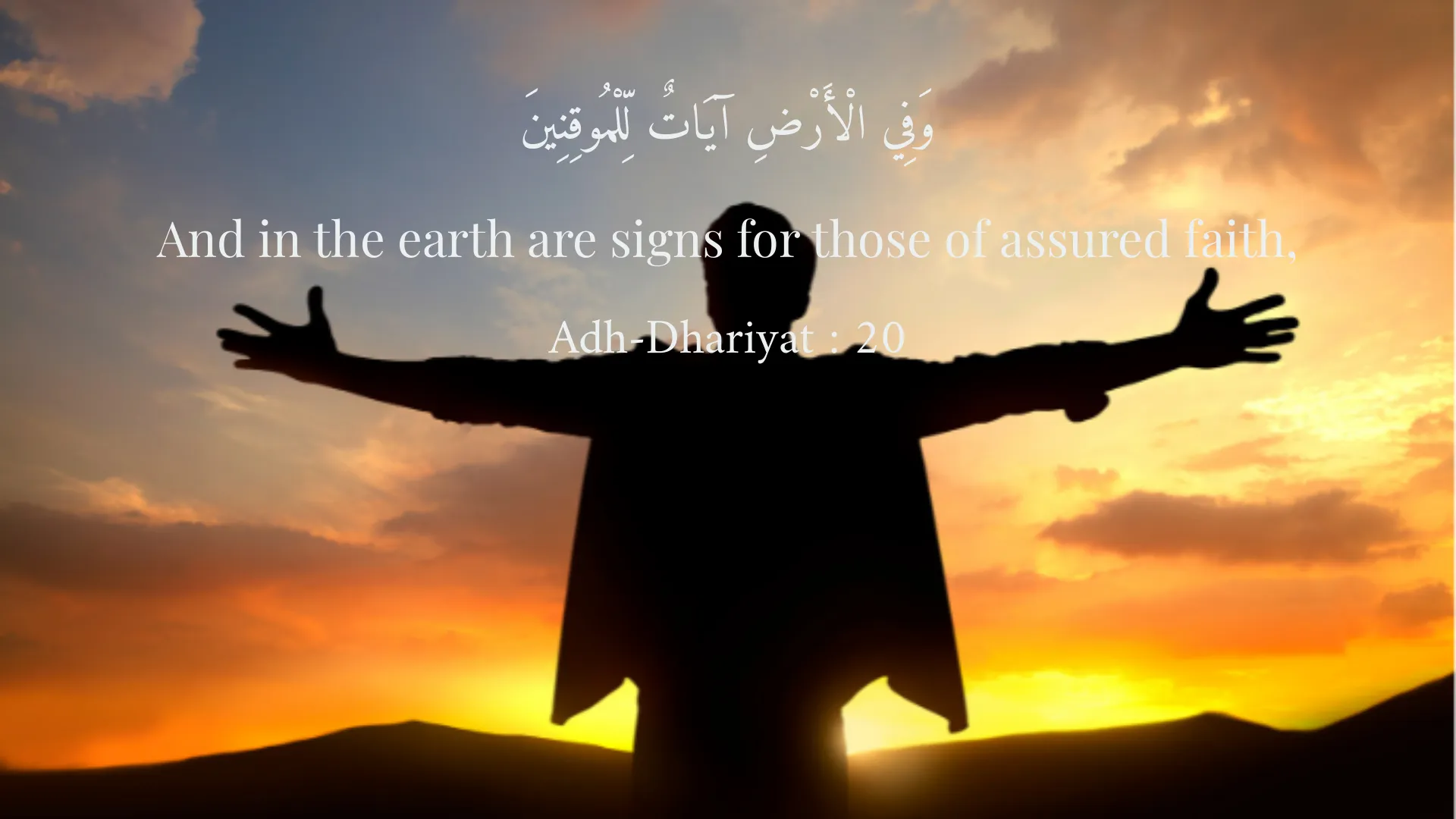
وَفِي الْأَرْضِ آيَاتٌ لِّلْمُوقِنِينَ
And in the earth are signs for those of assured faith,
Adh-Dhariyat : 20
وَفِي أَنفُسِكُمْ ۚ أَفَلَا تُبْصِرُونَ
And in yourselves. Then will you not see?
Adh-Dhariyat : 21
سَنُرِيهِمْ آيَاتِنَا فِي الْآفَاقِ وَفِي أَنفُسِهِمْ حَتَّىٰ يَتَبَيَّنَ لَهُمْ أَنَّهُ الْحَقُّ ۗ أَوَلَمْ يَكْفِ بِرَبِّكَ أَنَّهُ عَلَىٰ كُلِّ شَيْءٍ شَهِيدٌ
We will show them Our signs in the horizons and in themselves until it becomes clear to them that it is the truth. But is it not sufficient concerning your Lord that He is, over all things, a Witness?
Fussilat : 53
وَنَفْسٍ وَمَا سَوَّاهَا
And [by] the soul and [by] Him who proportioned it
Ash-Shams : 7
فَأَلْهَمَهَا فُجُورَهَا وَتَقْوَاهَا
And inspired it [with discernment of] its wickedness and its righteousness,
Ash-Shams : 8
قَدْ أَفْلَحَ مَن زَكَّاهَا
He has succeeded who purifies it,
Ash-Shams : 9
وَقَدْ خَابَ مَن دَسَّاهَا
And he has failed who corrupts it.
Ash-Shams : 10
Short Story
It is narrated that a dervish traveled for years from city to city in pursuit of knowledge, asking every scholar he met about the path to self-knowledge. One day, he reached a wise man and posed the same question. The wise man, with a warm smile, said: "O seeker, the path to knowledge is neither in distant travels nor in numerous books, but in the abode of your own heart. If you open the eye of your soul, you will find a bright mirror within that reveals everything that is and is not." When the dervish heard this, he returned and began to observe his soul, realizing that all he sought was not far from himself. This is why the Quran says: "And in yourselves. Then will you not see?" – that self-knowledge is a path to knowing God, and the true treasure lies within us.