Quranic Answer
The Holy Quran, as a divine revelation and comprehensive guide for humanity, addresses the concept of guidance in a profound and multifaceted manner. While the term "inner experience" (tajruba batini) in its specific philosophical or mystical sense is not explicitly found in the Quranic text, there are clear concepts and teachings within the Quran that unequivocally emphasize the pivotal role of human perception, insight, and inner transformation on the path of divine guidance. The Quran does not merely limit itself to outlining laws and injunctions; rather, it constantly calls its audience to contemplation, reflection, reasoning (ta'aqqul), and purification of the soul (tazkiyah al-nafs)—all of which are fundamental aspects of "inner experience." One of the most significant foundations of this approach is the concept of "fitra," the innate disposition. The Quran describes human beings as possessing a divine fitra, an inherent nature that is intrinsically inclined towards monotheism, truth, and justice. In Surah Ar-Rum, verse 30, it states: "So direct your face toward the religion, inclining to truth. [Adhere to] the fitra of Allah upon which He has created [all] people. No change should there be in the creation of Allah. That is the correct religion, but most of the people do not know." This verse explicitly affirms that the upright (monotheistic) religion is in harmony with human nature. This fitra acts as an internal compass, guiding humans towards truth. Inner experience here means awakening to and heeding this inner call, aligning oneself with it. When a person's inner self is pure and transparent, they can better perceive and connect with the light of divine guidance. 1. The Concept of the 'Qalb' (Heart): The term 'qalb' holds a special place in the Quran, being considered the center of perception, faith, intellect, and insight. The Quran repeatedly speaks of "hearts by which they reason" (qulubun ya'qiluna biha) and "hearts by which they do not understand" (qulubun la yafqahuna biha). True guidance is that which penetrates the heart and illuminates it. In Surah Al-Hajj, verse 46, it says: "Have they not traveled through the land, so that their hearts (minds) may thus learn wisdom and their ears may thus learn to hear? Truly it is not the eyes that are blind, but the hearts which are in the breasts." This verse clearly states that true blindness is the blindness of the heart, not the eyes. This indicates that inner insight (inner experience) is more vital for receiving guidance than merely seeing external appearances. Faith, inner perception (basira), and inner submission to the truth are key aspects of this inner experience that the Quran refers to as criteria for guidance. 2. Invitation to Reflection and Contemplation: The Quran calls humanity to 'tafakkur' (thought) and 'tadabbur' (contemplation) concerning the 'ayat al-afaqi' (signs of God in the cosmos) and 'ayat al-anfusi' (signs of God within oneself). Surah Fussilat, verse 53, states: "We will show them Our signs in the horizons and within themselves until it becomes clear to them that it is the truth." This verse illustrates that observation and internal and external reflection lead to the understanding of truth. This internal reflection is the central process of inner experience, through which humans attain self-knowledge and consequently knowledge of God. This profound contemplation is not merely an intellectual exercise but a spiritual journey wherein the individual's inner layers are opened, and divine truths become manifest within them. 3. Tazkiyah al-Nafs (Purification of the Soul): The purification of the soul is another crucial aspect strongly emphasized in the Quran, which identifies it as the path to salvation. In Surah Ash-Shams, verses 9 and 10, it states: "He has succeeded who purifies it, and he has failed who corrupts it." Tazkiyah al-nafs means uprooting moral vices, egoistic desires, and worldly attachments from within a person. By purifying these inner obstacles, the heart becomes more receptive to divine light, and the individual gains an insight that enables them to distinguish truth from falsehood. This process of purification is itself a continuous and dynamic inner experience that requires self-examination and a greater jihad against the self, resulting in inner peace and reassurance, which is a sign of having found guidance. Therefore, the Quran does not present inner experience as an "independent criterion" separate from revelation, but rather as the "internal medium and tool" for receiving, understanding, and affirming divine guidance. Divine revelation (the Quran) is the external light, and the pure, purified fitra and heart (inner experience) are the internal vessel that receives this light and transforms it into insight and certainty. These two are interdependent: without the light of revelation, the heart may go astray, and without a pure and ready heart, the light of revelation will have no effect. It is this synergy between revelation and inner experience that brings true and comprehensive guidance to humanity, leading them towards truth and eternal felicity. In other words, the Quran teaches us that to fully benefit from divine guidance, we must both heed the word of God and pay attention to the inner call of our fitra, continually purifying our hearts so that they become a perfect mirror reflecting the light of truth. This profound understanding of guidance, which is a fusion of external revelation and inner insight, helps believers to deepen their faith and move from mere imitation towards true certainty and gnosis. The Quran asks believers to observe God's signs in the horizons and within themselves with open eyes and a vigilant heart, and to utilize this inner insight in their decisions and choices at every moment of their lives. This is the path that leads humanity to the station of 'submission' (taslim) and 'contentment' (rida), connecting them to true tranquility, a tranquility that is achieved only through deep inner experience and connection to the ultimate source of existence. Ultimately, Quranic guidance is not merely the acquisition of information but a fundamental transformation within the depths of one's being.
Related Verses
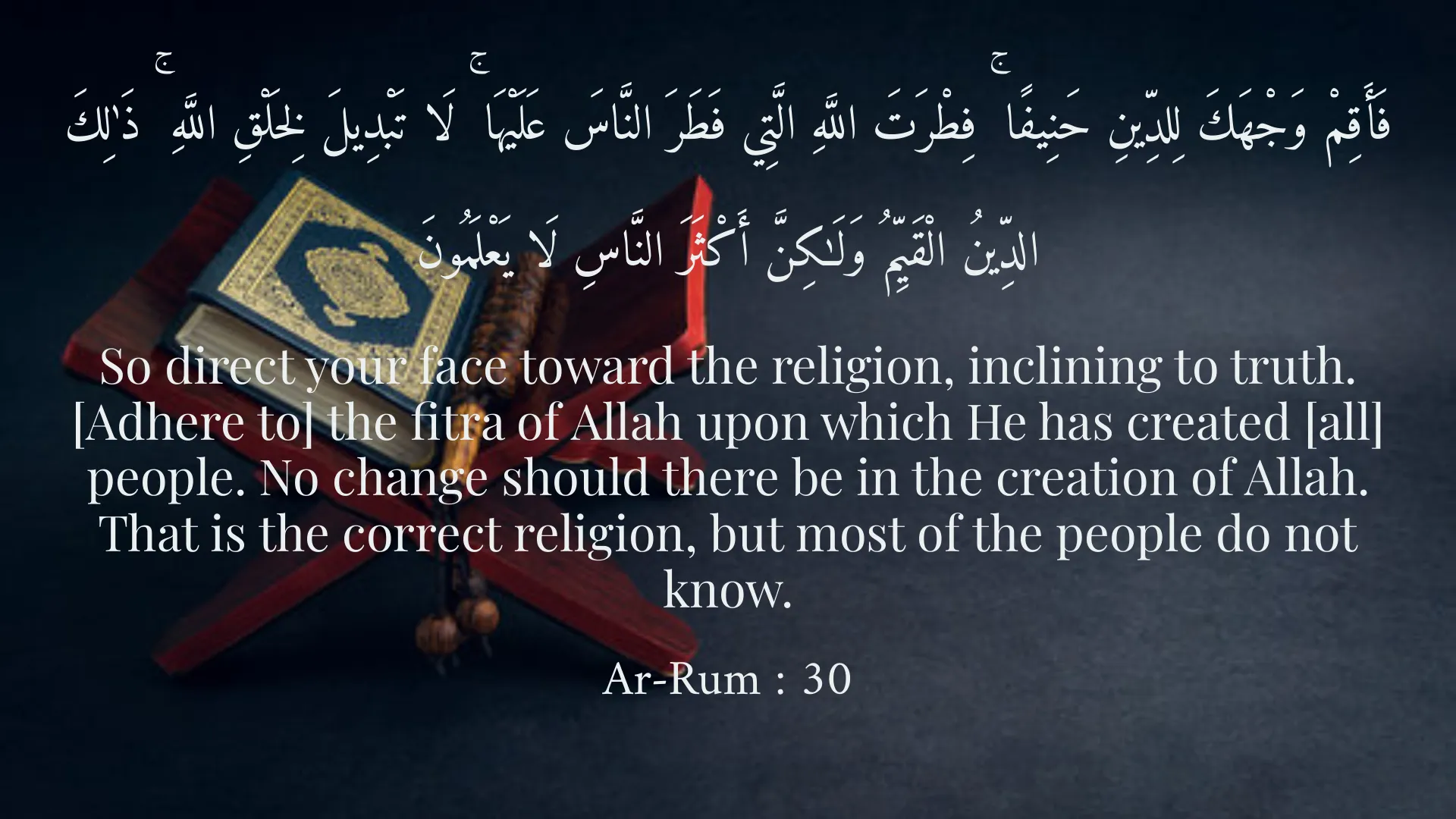
فَأَقِمْ وَجْهَكَ لِلدِّينِ حَنِيفًا ۚ فِطْرَتَ اللَّهِ الَّتِي فَطَرَ النَّاسَ عَلَيْهَا ۚ لَا تَبْدِيلَ لِخَلْقِ اللَّهِ ۚ ذَٰلِكَ الدِّينُ الْقَيِّمُ وَلَٰكِنَّ أَكْثَرَ النَّاسِ لَا يَعْلَمُونَ
So direct your face toward the religion, inclining to truth. [Adhere to] the fitra of Allah upon which He has created [all] people. No change should there be in the creation of Allah. That is the correct religion, but most of the people do not know.
Ar-Rum : 30
أَفَلَمْ يَسِيرُوا فِي الْأَرْضِ فَتَكُونَ لَهُمْ قُلُوبٌ يَعْقِلُونَ بِهَا أَوْ آذَانٌ يَسْمَعُونَ بِهَا ۖ فَإِنَّهَا لَا تَعْمَى الْأَبْصَارُ وَلَٰكِن تَعْمَى الْقُلُوبُ الَّتِي فِي الصُّدُورِ
So have they not traveled through the earth and have hearts by which to reason and ears by which to hear? For indeed, it is not eyes that are blinded, but blinded are the hearts which are within the breasts.
Al-Hajj : 46
سَنُرِيهِمْ آيَاتِنَا فِي الْآفَاقِ وَفِي أَنفُسِهِمْ حَتَّىٰ يَتَبَيَّنَ لَهُمْ أَنَّهُ الْحَقُّ ۗ أَوَلَمْ يَكْفِ بِرَبِّكَ أَنَّهُ عَلَىٰ كُلِّ شَيْءٍ شَهِيدٌ
We will show them Our signs in the horizons and within themselves until it becomes clear to them that it is the truth. But is it not sufficient concerning your Lord that He is, over all things, a Witness?
Fussilat : 53
قَدْ أَفْلَحَ مَن زَكَّاهَا
He has succeeded who purifies it,
Ash-Shams : 9
وَقَدْ خَابَ مَن دَسَّاهَا
And he has failed who corrupts it.
Ash-Shams : 10
Short Story
It is narrated that one day a pious and elderly man asked Sheikh Saadi: "O teacher of words, what is the true path to guidance? Is it in books or in journeys?" The Sheikh smiled and replied: "One day I saw a mystic who had traveled for years from city to city, seeking knowledge and visiting every school of thought. He had come to realize that knowledge is a sea, but insight is the pearl within it. One night, he dreamt that a voice told him: 'O seeker, the Kaaba you search for is within your heart. You have journeyed through the horizons; now turn to your inner self!' The mystic awoke and from that day on, instead of traveling through lands, he embarked on a spiritual journey within himself. He understood that the signs of God are not only external but also within man himself, and the purer he made his heart, the brighter the light of guidance would shine within it. So, my friend, true guidance lies not only in what you read, but in what you understand from within yourself and with which you purify your heart."