Quranic Answer
In an era marked by constant global crises—be it pandemics, economic downturns, social unrest, or environmental challenges—the human heart often seeks solace and a sense of stability. For believers, the Holy Quran serves as an immutable source of tranquility, offering profound wisdom and practical guidance on navigating these turbulent waters. Far from being a mere historical text, it is a living scripture that speaks directly to the human condition, providing frameworks for understanding suffering, fostering resilience, and ultimately, finding peace amidst chaos. The Quran’s approach to alleviating anxiety in times of crisis is multi-faceted, rooted deeply in the principles of faith (Iman), reliance on God (Tawakkul), patience (Sabr), and remembrance (Dhikr). It fundamentally shifts one’s perspective from despair to hope, from helplessness to empowered submission to a higher power. The Quran not only teaches strategies for coping with challenges but also explains the nature of these challenges, enabling individuals to face them with a deeper understanding and a calmer heart. One of the most foundational pillars of peace offered by the Quran is the concept of Tawakkul, or complete reliance on Allah. When global events spiral out of control, and human efforts seem insufficient, the Quran reminds us that there is a supreme planner and sustainer of the universe. Surah At-Tawbah (9:51) beautifully encapsulates this: "Say, 'Nothing will ever befall us except what Allah has destined for us. He is our Protector.' And in Allah let the believers put their trust." This verse instills a deep sense of security. It does not negate taking precautions or striving for solutions, but it assures the believer that the ultimate outcome is in God’s hands. This understanding frees the heart from the overwhelming burden of control, replacing it with serene trust, knowing that whatever transpires is part of a divine plan, often beyond our immediate comprehension but always rooted in ultimate wisdom and justice. It encourages active engagement with challenges, coupled with an inner calm derived from surrendering the uncontrollable to the Divine. This approach transforms the anxiety arising from the unknown into confidence in Allah's absolute power. Another critical component is Sabr, or patience and perseverance. The Quran frequently enjoins patience, particularly in the face of adversity. Surah Al-Baqarah (2:153) states: "O you who have believed, seek help through patience and prayer. Indeed, Allah is with the patient." This verse highlights a crucial mechanism for coping with distress: embracing patience as an active state of endurance and steadfastness, coupled with prayer. Patience, in the Quranic sense, is not passive resignation but an active, hopeful, and resilient bearing of difficulties. It involves restraining oneself from complaint, maintaining faith, and continuing good deeds even when the world seems to crumble. It is the ability to maintain inner peace and composure, believing that every trial carries a hidden blessing or a lesson, and that enduring it with steadfastness will lead to immense spiritual rewards and ultimate ease. This inner strength derived from patience transforms crises into opportunities for spiritual growth and deeper connection with the Creator. The Quran also emphasizes Dhikr, the remembrance of Allah, as a powerful antidote to anxiety and fear. Surah Ar-Ra'd (13:28) states unequivocally: "Those who have believed and whose hearts are assured by the remembrance of Allah. Unquestionably, by the remembrance of Allah hearts are assured." This verse is a direct prescription for inner peace. In times of global uncertainty, the human mind often races with worries and catastrophic scenarios. Engaging in Dhikr—whether through prayer, reciting Quranic verses, contemplating Allah’s attributes, or simply acknowledging His presence—serves as an anchor. It pulls the heart back from the turbulent waves of worldly concerns and grounds it in the immutable reality of God. This consistent remembrance fosters a profound sense of connection, reminding the believer that they are never truly alone, and that there is always a source of strength and solace far greater than any worldly crisis. The regularity of prescribed prayers (Salat) further reinforces this connection, providing structured moments of spiritual retreat and dialogue with the Divine, offering respite from the daily grind and anxieties. Furthermore, the Quran contextualizes hardship as part of the divine scheme of testing humanity. It clarifies that trials are not random punishments but serve to purify, elevate, and distinguish sincere believers. This perspective helps individuals make sense of seemingly senseless suffering. When one understands that global crises are tests from Allah, it reframes the experience. Instead of succumbing to despair, one can approach these challenges with a mindset of seeking Allah's pleasure, demonstrating resilience, and drawing closer to Him. This understanding imbues difficult times with purpose and meaning, transforming what might otherwise be perceived as destructive forces into catalysts for personal and communal refinement. Crucially, the Quran repeatedly offers the promise of ease after hardship. The verses from Surah Al-Sharh (94:5-6) are a beacon of hope: "For indeed, with hardship [will be] ease. Indeed, with hardship [will be] ease." This powerful reiteration serves as a constant reminder that no matter how dire a situation may seem, relief and ease are guaranteed to follow. This divine promise cultivates an optimistic outlook, preventing hearts from sinking into chronic depression or hopelessness. It encourages perseverance, knowing that every moment of struggle brings one closer to the promised ease, fostering a spirit of resilience and an unwavering belief in a brighter future. This spiritual optimism is not naive but firmly rooted in divine promise and justice. Beyond these individual practices, the Quran fosters a sense of community (Ummah), encouraging mutual support, compassion, and justice. In times of crisis, isolation can exacerbate fear and despair. The Quranic emphasis on brotherhood and collective responsibility means that believers are not meant to face challenges alone. This communal aspect provides a practical framework for support, where resources are shared, empathy is practiced, and collective prayers strengthen individual resolve. Knowing that one is part of a larger body of believers, all striving for good and supporting each other, adds another layer of comfort and security. In conclusion, the Quran provides a holistic and profound framework for finding peace amidst global crises. It achieves this by fostering an unwavering trust in Allah's plan, cultivating active patience and perseverance, anchoring the heart in divine remembrance, contextualizing suffering as a means of purification and growth, and offering the unwavering promise of ease after hardship. By internalizing these Quranic principles, believers can transcend the immediate anxieties of worldly events, find profound inner tranquility, and emerge from crises not only unscathed but spiritually fortified, ready to continue their journey with purpose and hope, guided by the timeless wisdom of the divine word. The Quran, therefore, is not just a book of rules, but a source of profound spiritual solace, a roadmap for navigating the storms of life, and a constant reminder that true peace resides in connection with the Creator.
Related Verses
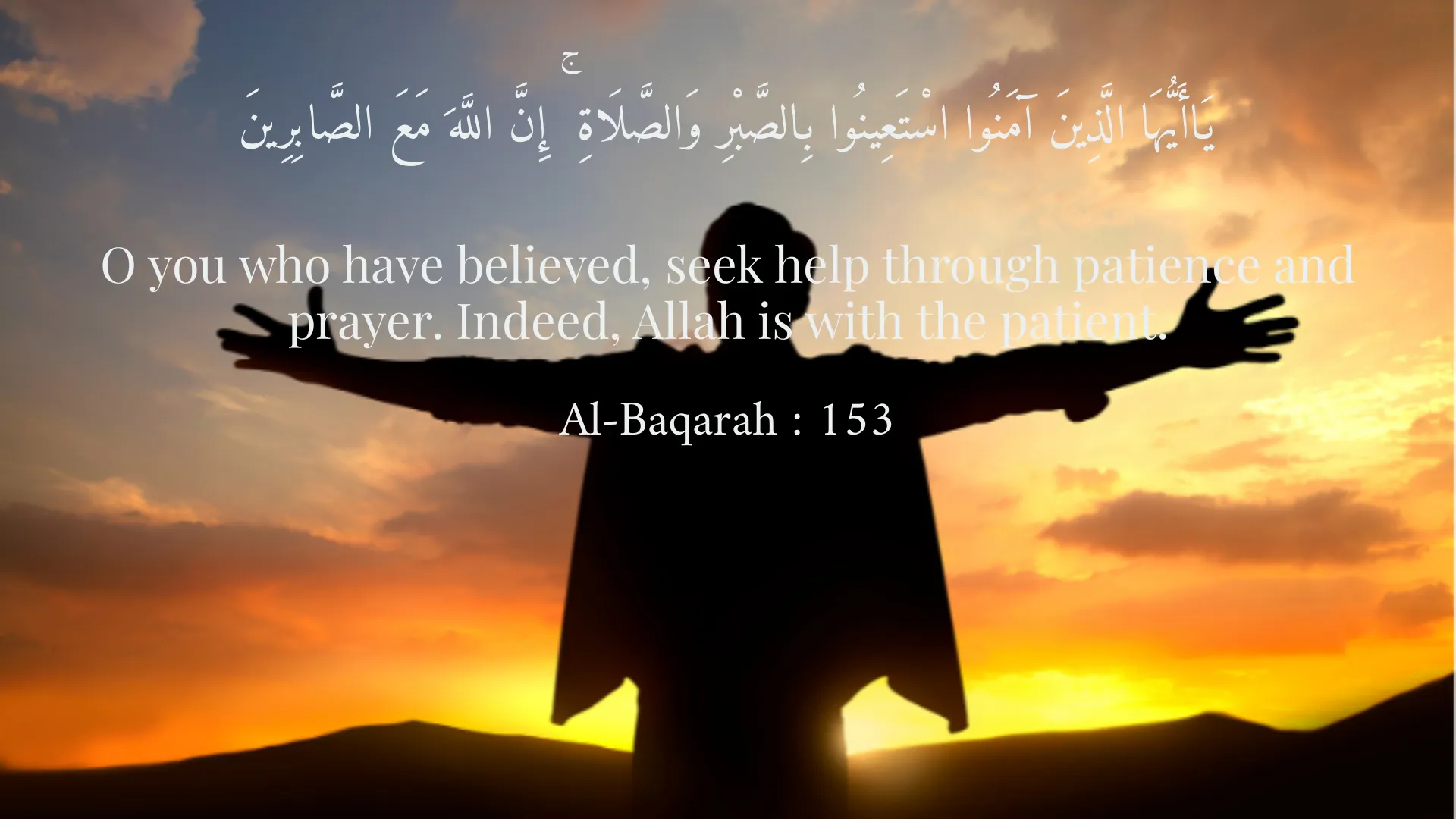
يَاأَيُّهَا الَّذِينَ آمَنُوا اسْتَعِينُوا بِالصَّبْرِ وَالصَّلَاةِ ۚ إِنَّ اللَّهَ مَعَ الصَّابِرِينَ
O you who have believed, seek help through patience and prayer. Indeed, Allah is with the patient.
Al-Baqarah : 153
الَّذِينَ آمَنُوا وَتَطْمَئِنُّ قُلُوبُهُم بِذِكْرِ اللَّهِ ۗ أَلَا بِذِكْرِ اللَّهِ تَطْمَئِنُّ الْقُلُوبُ
Those who have believed and whose hearts are assured by the remembrance of Allah. Unquestionably, by the remembrance of Allah hearts are assured.
Ar-Ra'd : 28
قُل لَّن يُصِيبَنَا إِلَّا مَا كَتَبَ اللَّهُ لَنَا هُوَ مَوْلَانَا ۚ وَعَلَى اللَّهِ فَلْيَتَوَكَّلِ الْمُؤْمِنُونَ
Say, "Nothing will ever befall us except what Allah has destined for us. He is our Protector." And in Allah let the believers put their trust.
At-Tawbah : 51
فَإِنَّ مَعَ الْعُسْرِ يُسْرًا
For indeed, with hardship [will be] ease.
Ash-Sharh : 5
Short Story
It is narrated that during a time of famine and drought, a virtuous man named "Sabir" (meaning patient) traveled from one land to another. One day, in a dry and barren desert, he was caught in a fierce storm that filled the sky with dust, making it impossible to distinguish the path from the abyss. Sabir, out of fear and worry, took shelter under a withered tree, but the wind blew so strongly that the tree threatened to fall. His heart became anxious, and in that state, he remembered the words of a wise old man who used to say: "If you step on a thorn, remember that roses are nurtured by thorns." Sabir collected himself and understood that in every hardship, there is ease. So he looked towards the sky and, with a heart full of reliance on God, began to remember the name of his Lord. The more he engaged in remembrance, the less his worries became, and a strange tranquility settled upon his heart. The storm subsided, leaving him in a calm plain bathed in the morning light. Sabir realized that true peace lies within a person, not in fleeing from hardships, but in facing them with patience and the remembrance of God. Through this experience, he understood that the Quran teaches us that in the storms of life, the anchor of the heart is the remembrance of God, and the hope for ease after hardship.