Quranic Answer
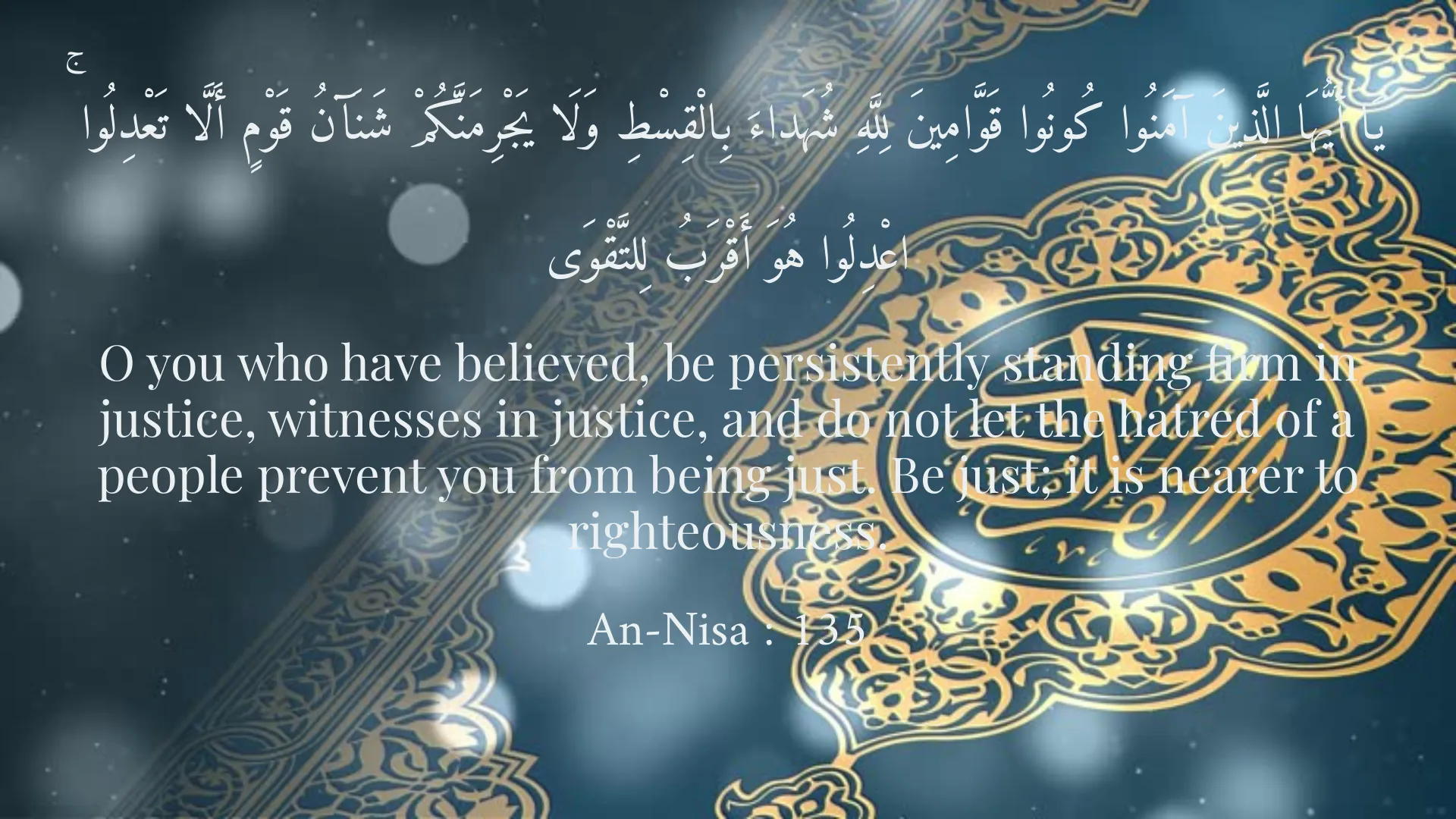
The Holy Quran, regarded as the divine scripture in Islam, emphasizes justice and fairness as core principles that should govern the interactions and relationships among individuals and society as a whole. This emphasis on justice is not merely an abstract ideal but a fundamental aspect of how society should be organized and how individuals should conduct themselves, shaping the moral and ethical landscape among present and future generations. In this article, we will explore the Quranic conception of justice, focusing on key verses that highlight the importance of fairness in social interactions and intergenerational relationships, and how these teachings can be applied in our modern context. The Concept of Justice in the Quran At the heart of the Quran's teachings on social ethics lies the concept of justice. It serves as a guiding principle that shapes the behavior of individuals, communities, and generations. In Surah An-Nisa, verse 135, Allah articulates the importance of justice in unequivocal terms: "O you who have believed, be persistently standing firm in justice, witnesses in justice, and do not let the hatred of a people prevent you from being just. Be just; it is nearer to righteousness." This verse calls upon believers to consistently maintain a commitment to justice, regardless of personal biases or societal pressures that may challenge that commitment. The message is clear: justice should not be a mere reaction to favorable circumstances but rather a steadfast principle that governs behavior. Believers are urged to testify to the truth even when it may place them at a disadvantage or conflict with their personal biases, such as familial or tribal affiliations. The insistence on justice in this context challenges individuals to rise above their instincts and loyalties, pressing them to uphold universal standards of fairness. This Quranic injunction to pursue justice has profound implications. It compels individuals to acknowledge the rights of others—regardless of background, ethnicity, or situation—and to interact with individuals with dignity and fairness. The command to be just entails not only a personal moral obligation but a societal one, paving the way for a community built on respect, equality, and the welfare of all. Justice Across Generations The importance of justice is not limited to the present relationships; it extends across generations. In Surah Aali 'Imran, verse 18, Allah emphasizes the obligation of individuals to testify to the truth: "Allah witnesses that there is no deity except Him, and [so do] the angels and those of knowledge - [that He is] maintaining His creation in justice." This verse illustrates the Quranic principle that justice is a divine order encompassing all of existence and transcends the temporal bounds of any single generation. Justice, as articulated in the Quran, encompasses a commitment to uphold the rights of previous generations and ensure that future generations inherit a legacy of fairness. The acknowledgment of past wrongs, the promotion of reparative measures, and the cultivation of an environment where equity thrives are imperative for future prosperity. A society that embraces the teachings of the Quran must therefore engage in introspection, recognizing historical injustices and striving to set right those imbalances for the benefit of future generations. The realization of intergenerational justice involves not just a familial obligation but a societal one. It is the responsibility of every generation to contribute to the establishment of a just society, ensuring that the rights and needs of those who come after are respected and provided for. The Social Interactions Within Families One of the most significant areas where justice plays a role is in social interactions and family relationships. The Quran serves as a robust model for fairness within families—an institution that is often the first point of social interaction and the bedrock of community structure. The emphasis on just relationships among family members is underscored by the notion of mutual duty and respect, which fosters a sense of belonging and solidarity. Fulfilling familial obligations requires an inherent sense of justice. Be it in matters of inheritance, support, or emotional bonds, justice ensures that relationships are cultivated respectfully and without oppression. When family members, including parents, children, and extended kin, engage in communication and decision-making processes following the principles of justice, the outcomes are more likely to be equitable and harmonious. This concept extends to all members of society, suggesting that communities thrive when members recognize the importance of justice in their interactions—not only within their closest correspondence but also in their dealings with others. When people exercise fairness in our families, the ripple effect is felt in the broader community, fostering mutual respect and understanding. Applying Quranic Justice in the Modern World The implications of the Quranic teachings on justice provide a profound framework that can be applied in contemporary society. The modern world faces an array of challenges, such as inequality, discrimination, and injustice—issues that can often seem overwhelming. However, the Quran’s persistent insistence on justice provides a pathway towards resolution. To promote social justice, individuals must strive to embrace and reflect upon the principles enshrined in the Quran. A commitment to fairness can lead to significant transformations in social structures, impacting policies, governance, and community initiatives. Individuals can take small but meaningful steps, such as advocating for equitable treatment in the workplace, promoting justice in educational settings, and actively resisting societal norms that perpetuate injustice. In applying the principles of Quranic justice, we activate the collective sense of agency that every individual possesses. As communities become more conscientious about their social responsibilities, a profound cultural shift can occur, enabling us to build a society where the rights of all are respected and protected. Conclusion In summary, the Quran’s emphasis on justice serves as a profound guide for interpersonal relationships and societal conduct. The verses discussed not only underscore the importance of justice for individuals but also illustrate a broader mandate that spans generations, encouraging believers to uphold these sacred principles in all aspects of life. By remaining steadfast in the pursuit of fairness, acknowledging historical injustices, and giving due respect to the rights of both current and future generations, we can cultivate a more equitable society that truly embodies the Quranic spirit of justice.
Related Verses
يَا أَيُّهَا الَّذِينَ آمَنُوا كُونُوا قَوَّامِينَ لِلَّهِ شُهَداءَ بِالْقِسْطِ وَلَا يَجْرِمَنَّكُمْ شَنَآنُ قَوْمٍ أَلَّا تَعْدِلُوا ۚ اعْدِلُوا هُوَ أَقْرَبُ لِلتَّقْوَى
O you who have believed, be persistently standing firm in justice, witnesses in justice, and do not let the hatred of a people prevent you from being just. Be just; it is nearer to righteousness.
An-Nisa : 135
شَهِدَ اللَّهُ أَنَّهُ لَا إِلَٰهَ إِلَّا هُوَ وَالْمَلَائِكَةُ وَأُولُو الْعِلْمِ قَائِمًا بِالْقِسْطِ ۚ لَا إِلَٰهَ إِلَّا هُوَ الْعَزِيزُ الْحَكِيمُ
Allah witnesses that there is no deity except Him, and so do the angels and those of knowledge - [who maintain] His creation in justice. There is no deity except Him, the Exalted in Might, the Wise.
Aali 'Imran : 18
Short Story
Once upon a time in a small village, there lived a young man named Hasan. Hasan always sought popularity and respect among his friends, but he never thought about how he could establish justice in the hearts of people and future generations. One day, he saw an old man sitting in the shade of a tree, praying. Hasan approached him and asked about the secret to his happiness. The old man smiled and said, "Establish justice in your life and share love and kindness, and generations will remember you." Hasan took this advice to heart, and over time, his good name became eternal in the hearts of future generations and in his village.