Quranic Answer
Superficiality, which means an excessive focus on outward appearances and forms devoid of substance, is a peril that can distance humanity from the true essence of faith and spirituality. In daily life, this phenomenon manifests in various forms: from performing acts of worship to gain others' attention (riyaa), to prioritizing material appearances while neglecting inner, ethical, and spiritual values. The Holy Quran, as a divine guide, offers profound and fundamental strategies to save humanity from this trap. The Quranic approach, contrary to superficiality, emphasizes inwardness, pure intention, and deepening the meaning of actions and behaviors. This heavenly book teaches us that the criterion for human worth in the sight of God is not one's outward appearance, but rather the heart, intention, and righteous deeds performed with sincerity. Emphasis on Sincerity and Pure Intention (Ikhlas): One of the most fundamental Quranic teachings in combating superficiality is its unequivocal emphasis on "Ikhlas" (sincerity). Ikhlas means purifying one's intention from any non-divine motive and performing actions solely for the pleasure of Allah. In Surah Al-Bayyinah, verse 5, Allah says: "And they were not commanded except to worship Allah, [being] sincere to Him in religion, inclining to truth, and to establish prayer and to give zakah. And that is the correct religion." This verse clearly indicates that the essence of religiosity is sincerity of intention in worship. Without sincerity, even the grandest acts of worship are considered worthless, because their primary goal (i.e., closeness to Allah) has not been achieved. By emphasizing this, the Quran strikes at the root of superficiality, as a superficial person seeks approval and praise from others, not the pleasure of Allah. Such an individual might pray, fast, or give charity, but if their intention is to gain attention or social prestige, their act becomes devoid of spiritual value. The Quran consistently warns that Allah is aware of people's inner selves and their intentions, and only what emanates from sincerity and a pure heart is acceptable to Him. This teaching compels the believer towards self-reflection and inner purification, ensuring that their actions are solely for the sake of God. It highlights that the true spiritual weight of an action lies not in its outward grandeur or recognition by others, but in the purity of the heart from which it springs. This continuous internal scrutiny acts as a shield against the allure of outward show, fostering a genuine connection with the Divine that transcends mere ritualistic performance. The Importance of Piety (Taqwa) and Inner Essence vs. Outer Form: The Quran repeatedly emphasizes "Taqwa" (piety or God-consciousness) as the primary criterion for human superiority. Taqwa signifies self-restraint and mindfulness, rooted in a deep knowledge of God and a fear of disobeying Him. In Surah Al-Hujurat, verse 13, it states: "O mankind, indeed We have created you from male and female and made you peoples and tribes that you may know one another. Indeed, the most noble of you in the sight of Allah is the most righteous of you. Indeed, Allah is Knowing and Acquainted." This verse explicitly declares that the standard of excellence is not race, color, wealth, or social status, but rather inner piety. It is this Taqwa that cleanses the human soul from impurities and draws them closer to God. Regarding sacrifices during Hajj, the Quran in Surah Al-Hajj, verse 37, states: "Their meat will not reach Allah, nor will their blood, but what reaches Him is your piety. Thus have We subjected them to you that you may glorify Allah for that which He has guided you; and give good tidings to the doers of good." This verse is a clear example of the Quran's emphasis on the spirit of the action rather than its outward form. Allah does not need the meat or blood of sacrifices; what matters to Him is the Taqwa and pure intention of those performing these acts. This teaching directly counters superficiality, as it instructs individuals that the true value of deeds lies in their spiritual depth and connection with God, not in their volume or external display. It shifts the focus from ceremonial adherence to an understanding of the underlying purpose and devotion, ensuring that acts of worship are transformative rather than merely performative. Warnings Against Hypocrisy (Riyaa and Nifaq): The Quran emphatically condemns Riyaa (performing good deeds to show off to people) and Nifaq (hypocrisy, a discrepancy between outward appearance and inner reality). Surah Al-Ma'un, verses 4-7, reprimands those who are heedless of their prayers and perform them for display: "So woe to those who pray, [but] who are heedless of their prayer — those who make show [of their deeds] and withhold [even] minor assistance." These verses highlight the danger of superficiality in worship, indicating that an act of worship, if accompanied by the intention of showing off, not only brings no reward but also warrants divine punishment. Concerning hypocrites (Munafiqun), the Quran describes them in numerous verses, identifying their core characteristic as the disparity between their words and deeds, and their outward appearance and inner reality. In Surah Al-Baqarah, verse 8, it states: "And of the people are some who say, 'We believe in Allah and the Last Day,' but they are not believers." These stern warnings help believers avoid falling into the trap of superficiality and constantly review their intentions. By exposing the inner deceit of the hypocrite, the Quran instills a profound sense of self-accountability, encouraging believers to align their internal state with their external expressions of faith. This constant vigilance against pretense is a vital aspect of the Quranic methodology for cultivating genuine faith. The Significance of the Heart and Inner Being: In the Quranic perspective, the heart (qalb) is the center of human perceptions, emotions, and intentions. The Quran repeatedly refers to a "qalb saleem" (a sound and pure heart) as the main asset for salvation on the Day of Judgment. In Surah Ash-Shu'ara, verses 88-89, it states: "The Day when neither wealth nor sons will benefit, but only he who comes to Allah with a sound heart." This emphasis on the heart means that the true value of a person lies in what transpires within them: faith, intention, sincerity, love, and purity. This perspective prevents individuals from being preoccupied with outward and material displays, which are often deceptive and temporary, and directs them towards self-purification and attention to their inner selves. The Quran continuously invites believers to ponder, reflect, and cleanse their hearts to be free from spiritual diseases such as arrogance, envy, pride, and hypocrisy, all of which stem from superficiality. This focus on the heart implies that real transformation begins within, and outward actions are merely reflections of an inner state. Balance Between This World (Dunya) and the Hereafter (Akhirah): Another dimension of the Quran's fight against superficiality is its emphasis on balancing one's view of this world and the Hereafter. Superficiality is often accompanied by worldliness and an infatuation with worldly glitters. Although the Quran does not negate worldly life and considers it the "farm of the Hereafter," it strongly warns against its deceptive nature, presenting it as a meager transient pleasure compared to the enduring values of the Hereafter. In Surah Al-Kahf, verse 46, it says: "Wealth and children are [but] adornment of the worldly life. But the enduring good deeds are better to your Lord for reward and better for [one's] hope." This verse reminds humanity that what truly matters in this world are the righteous deeds that endure, not just transient wealth and possessions. This outlook prevents individuals from being immersed in material and superficial desires and directs them towards their ultimate goal: gaining Allah's pleasure and achieving eternal bliss in the Hereafter, which is possible only through purity of intention and righteous deeds. By placing worldly pursuits in their proper context, the Quran helps individuals prioritize spiritual over material gains, thus preventing them from being trapped by the ephemeral allure of superficiality. Conclusion: The Holy Quran, by emphasizing sincerity (Ikhlas), piety (Taqwa), inwardness, warning against showing off (Riyaa) and hypocrisy (Nifaq), and by establishing a balance between this world and the Hereafter, plays a pivotal role in saving humanity from the trap of superficiality. Through its profound teachings, this divine book takes us beyond the mere facade of actions and individuals, teaching us that true value lies in pure intentions, a sound heart, and devoutness. With this comprehensive approach, the Quran not only helps rectify our outward actions but fundamentally transforms our perspective on life, worship, and our relationship with God. Adhering to these teachings grants individuals inner peace and clear guidance to distinguish truth from falsehood, and inner essence from outer appearance, aiding them on the path of spiritual development.
Related Verses
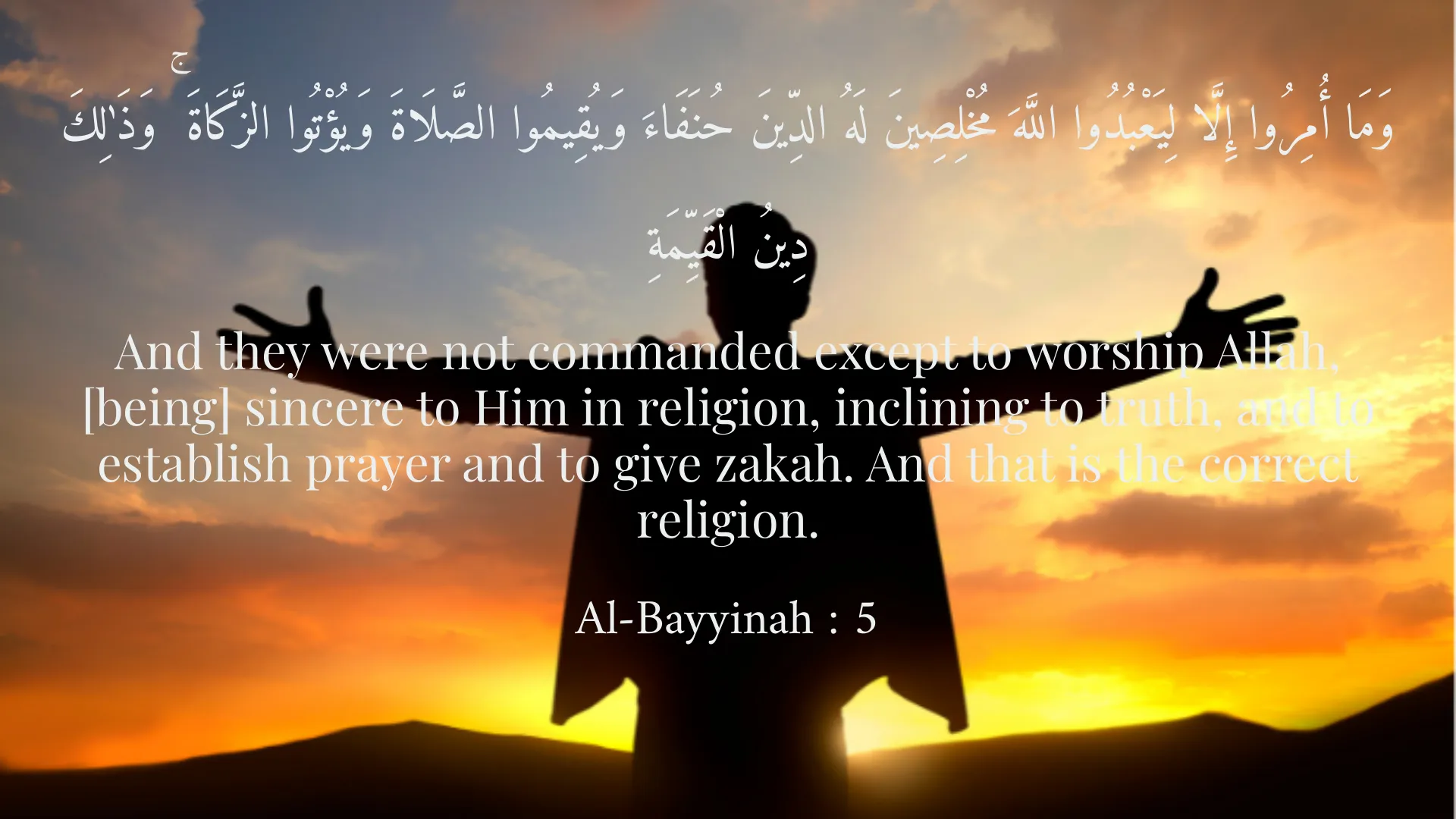
وَمَا أُمِرُوا إِلَّا لِيَعْبُدُوا اللَّهَ مُخْلِصِينَ لَهُ الدِّينَ حُنَفَاءَ وَيُقِيمُوا الصَّلَاةَ وَيُؤْتُوا الزَّكَاةَ ۚ وَذَٰلِكَ دِينُ الْقَيِّمَةِ
And they were not commanded except to worship Allah, [being] sincere to Him in religion, inclining to truth, and to establish prayer and to give zakah. And that is the correct religion.
Al-Bayyinah : 5
لَن يَنَالَ اللَّهَ لُحُومُهَا وَلَا دِمَاؤُهَا وَلَٰكِن يَنَالُهُ التَّقْوَىٰ مِنكُمْ ۚ كَذَٰلِكَ سَخَّرَهَا لَكُمْ لِتُكَبِّرُوا اللَّهَ عَلَىٰ مَا هَدَاكُمْ ۗ وَبَشِّرِ الْمُحْسِنِينَ
Their meat will not reach Allah, nor will their blood, but what reaches Him is your piety. Thus have We subjected them to you that you may glorify Allah for that which He has guided you; and give good tidings to the doers of good.
Al-Hajj : 37
يَوْمَ لَا يَنفَعُ مَالٌ وَلَا بَنُونَ
The Day when neither wealth nor sons will benefit,
Ash-Shu'ara : 88
إِلَّا مَنْ أَتَى اللَّهَ بِقَلْبٍ سَلِيمٍ
But only he who comes to Allah with a sound heart.
Ash-Shu'ara : 89
Short Story
It is narrated that in ancient times, there was an ascetic who constantly presented himself in rough, worn clothes and loudly recited devotions in the marketplaces so that people would be aware of his piety. One day, a wise Sheikh passed by and saw the ascetic cast a disdainful look at a wealthy merchant, clad in expensive garments, who was engaged in trade. The Sheikh approached the ascetic and said: "O brother, you adorn your outward appearance greatly to deceive people into believing in your piety, but your inner self is filled with pride, and your heart is heedless of true remembrance. That merchant, though dressed in worldly attire, might have a heart trembling more for God and an intention purer in his lawful earnings. Sa'di says: 'Among those dressed in dervish cloaks and outwardly adorned caps, how would you know whose true essence lies within?' The truth of faith is not in the cloak or the turban, but in the sincerity of intention and purity of heart. Let us not merely look at the exterior and neglect the essence, for God looks at hearts, not at faces." The ascetic was awakened by these words and realized that he had wasted years of his life in the trap of superficiality. From then on, he began to purify his inner self and abandoned showing off.