Quranic Answer
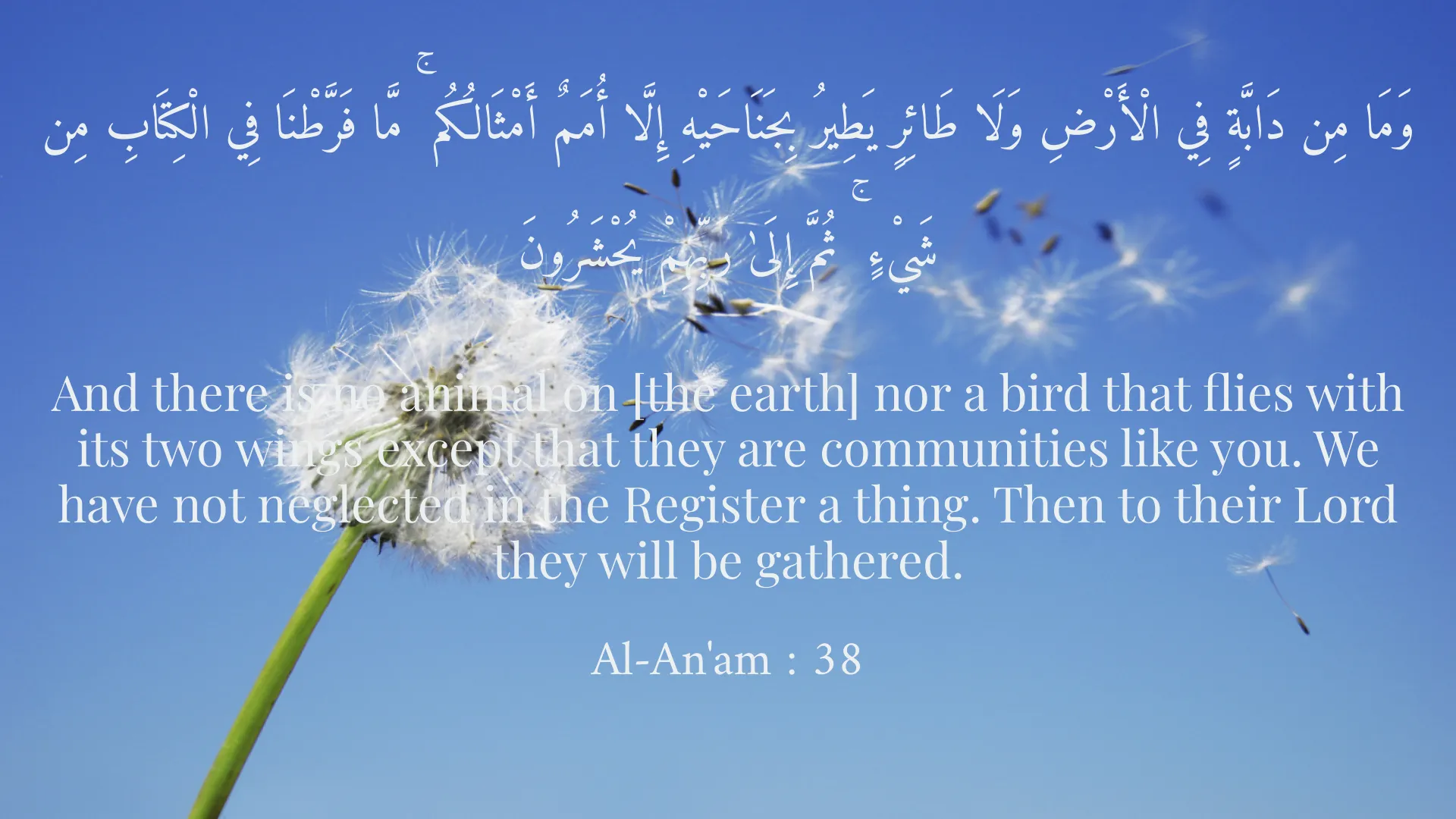
The Holy Quran, as a divine revelation and a comprehensive guide for human life, does not solely address human relationships but also presents a profound and encompassing perspective on all creatures, including animals. In Quranic teachings, animals are not merely objects for human exploitation; rather, they hold an inherent status and value as creations of God. This fundamental viewpoint shapes the core principles of kindness and compassion towards animals in Islam. One of the most significant verses directly addressing this matter is Surah Al-An'am (6:38), which states: "And there is no animal on [the earth] nor a bird that flies with its two wings except that they are communities like you." This blessed verse identifies animals as 'ummah' or 'communities' akin to humans. This expression is deeply profound and meaningful; it implies that animals also possess their own social structures, needs, instincts, and even a form of understanding appropriate to their existence. They, too, glorify God and hold a specific, purposeful place within the cosmic order. This verse teaches humanity to set aside arrogance and superiority, and to interact with other beings with respect and mutual understanding. Consequently, according to this verse, humans bear an ethical responsibility towards animals, as they are also God's creation and a part of the divine artistry that showcases the perfection and beauty of creation. Furthermore, the Holy Quran refers to the functions of animals in human life, stating that God created them for various benefits. In Surah An-Nahl (16:5-8), we read: "And the grazing livestock He has created for you; in them is warmth and [numerous other] benefits, and from them you eat. And for you in them is [the enjoyment of] beauty when you bring them in [from pasture] and when you send them out. And they carry your loads to a land you could not have reached except with difficulty to yourselves. Indeed, your Lord is Kind and Merciful. And [He created] horses, mules and donkeys for you to ride upon and as adornment. And He creates that which you do not know." These verses indicate that animals are tools and means for human comfort and well-being. However, this utility should not lead to abuse. The 'benefits' and 'beauty' mentioned in these verses implicitly mean that humans must utilize animals appropriately and prioritize their health and welfare. From a Quranic perspective, the utilization of animals must be accompanied by gratitude for divine blessings and the observance of their rights. For instance, Islam mandates that animals should not only be protected from harm and abuse but also provided with their basic needs such as water, food, shelter, and medical care. Prophet Muhammad (PBUH), who was the practical interpreter of the Holy Quran, strongly emphasized this aspect of kindness towards animals in numerous traditions (Hadith). Many stories are narrated about him showing compassion to thirsty animals, helping birds whose nests were disturbed, and even forbidding the harming of insects. These narrations demonstrate the depth and breadth of Islamic teachings in this regard. From a Quranic perspective, animals, like humans, are living beings with feelings, and God has assigned each of them a place and a role in the cycle of nature. Surah An-Nur (24:45) states: "And Allah has created every [living] creature from water. And among them are those that crawl on their bellies, and among them are those that walk on two legs, and among them are those that walk on four. Allah creates what He wills; indeed, Allah is over all things competent." This verse illustrates the diversity of animal creation and serves as a reminder of God's infinite power. This diversity and complexity itself testify to the grandeur of creation and invites humans to reflect upon it. Observing animal rights is, in essence, part of humanity's duty as God's khalifah (vicegerent) on Earth. This vicegerency does not imply absolute and unconditional dominion but rather implies trusteeship and responsibility towards all beings. God has appointed humans as His trustees on Earth to protect what He has created and to nurture it for the common good. Another aspect of kindness to animals in the Quran is the avoidance of injustice and oppression. Although the Quran does not explicitly use the term 'animals' as beings to be defended, the overarching principles of 'justice' (adl) and 'excellence' (ihsan) that pervade the entire Quran extend to animals as well. Any form of abuse, torture, excessive exploitation, or senseless killing of animals is a clear manifestation of injustice, which is strongly prohibited in the Quran. Even when slaughtering animals for food consumption, Islam has prescribed specific guidelines to minimize the animal's suffering, such as using a sharp knife and quickly severing the main vessels. These instructions indicate that even when an animal's life is taken, it must be done with compassion and respect. Furthermore, the Holy Quran emphasizes maintaining balance in the consumption of resources, including animals, and prohibits extravagance and waste. This means that humans should not use more animals than necessary or harm them for entertainment or sport. In conclusion, the Holy Quran provides a vast intellectual and ethical framework for kindness towards animals. This framework is built upon monotheism (Tawhid), human responsibility, and a respectful outlook towards all of God's creations. Animals are not only integral to the Earth's ecosystem but also serve as signs (ayat) of divine power, wisdom, and mercy. Upholding their rights and being kind to them is not merely an ethical act but an act of worship and a part of faith in God, carrying otherworldly rewards. In Islamic teachings, even quenching the thirst of an animal can lead to the forgiveness of sins and entry into Paradise, whereas harming an animal can incur divine punishment. This comprehensive perspective guides Muslims towards environmental preservation, protection of animal species, and responsible conduct towards all living beings, which are among the most important goals and ethical values in Quranic and Islamic teachings.
Related Verses
وَمَا مِن دَابَّةٍ فِي الْأَرْضِ وَلَا طَائِرٍ يَطِيرُ بِجَنَاحَيْهِ إِلَّا أُمَمٌ أَمْثَالُكُم ۚ مَّا فَرَّطْنَا فِي الْكِتَابِ مِن شَيْءٍ ۚ ثُمَّ إِلَىٰ رَبِّهِمْ يُحْشَرُونَ
And there is no animal on [the earth] nor a bird that flies with its two wings except that they are communities like you. We have not neglected in the Register a thing. Then to their Lord they will be gathered.
Al-An'am : 38
وَالْأَنْعَامَ خَلَقَهَا لَكُمْ فِيهَا دِفْءٌ وَمَنَافِعُ وَمِنْهَا تَأْكُلُونَ
And the grazing livestock He has created for you; in them is warmth and [numerous other] benefits, and from them you eat.
An-Nahl : 5
وَالْخَيْلَ وَالْبِغَالَ وَالْحَمِيرَ لِتَرْكَبُوهَا وَزِينَةً ۚ وَيَخْلُقُ مَا لَا تَعْلَمُونَ
And [He created] horses, mules and donkeys for you to ride upon and as adornment. And He creates that which you do not know.
An-Nahl : 8
Short Story
It is narrated that one day, a just king was passing through a garden. He saw a youth holding a sparrow in his hand, intending to harm it. The king, with a kind smile, said to him: "Young man, do you find pleasure in harming this weak creature? Release it, so that it may also find freedom." The youth replied: "O King, what value does this sparrow hold that you pay attention to it?" The king said: "Every particle of creation is a sign of divine wisdom, and harming no creature is commendable, let alone a creature that is under God's protection and grace. Release it and know that the reward for kindness is peace of mind and God's pleasure." Moved by these words, the youth released the sparrow and thereafter became known for his kindness to animals. Let us remember that every act of kindness, no matter how small, is a seed of goodness that spreads tranquility in our hearts and in the world.