Quranic Answer
Title: Embracing Forgiveness: The Teachings of the Holy Quran Introduction Forgiveness is a fundamental human desire, yet it remains one of the most challenging themes to grasp and practice in our lives. The Holy Quran, regarded as the final revelation to humanity, provides profound insights into the concept of forgiveness—especially the need to forgive ourselves and to reconcile with our past mistakes. This article will explore the Quranic principles surrounding forgiveness, underscoring the importance of hope in God's mercy, genuine repentance, and healing through compassion. Finding Hope in God's Mercy One of the most powerful aspects of the Quran is the focus on God's infinite mercy. Through verses that resonate with grace and compassion, believers are reminded that no matter how grave their sins may seem, there is always a path toward forgiveness. For instance, in Surah Az-Zumar, verse 53, Allah addresses His servants by stating: 'O My servants who have believed, do not despair of the mercy of Allah. Indeed, Allah forgives all sins.' This statement serves as a beacon of hope, urging believers not to lose their way due to guilt or despair. The emphasis on hope is critical because it fosters an environment conducive to personal growth. It teaches that mistakes are an inherent part of the human experience and that one should never feel that they are beyond redemption. God's promise of forgiveness invites us to confront our wrongdoings instead of being paralyzed by shame. We realize that turning back to Him not only alleviates our burdens but also allows for personal transformation. The Pursuit of Genuine Repentance The Quran strongly advocates for sincere repentance as the key to regaining a clean slate with God. Surah At-Tahreem, verse 8, states: 'O you who have believed, repent to Allah with sincere repentance. Perhaps your Lord will remove from you your misdeeds.' This call for honest reflection urges individuals to embrace an attitude of humility and remorse when seeking forgiveness. Genuine repentance, referred to as 'Tawbah' in Arabic, involves several critical steps—recognition of the sin, expressing sincere remorse, and committing to change one’s behavior. It is not merely a verbal expression but a holistic approach that encompasses one’s mind, heart, and soul. The Quran portrays repentance as a divine gift that not only purifies the soul but also strengthens the bond with the Creator. Furthermore, the Quran acknowledges that every individual is prone to sin, reinforcing the understanding that fallibility is part of the human condition. Therefore, when we seek forgiveness, we must approach it with sincerity, ensuring that our longing for God's mercy is genuine. The Power of Forgiveness Towards Others Forgiveness is not solely an inward reflection; it extends to our relationships with others. Surah An-Nur, verse 31 elaborates on this by emphasizing the importance of attire; it reminds us of the need to apologize and rectify our behavior. Islamic teachings suggest that when we face betrayal or hurt from others, forgiving them is as essential as forgiving ourselves. Forgiveness fosters an environment of compassion, healing, and understanding. In a world filled with conflict and grudges, the teachings of the Quran encourage believers to let go of anger and embrace compassion. By forgiving others, we liberate ourselves from the shackles of resentment and distress, cultivating peace within our hearts. As we become more aware of the need to forgive, we discover the underlying connections that unite humanity, reminding us that we are all striving to find grace within our imperfections. The Psychological and Spiritual Benefits of Forgiveness The act of forgiveness provides immense psychological benefits, supporting emotional well-being and promoting mental health. Holding onto anger and resentment often results in stress, anxiety, and depression. The Quran’s teachings encourage believers to release these negative feelings, which leads to tranquility and ease. When we embrace forgiveness, both towards ourselves and others, we experience a profound psychological shift. It alters our perceptions of past experiences, allowing us to focus on the lessons learned rather than the pain endured. This shift transforms our emotional state and paves the way towards inner peace and contentment. Additionally, the concept of forgiveness in Islam aligns with modern psychological approaches that emphasize the importance of self-compassion. Forgiveness is not an endorsement of wrongdoing; rather, it is a recognition of our shared humanity. By being compassionate with ourselves, we become more equipped to extend that compassion and understanding to others. Conclusion In summary, the Holy Quran provides deeply insightful guidance on the principles of forgiveness. By encouraging hope in God's mercy, promoting sincere repentance, and advocating for compassionate relationships with others, the Quran leads us towards a more fulfilling and peaceful existence. As we embrace these teachings, we learn that our mistakes do not define us. Instead, they provide opportunities for growth, transformation, and deeper connections with ourselves and with others. The path of forgiveness is indeed a challenging journey; however, it is also one that offers profound rewards, leading us ultimately to inner peace and acceptance. As we turn to the Quran for wisdom and strength, let us remember the words of Allah and allow His mercy to envelop us, guiding us towards a life of grace and harmony.
Related Verses
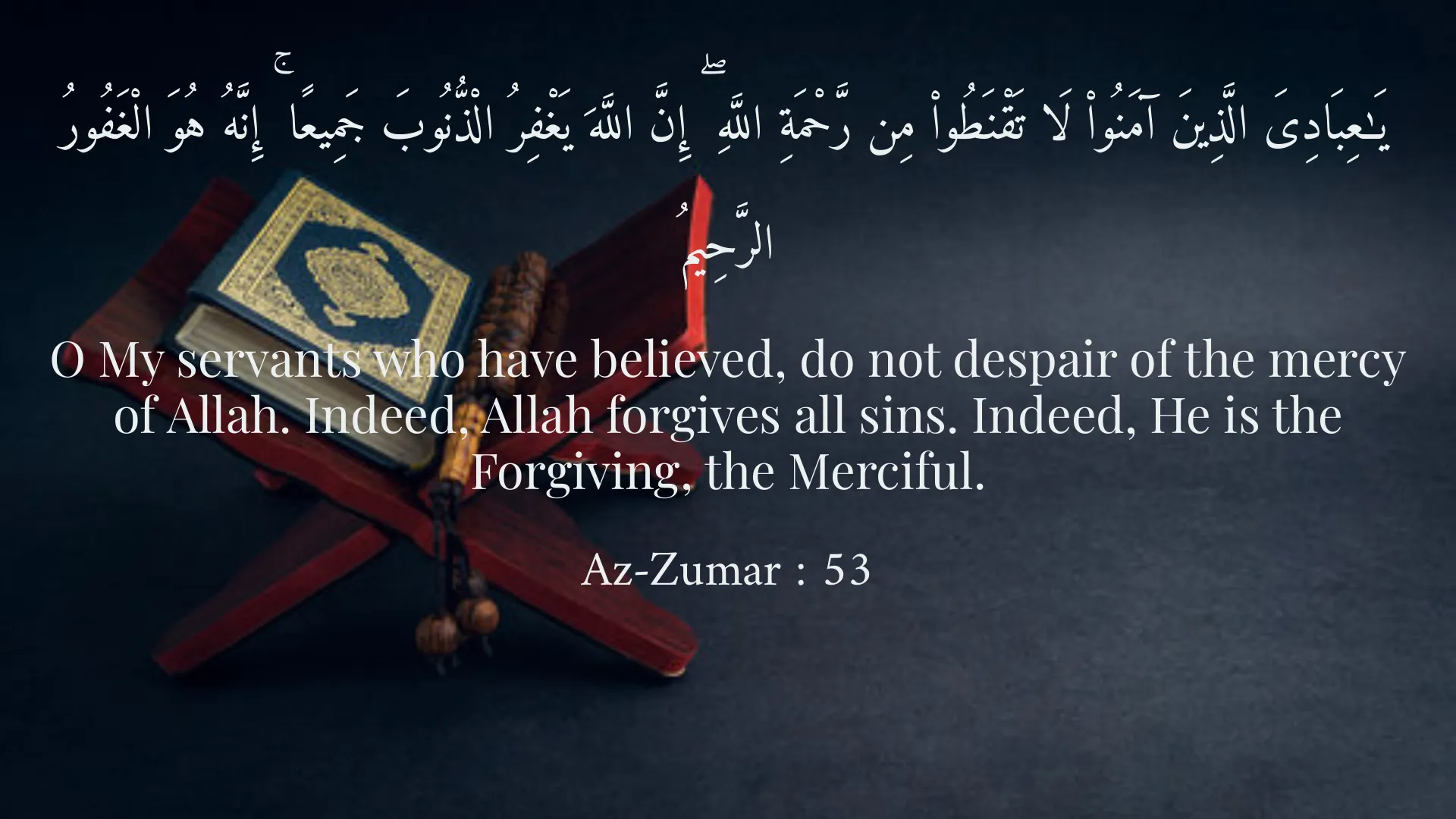
يَـٰعِبَادِىَ الَّذِينَ آمَنُواْ لَا تَقْنَطُواْ مِن رَّحْمَةِ اللَّهِ ۖ إِنَّ اللَّهَ يَغْفِرُ الْذُّنُوبَ جَمِيعًا ۚ إِنَّهُ هُوَ الْغَفُورُ الرَّحِيمُ
O My servants who have believed, do not despair of the mercy of Allah. Indeed, Allah forgives all sins. Indeed, He is the Forgiving, the Merciful.
Az-Zumar : 53
يَـٰأَيُّهَا الَّذِينَ آمَنُواْ تُوبُواْ إِلَى اللَّهِ تَوْبَةً نَّصُوحًا ۚ عَسَى اللَّهُ أَن يُكَفِّرَ عَنكُمْ سَيِّئَاتِكُمْ
O you who have believed, repent to Allah with sincere repentance. Perhaps your Lord will remove from you your misdeeds.
At-Tahreem : 8
وَقُل لِّلْمُؤْمِنَـٰتِ يَغْضُضْنَ مِنْ أَبْصَارِهِنَّ وَيَحْفَظْنَ فُرُوجَهُنَّ وَلَا يُبْدِينَ زِينَتَهُنَّ إِلَّا مَا ظَهَرَ مِنْهَا ۖ وَلْيَضْرِبْنَ بِخُمُرِهِنَّ عَلَى جُيُوبهِنَّ وَلَا يُبْدِينَ زِينَتَهُنَّ إِلَّا لِزَوْجِهِنَّ أَوْ آبَائِهِنَّ أَوْ آبَاءِ أَزْوَاجِهِنَّ أَوْ أَبْنَائِهِنَّ
And tell the believing women to reduce [some] of their vision and guard their private parts and not expose their adornment except that which [ordinarily] appears thereof.
An-Nur : 31
Short Story
Once upon a time, there was a man named Hasan who thought deeply about his sins. Every day he would pray to God to forgive him. One day, he went to a scholar and asked, 'How can I forgive myself?' The scholar replied, 'Through repentance and seeking forgiveness from God.' Hasan returned home and sincerely asked God for forgiveness, deciding to revert to the right path. From that day onwards, Hasan felt peace and happiness.