Quranic Answer
The Holy Quran, regarded by Muslims as the verbatim word of God as revealed to the Prophet Muhammad, is replete with messages of mercy, compassion, and guidance for humanity. Central to these messages is the theme of repentance, a concept that underscores Allah's boundless mercy towards His creation. One of the most profound affirmations of this mercy and the invitation to repentance can be found in Surah Az-Zumar (Chapter 39), verse 53, where Allah states: 'Say, O My servants who have believed, fear your Lord. For those who do good in this world is good, and the earth of Allah is spacious. Indeed, the patient will be given their reward without account.' Through this verse, Allah encourages His believers to acknowledge His sovereignty while also reassuring them that His mercy and goodness are available to those who engage in righteous deeds. The verse serves as an invitation to all believers, affirming that no individual, regardless of the enormity of their sins, is beyond the reach of Allah's mercy. The essence of repentance in Islam is encapsulated in the concept of regret and the sincere intent to return to Allah. This acknowledges the inevitability of human fallibility, yet it emphasizes the importance of taking proactive steps towards spiritual redemption. Moreover, the Quran continually stresses that the door of repentance remains open until the moment of death. In Surah Al-Baqarah (Chapter 2), verse 160, Allah warns of the consequences of disbelief: 'Indeed, those who disbelieve and die while they are disbelievers – it is they who will be the companions of the Fire; they will abide therein eternally.' This stark reminder serves as a critical reflection on the consequences of negligence towards sin and disbelief. While acknowledging the severe repercussions faced by those who die in a state of disbelief, the wider context of the Quran conveys the potential for redemption and the importance of repentance. Repentance (Tawbah) signifies turning back to Allah with sincere remorse for past wrongdoings and a commitment to reform one’s actions moving forward. In Islam, Tawbah is often described as a pathway to reclaiming Allah's love and acceptance. The act of repenting is not merely a ritual but a profound transformation of the heart and mind. It indicates a conscious decision to abandon sinful ways and seek solace and forgiveness from the Creator who understands human flaws. The Quran illustrates that Allah’s mercy is not just inherent but also unconditional for those who sincerely seek it. The divine promise that if His servants return to Him with genuine contrition in their hearts, He will forgive them is a testament to His unparalleled compassion. Allah states in Surah Al-Furqan (25:70): 'Except for those who repent, believe and do righteousness. For them Allah will replace their evil deeds with good. And ever is Allah Forgiving and Merciful.' This emphasizes that sincere repentance not only results in the forgiveness of sins but acts as a catalyst for transformation, where evil deeds could be turned into good, reflecting the limitless opportunities for success in this life and the hereafter. Moreover, the Quran emphasizes the significance of patience and perseverance when it comes to seeking forgiveness. In Surah Az-Zumar (39:10), it is stated: 'Say, 'O My servants who have believed, fear your Lord. For those who do good in this world is good, and the earth of Allah is spacious. Indeed, the patient will be given their reward without account.' Here, believers are invited to practice patience, knowing that the rewards in doing good in this world and the hereafter are abundant, especially when they remain steadfast in their faith and intentions. Furthermore, the disposition of Allah towards His servants is beautifully encapsulated in numerous hadiths (sayings of the Prophet Muhammad). One such prophetic saying reveals that Allah’s mercy surpasses even that of a mother towards her child. This profound metaphor serves to remind believers that God's compassion and willingness to forgive exceed our understanding of love and mercy. Thus, this concept should inspire individuals to cultivate a sincere and profound relationship with Allah, characterized by humility, gratitude, and an earnest desire for forgiveness. The cycle of sin and repentance is inherent in the human experience, and it is essential for believers to recognize that such experiences are a part of their spiritual journey. The acknowledgment of mistakes and shortcomings is crucial as it fosters a deeper appreciation of Allah's mercy and love. The Quran illustrates that each individual is accountable for their actions, and repentance is an avenue towards spiritual rectitude and reconciliation with Allah. Despite the challenges that come with acknowledging one's wrongdoings, the invitation to turn back to Allah is always there, regardless of how distant someone may feel. This message resonates throughout the Quran and is a source of immense hope for believers facing their struggles with sin. The belief that no sin can ultimately alienate a person from Allah’s mercy should encourage individuals to embark on a path of repentance, assurance, and spiritual rejuvenation. In conclusion, the themes of mercy and repentance within the Holy Quran serve as guiding principles for believers to navigate the complexities of their lives. The constant reminder that Allah remains accessible and forgiving provides a deeply reassuring foundation for spiritual growth. As such, the practice of repentance is not merely a reaction to sin but a proactive engagement with the Divine. By returning to Allah with sincere hearts, believers can experience transformation, recommit to a life of righteousness, and deepen their connection with their Creator. Ultimately, the Quran exemplifies that mercy is a core attribute of Allah, inviting His servants to seek Him, repent, and embrace His infinite love and compassion.
Related Verses
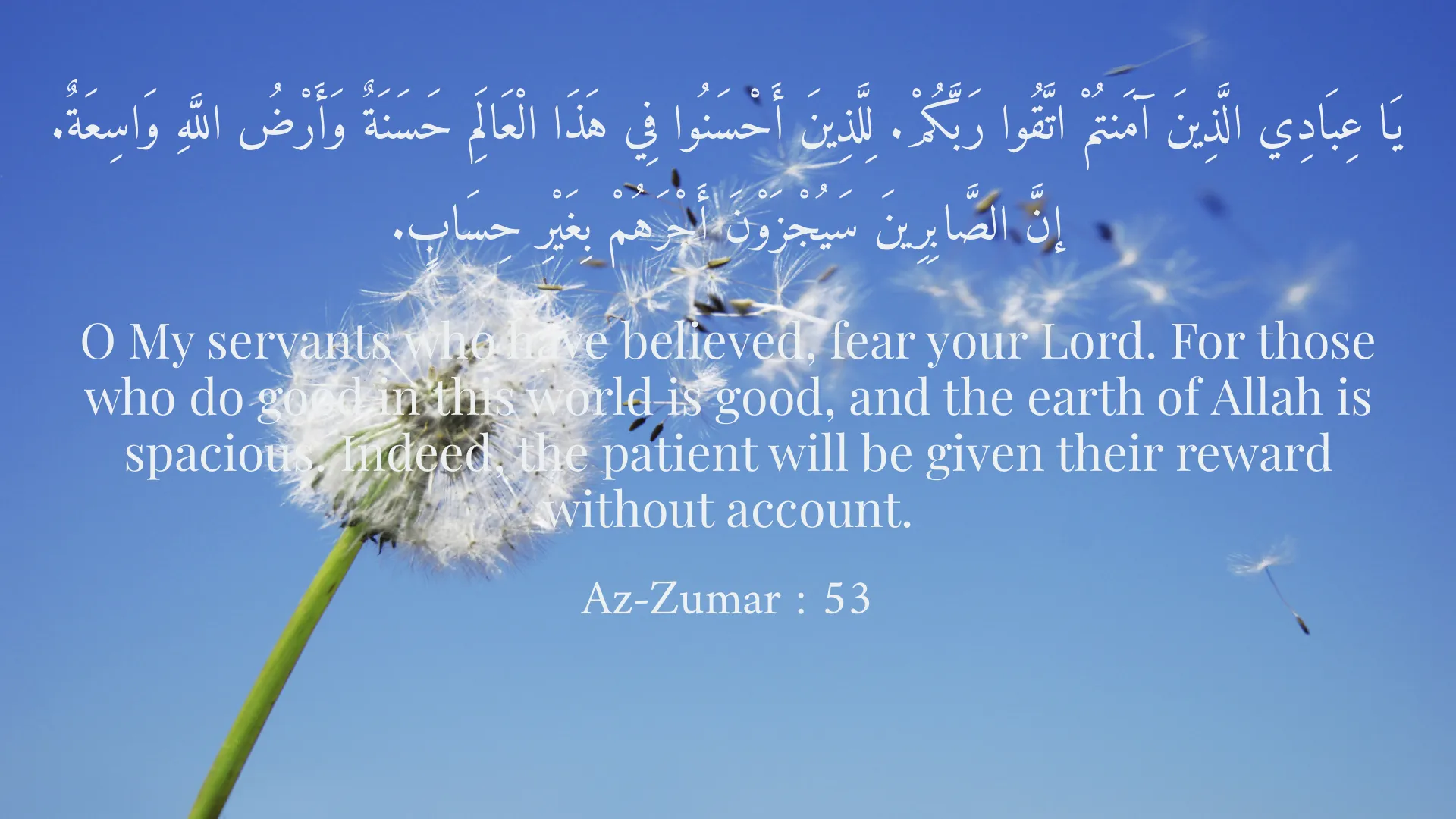
يَا عِبَادِي الَّذِينَ آمَنتُمْ اتَّقُوا رَبَّكُمْ. لِلَّذِينَ أَحْسَنُوا فِي هَذَا الْعَالَمِ حَسَنَةٌ وَأَرْضُ اللَّهِ وَاسِعَةٌ. إنَّ الصَّابِرِينَ سَيُجْزَوْنَ أَجْرَهُمْ بِغَيْرِ حِسَابٍ.
O My servants who have believed, fear your Lord. For those who do good in this world is good, and the earth of Allah is spacious. Indeed, the patient will be given their reward without account.
Az-Zumar : 53
إِنَّ الَّذِينَ كَفَرُوا وَمَاتُوا وَهُمْ كُفَّارٌ أُو۟لَـٰئِكَ هُمْ شَرُّ ٱلْبَرِيَّةِ.
Indeed, those who disbelieve and die while they are disbelievers – it is they who will be the companions of the Fire; they will abide therein eternally.
Al-Baqarah : 160
Short Story
One day, Ali, a young teenager, went to the mosque with a heavy heart and asked Allah for forgiveness. He felt there was a delay in his life's path. After prayer, a local cleric noticed his state and talked to him. The cleric said, 'My son, the Quran says that Allah has kept the door open for repentance, and we must remain hopeful for His mercy.' These words touched Ali's heart, and he decided to return to the right path. From then on, he tried to engage in good deeds and refrain from sins. With his repentance, Ali discovered that his life felt remarkably transformed, and he looked to the future with greater peace.