Quranic Answer
In the profound teachings of the Holy Quran, the relationship between doubt and faith is a fundamental and complex topic addressed with exquisite wisdom and subtlety. Faith (Iman) linguistically means heartfelt affirmation and tranquility, and in Quranic terminology, it signifies the sincere conviction in the existence of the One God, His prophets, divine scriptures, angels, the Day of Judgment, and divine decree, accompanied by verbal affirmation and adherence to the pillars of religion. Faith is a state of certainty and assurance that encompasses the human heart and soul, liberating one from confusion and hesitation. Conversely, doubt (Shakk) means uncertainty, indecision, or being suspended between two states, where one cannot attain conviction in either. The Quran addresses both aspects of doubt – both constructive and destructive doubt. The Quran categorizes doubt into two main types: doubt that seeks truth and doubt that is contentious. Doubt that seeks truth is a state where an individual is in pursuit of deeper answers and strives to reach higher levels of certainty. This type of doubt is not only permissible but can also be a catalyst for contemplation, reflection, and inquiry, ultimately leading to a deeper and more steadfast faith. A prominent example of this doubt can be observed in the story of Prophet Abraham (peace be upon him) in Surah Al-Baqarah, verse 260. When Abraham asks Allah to show him how He resurrects the dead, Allah asks him: “Have you not believed?” And he replies: “Yes, but [I ask] only that my heart may be satisfied.” This request from Abraham was not out of doubt in Allah’s power, but from a desire to attain 'Ayn al-Yaqeen' (experiential and observational certainty) so that his heart might achieve the utmost peace and assurance. This illustrates that in the path of faith, seeking truth and striving for heartfelt certainty and deeper insight is not only permissible but also among the distinguished attributes of God’s chosen servants. The Quran, by presenting 'Ayat' (signs) in the horizons and within human souls, invites humanity to reflect and ponder so that they may discover the truth for themselves and dispel doubt from their hearts. These signs include not only natural and cosmic phenomena but also the Quran itself and the history of past nations, all of which are indications of Allah’s power, wisdom, and existence. This insight helps people understand that existence has order and purpose, and this order and purpose are the work of a wise Creator, not mere coincidence or accident. In contrast, the Quran strongly condemns contentious and stubborn doubt. This type of doubt does not stem from ignorance but from arrogance, obstinacy, and the deliberate disregard of truth. Such doubt often resides in the hearts of disbelievers and hypocrites. The Quran describes these individuals as those who, despite clear proofs and miracles, stubbornly persist in their skepticism and denial. In Surah Al-Baqarah, verse 2, we read: “That is the Book about which there is no doubt, a guidance for the righteous.” This verse clearly states that the Quran is a perfect truth, free from any doubt or uncertainty, and any doubt about it comes from those who are not seeking guidance or whose hearts are diseased. This doubt prevents the understanding of truth and the acceptance of divine guidance, keeping individuals in error and darkness. This doubt not only leads to disbelief but can also result in hypocrisy (nifaq), where a person appears to be a believer outwardly but harbors a heart full of doubt and spiritual sickness inwardly. In Surah Yunus, verse 94, Allah says to the Prophet Muhammad (peace be upon him): “So if you are in doubt, [O Muhammad], about that which We have revealed to you, then ask those who have recited the Book before you. The truth has certainly come to you from your Lord, so never be among the doubters.” This verse, besides emphasizing the truth of the Quran, also points to the way to dispel doubt: consulting people of knowledge and predecessors, and using intellect and reason to reach certainty. However, in the context of the Prophet (PBUH), this verse is more emphatic, intended for the primary audience (the Meccan polytheists) to remind them that even if, hypothetically, the Prophet himself had doubts, he could have referred to earlier scriptures and found the truth. This indicates that the path to truth is always open, and contentious doubt has no recourse but willful disregard. The Quran offers several methods for transitioning from doubt to firm faith: 1. Contemplation of the Cosmic and Inner Signs (Ayat Afaqi and Anfusi): The Quran continuously invites humanity to reflect on the creation of the heavens and the earth, the alternation of night and day, the movement of stars, the growth of plants, the cycle of life and death, and also the creation of human beings themselves (inner signs). This contemplation removes veils of ignorance and heedlessness from one’s vision, guiding humanity to the Creator’s majesty and the wondrous order of the universe, thus increasing heartfelt conviction. Observing these signs and reflecting upon them elevates one from 'Ilm al-Yaqeen' (certainty through knowledge and evidence) to 'Ayn al-Yaqeen' (certainty through direct observation and insight) and even 'Haqq al-Yaqeen' (experiential certainty through immersion in truth). This process is the foundation of any deep and lasting faith. 2. Study and Reflection on the Holy Quran: The Quran itself is the greatest miracle and an undeniable guide. Its decisive tone, comprehensive laws, absence of contradictions, precise prophecies, and profound impact on the soul and society all serve as proofs of its truthfulness. Reciting with contemplation, understanding its meanings, and acting upon its injunctions eradicates doubt and firmly roots faith in the heart. The Quran presents itself as an illuminating book that unveils secrets for those who seek truth. 3. Reflection on the History of Past Nations: The Quran recounts the detailed stories of prophets and previous peoples to offer lessons and insight to humanity. Witnessing the triumph of truth over falsehood, and the consequences of disbelief and skepticism, strengthens faith and dispels the whispers of doubt. These narratives provide models for steadfastness and lessons for avoiding deviation. 4. Purification of the Soul (Tazkiyah al-Nafs): A heart contaminated by sin, arrogance, and worldly desires becomes a breeding ground for doubt and hesitation. The Quran emphasizes self-purification, acts of worship, remembrance of God (dhikr), and abstaining from sins so that the heart may be cleansed and the light of faith can shine within it. When the human heart is polished through piety and good deeds, it becomes more receptive to understanding unseen realities and attaining certainty. This purification removes inner obstacles and paves the way for receiving divine inspirations. 5. Patience and Steadfastness (Sabr and Istiqamah): The path of faith, especially when encountering ambiguities and temptations, requires patience and steadfastness. The Quran invites believers to persevere in the path of truth and rely on Allah so that they may be protected from straying into skepticism. Faith is a process and requires persistence in the face of intellectual and spiritual challenges. 6. Association with the Community of Believers: Being present among believers, acquiring knowledge from righteous scholars, and benefiting from the support and solidarity of the Islamic community are also effective in strengthening faith and dispelling doubt. A spiritual environment and the presence of faithful role models significantly help individuals overcome their uncertainties. In conclusion, the Holy Quran acknowledges doubt as a human phenomenon and provides guidance for those who seek truth out of genuine inquiry, enabling them to reach certainty and inner peace through reflection, investigation, and engagement with divine signs. However, it strongly condemns contentious and stubborn doubt, as this type of doubt acts as a barrier that deprives individuals of guidance and sickens the heart. Therefore, the relationship between doubt and faith in the Quran is dynamic; doubt can be a bridge to deeper faith, provided that it is pursued with pure intention and by utilizing the cognitive and spiritual tools provided by the Quran to move towards certainty. The ultimate goal is to achieve 'Yaqeen', which fills the heart with tranquility and assurance, protecting humanity from worldly fluctuations and devilish whispers. This certainty is not merely an intellectual state but an existential experience that encompasses all dimensions of human existence, guiding one toward sincere servitude and human perfection.
Related Verses
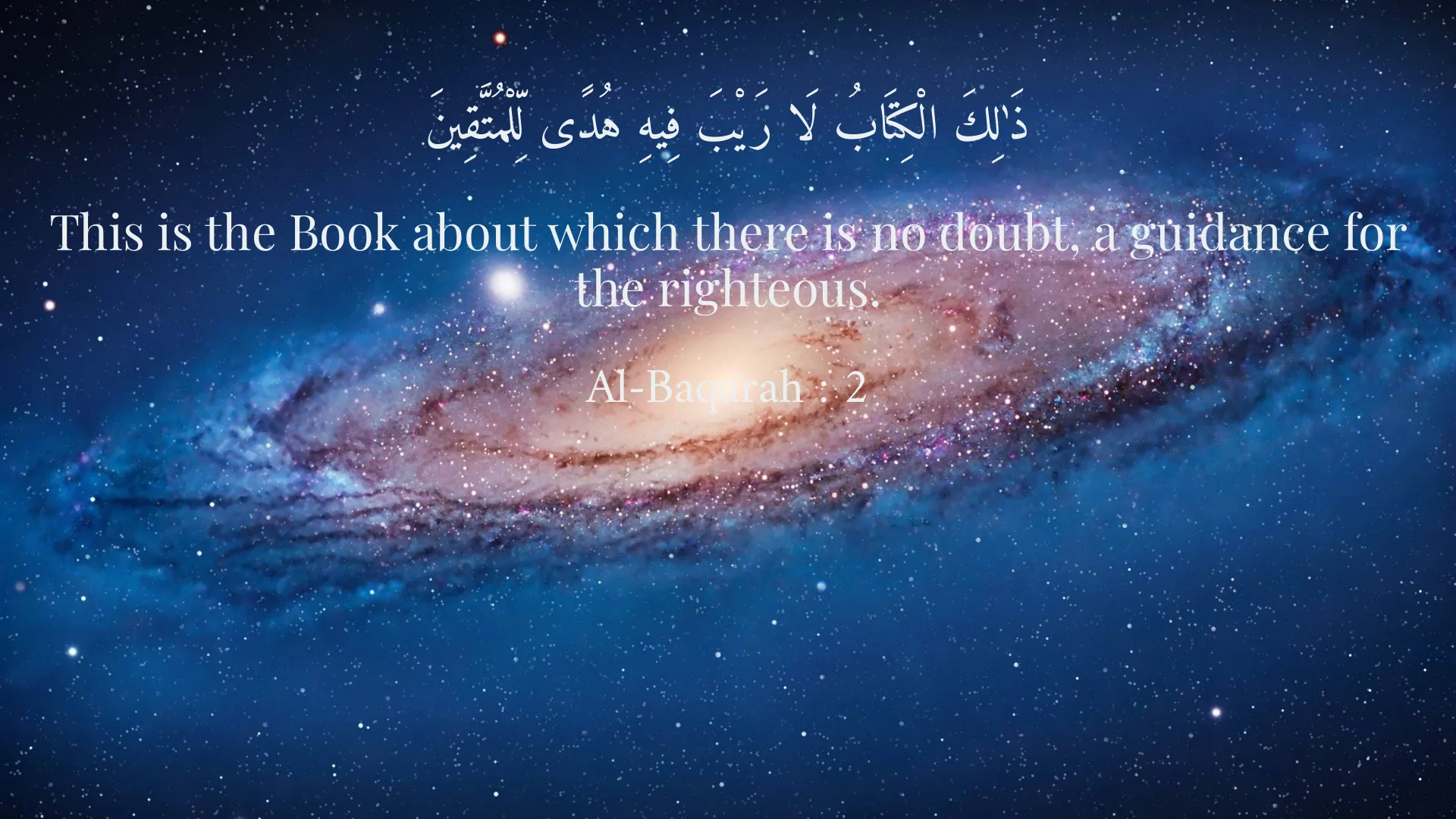
ذَٰلِكَ الْكِتَابُ لَا رَيْبَ فِيهِ هُدًى لِّلْمُتَّقِينَ
This is the Book about which there is no doubt, a guidance for the righteous.
Al-Baqarah : 2
فَإِن كُنتَ فِي شَكٍّ مِّمَّا أَنزَلْنَا إِلَيْكَ فَاسْأَلِ الَّذِينَ يَقْرَءُونَ الْكِتَابَ مِن قَبْلِكَ ۚ لَقَدْ جَاءَكَ الْحَقُّ مِن رَّبِّكَ فَلَا تَكُونَنَّ مِنَ الْمُمْتَرِينَ
So if you are in doubt, [O Muhammad], about that which We have revealed to you, then ask those who have recited the Book before you. The truth has certainly come to you from your Lord, so never be among the doubters.
Yunus : 94
وَإِذْ قَالَ إِبْرَاهِيمُ رَبِّ أَرِنِي كَيْفَ تُحْيِي الْمَوْتَىٰ ۖ قَالَ أَوَلَمْ تُؤْمِن ۖ قَالَ بَلَىٰ وَلَٰكِن لِّيَطْمَئِنَّ قَلْبِي ۗ قَالَ فَخُذْ أَرْبَعَةً مِّنَ الطَّيْرِ فَصُرْهُنَّ إِلَيْكَ ثُمَّ اجْعَلْ عَلَىٰ كُلِّ جَبَلٍ مِّنْهُنَّ جُزْءًا ثُمَّ ادْعُهُنَّ يَأْتِينَكَ سَعْيًا ۚ وَاعْلَمْ أَنَّ اللَّهَ عَزِيزٌ حَكِيمٌ
And [mention] when Abraham said, 'My Lord, show me how You give life to the dead.' [Allah] said, 'Have you not believed?' He said, 'Yes, but [I ask] only that my heart may be satisfied.' [Allah] said, 'Then take four birds and familiarize them with you, then put on every hill a portion of them; then call them, they will come to you in haste. And know that Allah is Exalted in Might and Wise.'
Al-Baqarah : 260
Short Story
They tell a tale of a wealthy merchant who lived with a heart full of anxiety. Every morning, he began his day with calculations and until evening, he was submerged in a whirlpool of "what ifs" and "perhaps nots." Consequently, his heart was full of worry, and he harbored doubts about whether his tomorrow would be better than his today. One day, a dervish who lived contentedly with little and possessed a tranquil heart, observed him in such distress. He asked, "O Master, you have all this wealth and fortune, so why this anxiety and agitation? Does not prosperity bring peace?" The merchant sighed and replied, "Where is peace? My wealth grows day by day, but my fear of losing it also increases. I doubt whether this wealth will last or not; will I one day become poor? This doubt has robbed sleep from my eyes and taken away the sweetness of life." The dervish smiled gently and said, "My friend, the difference between doubt and faith lies precisely here. Consider a bird that takes flight from its nest every morning, without knowing where its sustenance will come from. Yet, with complete certainty in the Provider, it flies with trust and never returns hungry. In its ignorance of the future, with certainty in Divine providence, it has found peace. But he who counts every grain a thousand times and doubts his own calculations, experiences only anxiety and inner poverty." The merchant was brought to his senses by the dervish's words and realized that peace was not in the abundance of wealth, but in the certainty of the heart and reliance on the Creator. His doubt had made him poor in a world of plenty, while the dervish, with certainty, had achieved inner richness in apparent poverty.