Quranic Answer
In today's interconnected world, where diversity in cultures, thoughts, and ethical perspectives is increasingly evident, the question of how to interact with individuals who hold different ethical views from our own has gained significant importance. The pristine religion of Islam, with its rich and comprehensive teachings, provides clear guidance in this regard. These directives not only help preserve human dignity but also pave the way for peaceful coexistence and even positive influence on others. The Holy Quran and the Sunnah (traditions) of Prophet Muhammad (peace be upon him) teach us how our conduct should be based on divine and human principles, even in the face of profound differences. 1. The Principles of Justice and Benevolence: Cornerstones of Interaction The foremost and most crucial principle that the Quran sets forth concerning dealing with others, regardless of their beliefs or ethics, is "justice" (adl) and "benevolence" (ihsan). Allah states in Surah Al-Mumtahanah (60:8): "Allah does not forbid you from those who do not fight you because of religion and do not expel you from your homes - from being righteous toward them and acting justly toward them. Indeed, Allah loves those who act justly." This verse explicitly demonstrates that even with non-Muslims who bear no hostility towards us, we must act with kindness and justice. Birr signifies absolute goodness, akin to the way one treats their parents, and Qist means establishing justice and fairness. This implies that even if someone differs from us ethically or religiously, it is their right to be treated with justice, and if possible, kindness and love should also extend to them. This approach is the fundamental basis for interaction in a pluralistic society, opening the door for mutual respect. Islam never permits Muslims to deviate from the principles of justice and fairness due to ethical or religious differences. This highlights the universality and inclusiveness of Islamic ethical teachings, stressing that our moral obligations extend beyond our immediate community to all of humanity. 2. Tolerance and No Compulsion in Religion One of the most significant Quranic principles for interacting with non-Muslims and individuals with differing viewpoints is the principle of "La Ikraha fid-Din" (There is no compulsion in religion), found in Surah Al-Baqarah (2:256). This principle not only implies no compulsion in accepting the faith but also signifies no imposition of personal views and ethics. Our duty is to articulate our values with wisdom and logical reasoning, but we do not have the right to force anyone to accept them. This approach emphasizes respect for human choice and free will, preventing unnecessary conflicts. When we encounter someone whose ethics differ from ours, we must remember that our duty is not to force hearts to change, but to exemplify the best aspects of Islamic ethics and to invite others with gentle speech and wisdom. Insisting on immediate conversion or change often leads to resistance and alienation, producing counterproductive results. Understanding this divine decree frees us from the burden of coercing others, allowing us to focus on our own character and the quality of our message. 3. Repelling Evil with Good: Exemplary Ethics in Challenges The Holy Quran provides a practical and effective strategy for dealing with ill-treatment and irritating differences. In Surah Fussilat (41:34), it states: "And not equal are the good deed and the bad. Repel [evil] with that which is better; then abruptly the one whom between you and him is enmity will become as though he was a devoted friend." This verse indicates that the best response to evil is goodness. When someone acts unethically towards us or holds inappropriate views that bother us, reciprocating with the same negativity only fuels the fire of animosity. However, if we respond with patience, forgiveness, forbearance, and good conduct, we can soften hearts and even transform enmity into friendship. This requires a very high degree of self-restraint and self-control, but the outcome will be astonishing and lasting. This educational and ethical approach not only helps maintain inner peace for the Muslim individual but also presents a beautiful and impactful image of Islam. It is a proactive stance, where one consciously chooses to elevate the interaction above the level of provocation, demonstrating moral strength and conviction. 4. Inviting with Wisdom and Good Admonition If our intention is to guide or ethically reform an individual, the Quran shows the way in Surah An-Nahl (16:125): "Invite to the way of your Lord with wisdom and good instruction, and argue with them in a way that is best." Hikmah (wisdom) means speaking appropriately for the context, understanding the audience, using strong logic and sound reasoning. Maw'izah Hasanah (good instruction/admonition) means advising with compassion, gentle language, and without blame or humiliation. Jidal Ahsan (arguing in a way that is best) refers to conducting discussions and debates in the best manner, without insult, mockery, and with the goal of seeking truth, not merely triumphing over an opponent. This method of interaction preserves mutual respect and provides the necessary space for listening and understanding. In confronting ethical differences, we must never adopt a condescending or superior tone. Instead, we should humbly and sincerely present the best teachings. Even if we cannot change someone's beliefs, we can at least bring them closer to the human and ethical values of Islam through our excellent character. This approach fosters an environment of dialogue rather than confrontation, making it more likely for positive influence to occur. 5. Upholding One's Principles and Identity While tolerance and good conduct are emphasized, Islam never implies indifference to one's own ethical and religious principles. In Surah Al-Kafirun (109:6), it states: "To you your religion, and to me mine." This verse establishes a clear ideological boundary. While respecting differences, we must adhere to our own ethical and value principles and never sacrifice them for the sake of coexistence. This means that we should not remain silent or approve of unethical behaviors that contradict our religious and human principles. Instead, while observing the aforementioned principles (wisdom, good admonition, and best argumentation), we should express our stance and avoid deviations. We can interact with people of different ethics and even be friends, but this friendship should not mean accepting or condoning actions that we consider wrong. Social interaction does not mean dissolving into the dominant culture and ethics but establishing constructive communication based on mutual respect and maintaining independent identity. It is a delicate balance that requires discernment and conviction, ensuring that while we are open to others, we remain firm in our own convictions. Conclusion: Interacting with individuals who hold different ethical views is both an art and a divine obligation, requiring patience, insight, and adherence to Quranic teachings. Islam teaches us to interact with others through justice and benevolence, tolerance and non-compulsion, repelling evil with good, inviting with wisdom and good admonition, while simultaneously preserving our own ethical identity and principles. This approach not only helps maintain individual and social peace but also opens the way for disseminating the ethical message of Islam through action, not merely words. Ultimately, our intention in every interaction should be to seek divine pleasure, for Allah is most knowing of who is guided and who has strayed. By adopting this approach, we can build strong bridges of communication and leave a lasting, positive impact on those around us.
Related Verses
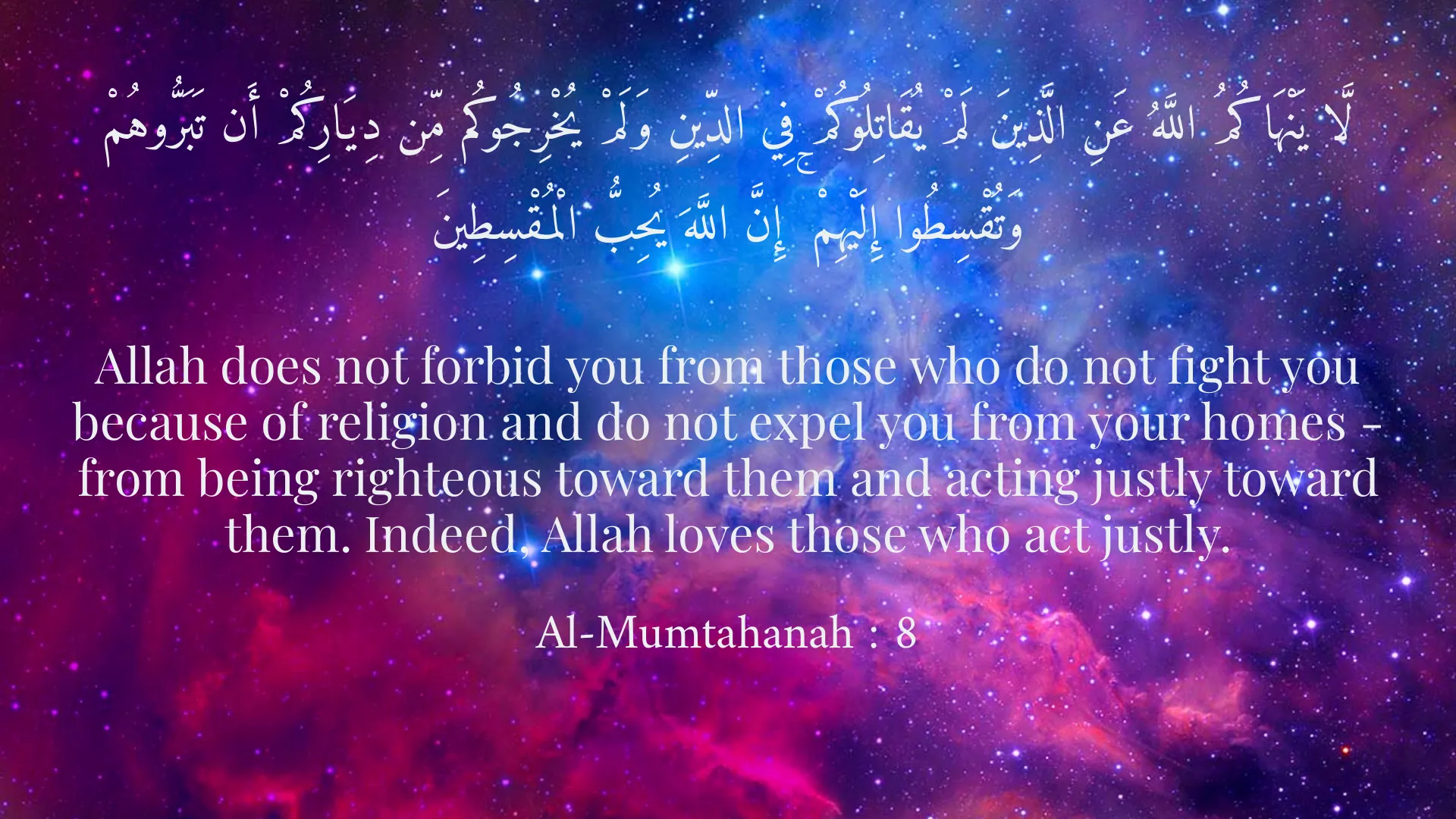
لَّا يَنْهَاكُمُ اللَّهُ عَنِ الَّذِينَ لَمْ يُقَاتِلُوكُمْ فِي الدِّينِ وَلَمْ يُخْرِجُوكُم مِّن دِيَارِكُمْ أَن تَبَرُّوهُمْ وَتُقْسِطُوا إِلَيْهِمْ ۚ إِنَّ اللَّهَ يُحِبُّ الْمُقْسِطِينَ
Allah does not forbid you from those who do not fight you because of religion and do not expel you from your homes - from being righteous toward them and acting justly toward them. Indeed, Allah loves those who act justly.
Al-Mumtahanah : 8
وَلَا تَسْتَوِي الْحَسَنَةُ وَلَا السَّيِّئَةُ ۚ ادْفَعْ بِالَّتِي هِيَ أَحْسَنُ فَإِذَا الَّذِي بَيْنَكَ وَبَيْنَهُ عَدَاوَةٌ كَأَنَّهُ وَلِيٌّ حَمِيمٌ
And not equal are the good deed and the bad. Repel [evil] with that which is better; then abruptly the one whom between you and him is enmity will become as though he was a devoted friend.
Fussilat : 34
ادْعُ إِلَىٰ سَبِيلِ رَبِّكَ بِالْحِكْمَةِ وَالْمَوْعِظَةِ الْحَسَنَةِ ۖ وَجَادِلْهُم بِالَّتِي هِيَ أَحْسَنُ ۚ إِنَّ رَبَّكَ هُوَ أَعْلَمُ بِمَن ضَلَّ عَن سَبِيلِهِ وَهُوَ أَعْلَمُ بِالْمُهْتَدِينَ
Invite to the way of your Lord with wisdom and good instruction, and argue with them in a way that is best. Indeed, your Lord is most knowing of who has strayed from His way, and He is most knowing of who is [rightly] guided.
An-Nahl : 125
Short Story
It is narrated that one day, an unrefined man entered the assembly of a wise Sheikh and uttered words that were contrary to etiquette and custom, displeasing the Sheikh. The Sheikh's students grew angry and wanted to be harsh with him. But the Sheikh smiled and said: 'O brothers! If we respond to everyone according to their understanding and manners, then what is the difference between us and them? We must speak what is good, whether they hear it or not. Tolerance is better than conflict, and a smile removes a stone from the heart that a thousand shouts cannot.' So, the Sheikh, with a cheerful face and gentle words, advised the man, who was then affected by the Sheikh's words and realized his mistake. The Sheikh said: 'Adding anger to anger ignites the fire further, but with gentleness and benevolence, its sparks can be extinguished.' And so it was that hearts were softened by goodness and patience, not by strife and harshness.