Quranic Answer
The Holy Quran emphasizes steadfastness and patience, especially during times of difficulty and distress. Across its verses, it offers guidance on how to confront life’s challenges and underscores the importance of faith in overcoming adversity. This article seeks to explore crucial themes related to patience and perseverance as articulated in the Quran, with a focus on several pivotal verses. One of the most prominent verses that underscore the need for patience is found in Surah Al-Baqarah (Chapter 2), verse 153, where the believers are instructed to seek help through patience and prayer. The verse reads: "O you who have believed, seek help through patience and prayer. Indeed, Allah is with the patient." This directive establishes a profound connection between patience and prayer, suggesting that turning to Allah during difficult times is paramount. By emphasizing that Allah is "with the patient," it reassures believers that divine support accompanies those who remain steadfast amidst trials. This foundation sets the stage for the understanding that resilience is not merely an individual endeavor but rather a collective one. The importance of community support can provide a source of strength and solidarity when facing personal and communal challenges. Patience, therefore, becomes a tool that not only fosters individual resilience but also nurtures a supportive environment. In times of hardship, believers are reminded of the enduring nature of their trials. Surah Al-Mu'minun (Chapter 23), verse 111 adds depth to this understanding, saying that Allah will grant immense rewards to those who are patient and persevering on His path. The verse reiterates that perseverance is recognized and valued by Allah, highlighting that the trials one faces are part of a larger scheme that tests faith. This idea of testing is central in Islamic theology; it underscores that life’s challenges serve to strengthen the believer’s resolve and fortitude. By framing struggles as a means to attain higher rewards, the Quran cultivates a sense of purpose among the faithful. Each difficulty encountered becomes an opportunity to deepen one’s faith and draw closer to Allah. This perspective not only emboldens individuals but also inspires them to remain committed on their spiritual journeys. Moreover, the cultivation of patience is not limited to spiritual practices; it also encompasses ethical behavior and interpersonal relationships. In Surah Al-Anfal (Chapter 8), verse 46, the Quran emphasizes unity among believers, advising them: "And be not like those who divided and differed after the clear proofs had come to them..." This instruction calls for unity in the face of adversity, encouraging believers to work collaboratively towards common goals rather than allowing internal differences to weaken their resolve. Unity underpins the strength of any community, reinforcing the idea that resilience is not achievable in isolation. Instead, when believers stand together, their collective faith becomes a powerful force against external challenges. The emotional and psychological support garnered from a united community can foster a sense of belonging, ease burdens, and help individuals find comfort amid distress. Furthermore, the principles of patience and unity are timeless and transcendent, addressing challenges that have resonated throughout human history. The message conveyed through these verses serves as a beacon of hope for believers. No matter how daunting life’s obstacles may become, these Quranic teachings serve to remind them that Allah’s support is always present and that they are never alone in their struggles. The assurance that Allah is with those who endure fosters a sense of empowerment and motivates believers to navigate through their challenges with courage and faith. In practical terms, the teachings of the Quran can be implemented in various aspects of life. For instance, contemplating the verse in Surah Al-Baqarah can help individuals in moments of despair to remember to turn to prayer and exercise patience. Establishing regular prayer becomes a means of reconnecting with Allah, providing the spiritual fortitude necessary to endure hardships. Engaging in community service and fostering relationships within the community can also enhance a sense of belonging and support, reinforcing the aspect of unity the Quran encourages. In conclusion, the verses of the Holy Quran provide profound insights into the importance of steadfastness and patience. They liberate believers to understand that challenges are part of life’s journey, equipping them with the tools needed to overcome obstacles. The intertwining of patience, prayer, and unity epitomizes a holistic approach to resilience, illustrating how believers can support each other while enduring the trials set before them. Therefore, in moments of difficulty, turning to these divine principles fosters an environment where faith flourishes, and where the presence of Allah envelops the believer, guiding them through life’s unpredictable tides.
Related Verses
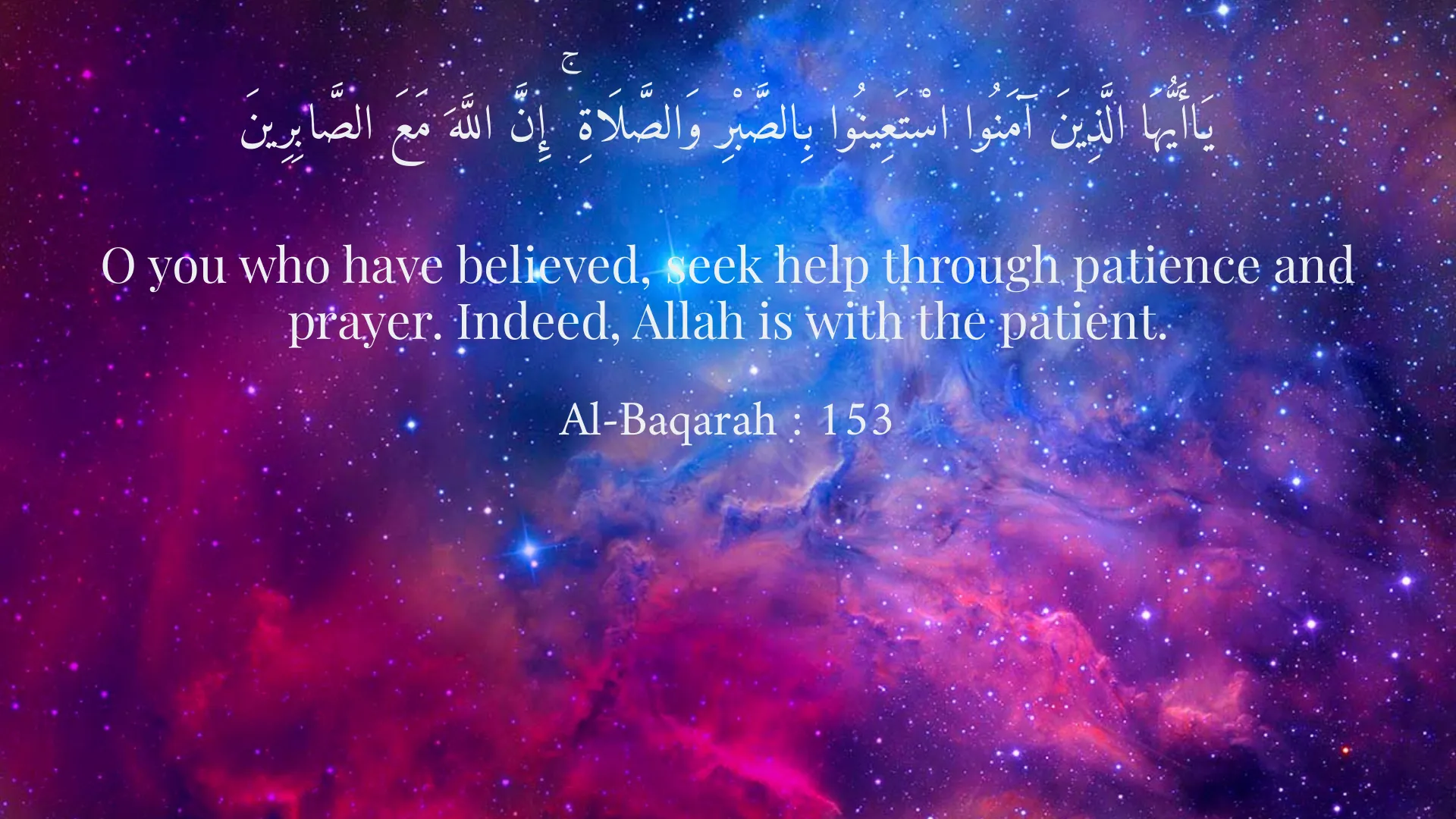
يَاأَيُّهَا الَّذِينَ آمَنُوا اسْتَعِينُوا بِالصَّبْرِ وَالصَّلَاةِ ۚ إِنَّ اللَّهَ مَعَ الصَّابِرِينَ
O you who have believed, seek help through patience and prayer. Indeed, Allah is with the patient.
Al-Baqarah : 153
إِنَّا أَجْرَهُمْ لَا يَضِيعُ.
Indeed, their reward will not be lost.
Al-Mu'minun : 111
وَلاَ تَكُونُوا كَالَّذِينَ تَفَرَّقُوا وَاخْتَلَفُوا مِن بَعْدِ مَا جَاءَهُمُ الْبَيِّنَاتُ...
And be not like those who divided and differed after the clear proofs had come to them...
Al-Anfal : 46
Short Story
One day, Aref was sitting in a temple pondering how he could be steadfast in the face of life's challenges. He recalled the verses of the Quran and understood that patience and prayer could assist him in this regard. He decided to spend more time each day in prayer and supplication, keeping in mind God and His promises when facing challenges. After a while, Aref felt much more at peace and was able to overcome difficulties with ease.