Quranic Answer
The Concept of Enjoining What is Right and Forbidding What is Wrong in the Holy Quran The Holy Quran, the central religious text of Islam, serves as a comprehensive guide for Muslims, providing them with teachings that encompass all aspects of life. Among these teachings, one of the most significant is the emphasis on enjoining what is right and forbidding what is wrong. This principle not only serves as a guideline for individual behavior but also plays a crucial role in shaping the moral framework of society as a whole. ### The Importance of Enjoining What is Right To enjoin what is right means to encourage individuals to engage in good deeds and to promote positive values in the community. This practice is not merely a suggestion but is viewed as a sacred duty in Islam. The Quranic verse from Surah Al-Imran, verse 104, states emphatically: “And let there be [arising] from you a nation inviting to all that is good and advising what is right and forbidding what is wrong.” This divine command serves as a call to action for Muslims, urging them to actively participate in the betterment of society. By enjoining good, believers create an environment that fosters righteousness. Such environments can lead to healthier relationships, improved mental well-being, and a sense of belonging among individuals. For instance, when members of a community come together to encourage acts of charity, honesty, and integrity, they contribute positively to the collective consciousness of society. This, in turn, can help combat social evils like corruption, inequality, and injustice. Moreover, enjoining what is right promotes accountability among community members. Encouraging one another to do good establishes a sense of shared responsibility that can culminate in a more ethical society. The collective effort of individuals striving to promote good can yield fruitful results, leading to a thriving and harmonious community where everyone supports each other in their moral endeavors. ### Forbidding What is Wrong: A Balancing Act On the other hand, forbidding what is wrong is equally vital in maintaining social order and harmony. The concept of forbidding evil reflects the belief that individuals should work to prevent wrongdoing and guide others away from harmful actions. Surah At-Tawbah, verse 71, states: “And the believing men and believing women are allies of one another. They enjoin what is right and forbid what is wrong.” This reinforces the idea that Muslims have a social obligation to look out for one another and address behaviors that deviate from moral and ethical standards. However, it is important to note that forbidding what is wrong should be approached with care, sensitivity, and compassion. It is not enough to merely point out faults or criticize others for their actions. Instead, a more thoughtful and gentle approach can be much more effective in bringing about positive change. Criticism must be accompanied by understanding, kindness, and the willingness to help others improve. For instance, a person seeing a friend engage in unethical behavior might approach them not with anger or condemnation but with empathy. Phrasing their concern in a supportive manner can make it easier for the friend to receive the message and consider changing their behavior. This method fosters an environment of trust wherein individuals feel safe to discuss their shortcomings and seek help without fear of judgment. ### The Role of Wisdom and Respect in Social Responsibility Enjoining what is right and forbidding what is wrong is not only a religious duty but also a profound social responsibility. While these principles are pivotal in the lives of Muslims, they are also applicable in broader societal contexts. Every member of society has a role to play in promoting good and discouraging bad behavior, thus creating a more just and equitable world. The execution of these principles requires wisdom and respect. It is critical to approach discussions about morality and ethics with an open heart and a mindset focused on reconciliation and growth. One effective way to achieve this is through education and awareness. Peaceful dialogue and discussion about values, ethics, and the consequences of wrongdoing can substantially impact public perception and behavior. Furthermore, leaders in the community—be they religious figures, educators, or social organizers—can serve as role models in enjoining good and forbidding evil. Their actions and words can inspire others to follow suit, creating a ripple effect that encourages a culture of moral awareness and responsibility. ### The Impacts of Collective Efforts When individuals and communities commit to enjoining what is right and forbidding what is wrong, they significantly contribute to the establishment of a just society. As Muslims work to support one another in their moral journeys, they create bonds of solidarity that transcend individual differences. Such solidarity lies at the heart of a functional society, one where people care for and uplift each other, regardless of personal challenges. The interactions generated through these efforts serve to strengthen community ties and foster a spirit of cooperation. When society works collaboratively to promote good and discourage evil, individuals can experience personal transformation and growth. The long-term impacts of enjoining good and forbidding evil extend beyond individual improvement; they encompass community-wide progress. A society that prioritizes ethical behavior and collective strength is likely to witness reduced crime rates, increased opportunities for individuals, and a significant drop in societal issues such as poverty and discrimination. ### Conclusion In conclusion, the principles of enjoining what is right and forbidding what is wrong represent a vital component of Islamic teachings and social responsibility. Rooted in the Quran and practiced with wisdom and compassion, they not only guide individual behavior but also lay the foundation for a moral and just society. Muslims are called to uphold these values with sincerity, fostering a sense of community that empowers and uplifts each member. Ultimately, the call to enjoin good and forbid evil is an invitation to engage actively in the lives of others, reminding us that we are all part of a larger social fabric. Through our collective actions, we can shape a world where righteousness prevails and compassion flourishes.
Related Verses
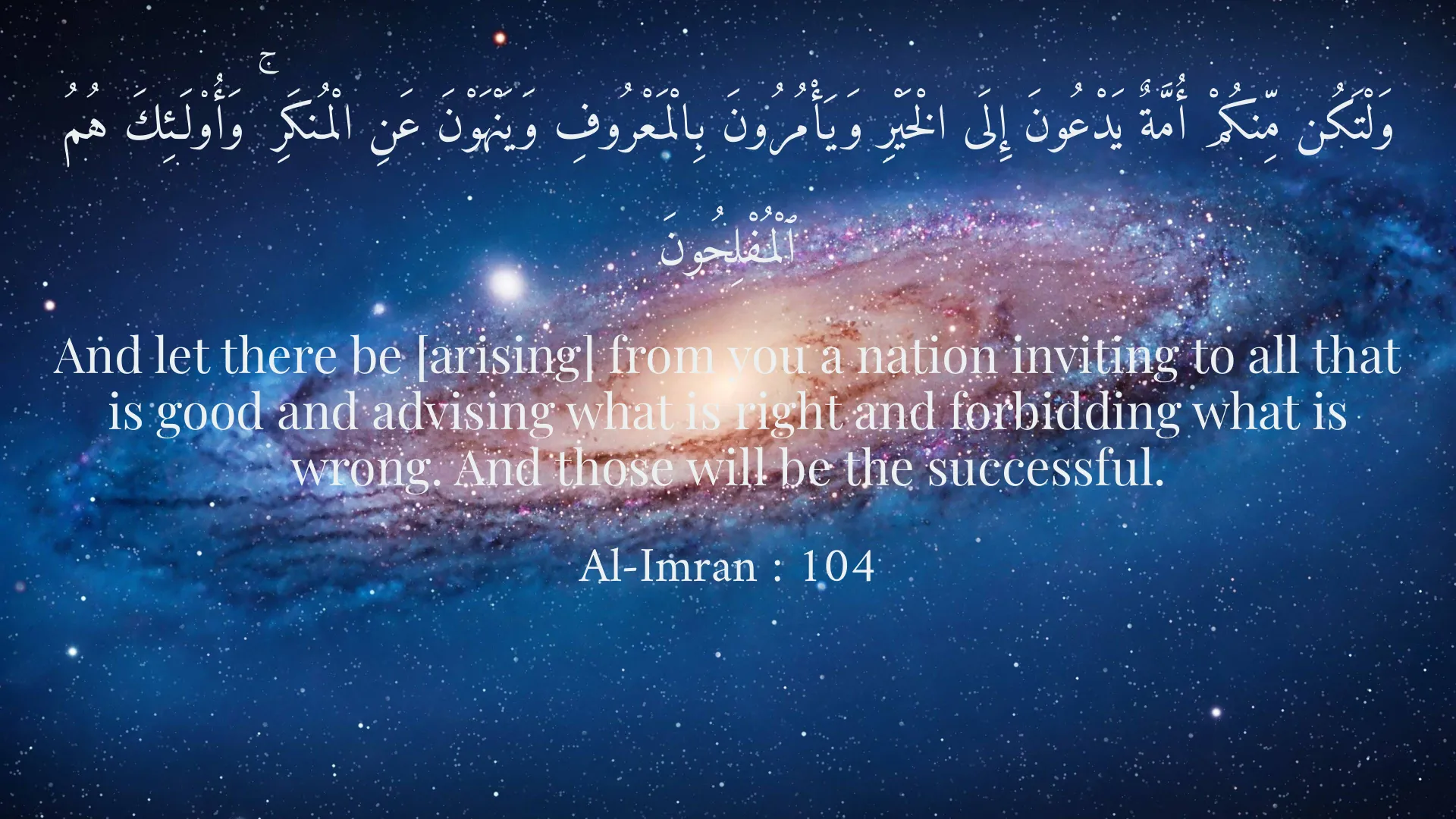
وَلْتَكُن مِّنكُمْ أُمَّةٌ يَدْعُونَ إِلَى الْخَيْرِ وَيَأْمُرُونَ بِالْمَعْرُوفِ وَيَنْهَوْنَ عَنِ الْمُنكَرِ ۚ وَأُو۟لَـئِكَ هُمُ ٱلْمُفْلِحُونَ
And let there be [arising] from you a nation inviting to all that is good and advising what is right and forbidding what is wrong. And those will be the successful.
Al-Imran : 104
وَالمُؤْمِنُونَ وَالمُؤْمِنَاتُ بَعْضُهُمْ أَوْلِيَاءُ بَعْضٍ ۖ يَأْمُرُونَ بِالْمَعْرُوفِ وَيَنهَوْنَ عَنِ الْمُنْكَرِ وَيُقِيمُونَ الصَّلَاةَ وَيُقْتُونَ الزَّكَاةَ ۚ وَيُطِيعُونَ اللَّـهَ وَرَسُولَهُ ۚ أُو۟لَـئِكَ سَتَرْحَمُهُمُ اللَّـهُ ۚ إِنَّ اللَّـهَ عَزِيزٌ حَكِيمٌ
And the believing men and believing women are allies of one another. They enjoin what is right and forbid what is wrong and establish prayer and give zakah and obey Allah and His Messenger. Those Allah will have mercy upon. Indeed, Allah is Exalted in Might and Wise.
At-Tawbah : 71
Short Story
One day in a neighborhood, a young man named Hossein was playing with his friends. He suddenly noticed that one of his friends was doing something wrong. Hossein approached him with kindness and without anger, saying, 'Dear friend, I think this action is not right and it might harm you.' His friend, touched by Hossein's words, decided to stop what he was doing. This act of Hossein inspired his other friends, and they realized how they could help each other with kindness and respect.