Quranic Answer
Living in the face of oppression and injustice represents one of the most significant challenges that individuals and societies encounter throughout history. Throughout time, humanity has faced various forms of tyranny—be it political, social, economic, or even ideological oppression. These struggles against injustice shape the very essence of civil rights movements, revolutions, and social change. The Holy Quran serves as an important reference point for believers, providing guidance in the face of oppression, urging proactive engagement, and promoting eudaemonia (human flourishing) through justice. The teachings of the Holy Quran are rooted in the principles of morality, integrity, and justice. One critical verse that underlines the necessity of standing against injustice is found in Surah An-Nisa (Chapter 4), verse 135, which states: 'O you who have believed, be persistently standing firm in justice, witnesses for Allah, even if it be against yourselves or your parents and relatives.' This profound directive instructs believers to uphold justice above all else, regardless of who is involved. The phrase 'even if it be against yourselves or your parents and relatives' carries a deep weight; it calls for an unwavering commitment to justice that transcends personal ties and familial loyalty. In essence, this verse emphasizes that true justice requires courage and integrity. To effectively confront the multifaceted dimensions of oppression, it is imperative to recognize the importance of vocalizing dissent. Within communities, silence can inadvertently perpetuate cycles of injustice, as it emboldens oppressors and detracts from collective accountability. When individuals witness acts of oppression, remaining quiet not only undermines their moral integrity but can also reflect a societal acceptance of such actions. Engaging in a constructive dialogue about societal wrongs is paramount. The Quran boldly calls believers to be witnesses for justice, pushing individuals to confront their fears and speak out against oppression, thereby fostering an environment where truth prevails. Additionally, the Quran emphasizes the necessity of cooperation and collective action in Surah Al-Imran (Chapter 3), verse 104, wherein it states: 'And let there be [a group among you] that invites to goodness and enjoins what is right and forbids what is wrong.' This verse not only addresses the importance of individual responsibility but also underscores the power of unity in the face of oppression. It instructs Muslims to collaborate in promoting virtuous actions while collectively denouncing injustices, creating a supportive network that galvanizes change within society. The call to action extends beyond individual communities; it seeks to unify Muslims globally, inspiring them to echo solidarity against oppressive regimes and empower one another in the pursuit of justice. The concept of forming groups committed to enjoining good and forbidding wrong is vital in standing up against tyranny. Community solidarity transforms passive resistance into a powerful collective voice, emphasizing that systemic injustice cannot go unchecked. However, the challenges of confronting oppression require more than a unified voice; they demand courage, perseverance, and tenacity. A historical examination of figures such as Malcolm X, Martin Luther King Jr., and Nelson Mandela illuminates how standing against oppression often leads to monumental societal changes. These leaders, through their actions and speeches, exhibited the principles outlined in the Quran; they recognized their duty to defend the marginalized and fight against the powerful. Each of them understood that silence equated complicity, and ran the risk of condemning future generations to the same plight. By standing firm in their beliefs and engaging with their communities, they sparked movements that continue to resonate today. Moreover, the consequences of remaining silent in the face of oppression can lead to dire results—not only for those subjected to such injustice but also for wider society. Societal despair and hopelessness can fester when individuals feel disempowered by the oppressive structures surrounding them. The perpetuation of injustice often leads to a culture of fear, inhibiting individuals from pursuing solutions to their grievances. It can create an environment wherein despair takes root, stifling creativity, innovation, and unity. In our modern world, where various forms of oppression persist in many regions, the Islamic teachings urge believers to embrace their agency and take an active stance against injustices. The response to oppression should not be limited to mere condemnation; it must translate into efforts to change systems and structures that marginalize individuals. This process may include raising awareness, educating the public, participating in dialogues, and lobbying for legal reforms. Therefore, as Muslims and as global citizens, one of our paramount responsibilities is to champion the rights of those who suffer from oppression. The foundation of this advocacy begins at the grassroots level and extends into broader societal initiatives. Whether advocating for human rights, gender equality, or economic justice, we must mobilize our communities to respond robustly to oppression. Engagement in such movements validates the teachings of the Quran and sheds light on the principles of justice that Allah highlights. The ethical imperative to advocate for others not only fortifies individual character but elevates society toward a brighter future marked by peace, equity, and respect for human dignity. In conclusion, the teachings of the Holy Quran establish clear directives for Muslims to confront oppression and injustice. Through vocal dissent and community solidarity, as advised in Surah An-Nisa and Surah Al-Imran, believers are called upon to stand firm in their pursuit of justice. Historical and contemporary examples illustrate the significant impact that collective action can achieve; thus, it is crucial for individuals to actively engage in confronting injustices they observe. Remaining silent is no longer an option; it is through our combined efforts that we can combat oppression and advocate for the rights of others effectively. In doing so, we can not only inspire hope in those who suffer but also pave the way for a more just and equitable society for future generations.
Related Verses
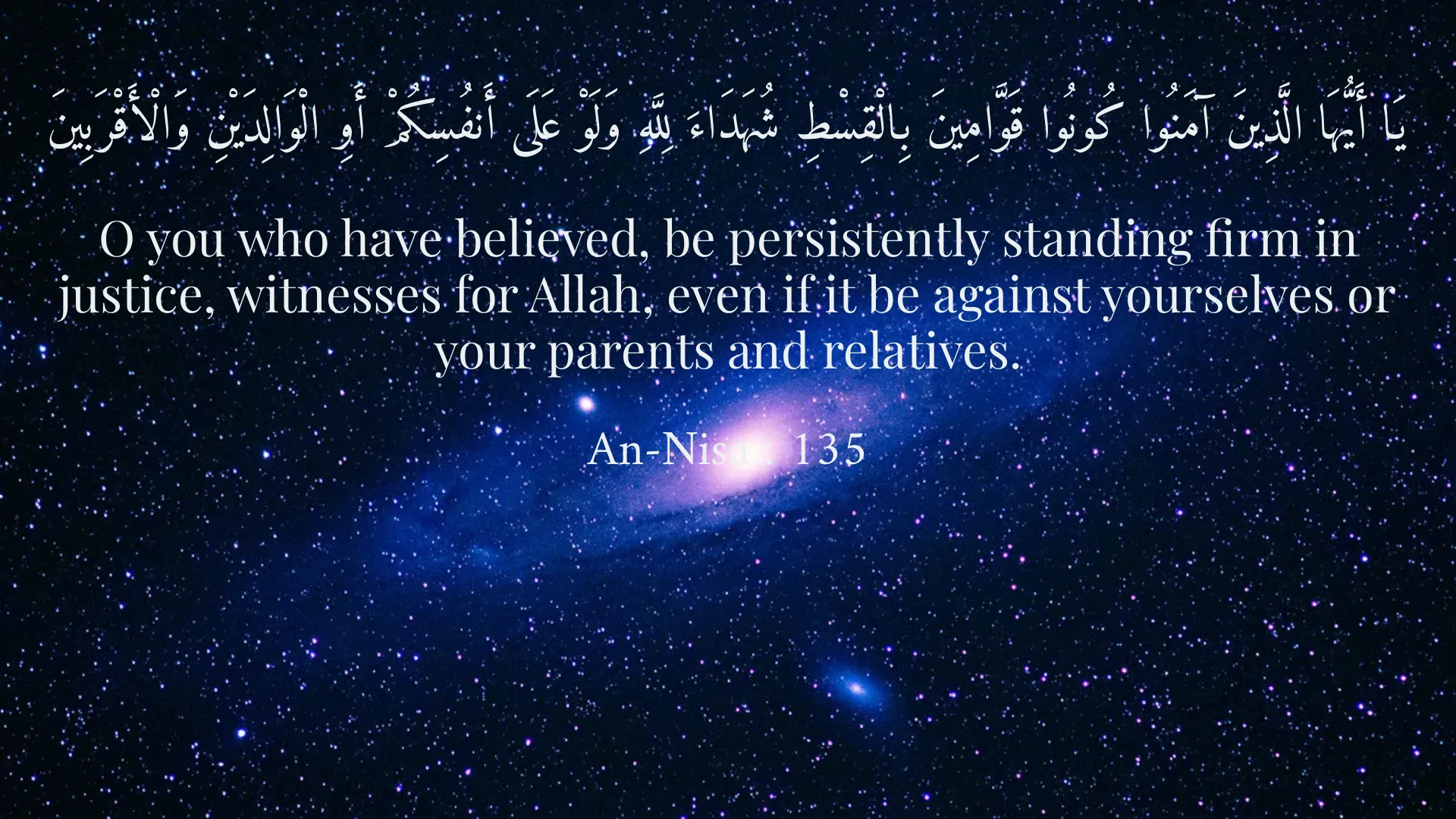
يَا أَيُّهَا الَّذِينَ آمَنُوا كُونُوا قَوَّامِينَ بِالْقِسْطِ شُهَدَاءَ لِلَّهِ وَلَوْ عَلَى أَنفُسِكُمْ أَوِ الْوَالِدَيْنِ وَالْأَقْرَبِينَ
O you who have believed, be persistently standing firm in justice, witnesses for Allah, even if it be against yourselves or your parents and relatives.
An-Nisa : 135
وَلْتَكُن مِّنكُمْ أُمَّةٌ يَدْعُونَ إِلَى الْخَيْرِ وَيَأْمُرُونَ بِالْمَعْرُوفِ وَيَنْهَوْنَ عَنِ الْمُنْكَرِ
And let there be [a group among you] that invites to goodness and enjoins what is right and forbids what is wrong.
Al-Imran : 104
Short Story
Once upon a time in a not-so-distant past, a man named Ahmad lived in a small town. He always refused to stay silent against the injustices he witnessed around him. One day, a neighbor faced an attack on their rights. Without hesitation, Ahmad stood up and defended his neighbor's rights. He understood that silence in the face of oppression would not only harm him but would also put his community at risk. He courageously stood against oppression and became known as a champion of justice and fairness.