Quranic Answer
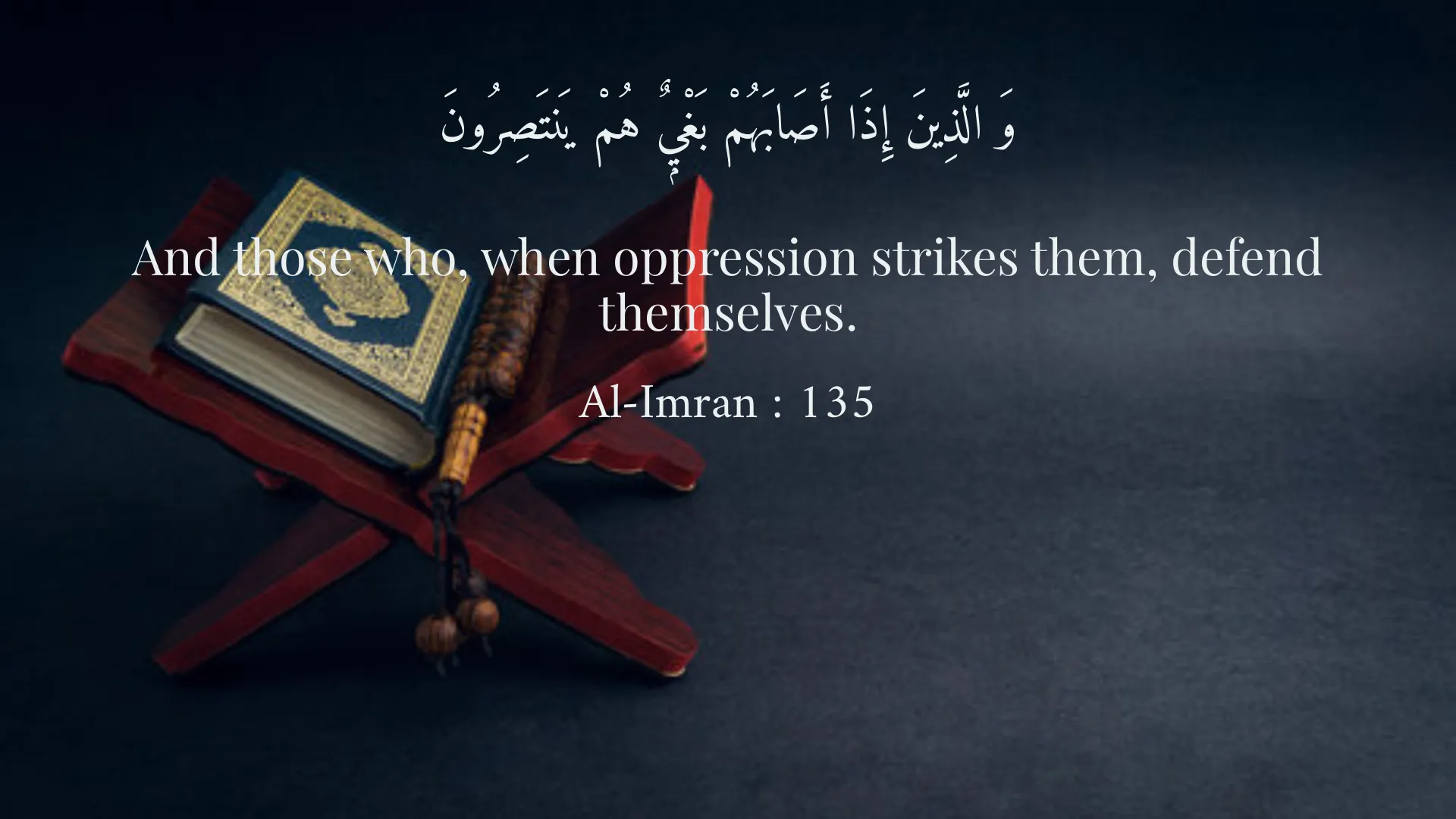
In response to injustice, the way we react matters significantly. The teachings of the Quran provide a profound guide for addressing inequities and oppression in our societies. Particularly, in Surah Al-Imran, verse 135, Allah admonishes believers to not remain passive in the face of injustice; the verse highlights, 'And those who, when oppression strikes them, they defend themselves.' This particular guidance is crucial as it encourages active engagement in the quest for justice, rather than silent acceptance of wrongdoing. Furthermore, it is imperative that individuals understand the necessity of standing up against injustices that they might encounter personally or in the broader community. The Quran articulates a deep sense of responsibility on each individual to take charge of their rights. This pursuit of justice can manifest in various forms, such as earnest prayers, seeking legal recourse, or taking tangible actions to rectify the situation. In Islam, it is considered essential to enter the realm of justice with a positive mindset—one that is driven by moral fortitude and clarity of purpose. Prayer serves as a spiritual anchor, providing solace and strength as believers confront the harsh realities of injustice. These actions of seeking justice highlight the notion that Islam is a faith that not only advocates for inner peace but also champions the cause of equity and fairness in the world around us. Moreover, the Quran stresses the importance of patience and perseverance, especially in the face of adversity or injustice. In Surah Al-Baqarah, verse 153, it states: 'O you who have believed, seek help through patience and prayer. Indeed, Allah is with the patient.' This verse is particularly salient as it elucidates two core Islamic principles that must be intertwined when dealing with injustices: patience and prayer. Patience here is not a passive acceptance of oppression, but rather an enduring strength that empowers the individual to maintain their integrity while advocating for justice. It encourages believers that even in challenging situations, they must remain steadfast in their actions and retain their faith. This challenges the common misconception that justice can only be sought through immediate retaliation or confrontational practices; instead, it emphasizes the power of a calm and composed approach, showing resilience while remaining focused on the objective of justice. It is also crucial to understand that an effective response to injustice should be devoid of anger and insults. Maintaining respect and upholding human dignity is paramount, as reiterated in Surah Hud, verse 112: 'So remain steadfast as you are commanded...' This instruction calls upon the followers of Islam to adhere to ethical standards and moral integrity, particularly when facing opposition or adversity. Adopting an approach governed by respect, civility, and principled communication not only preserves dignity but also enhances the effectiveness of one's response toward injustice. In a world filled with myriad forms of injustices—social, economic, political, or even personal—it can oftentimes feel overwhelming to respond appropriately. However, the teachings of the Quran serve as a perennial source of guidance, reminding us that our reactions should be informed by principles of justice, the pursuit of truth, and the preservation of human dignity. When confronted with injustice, it becomes essential to articulate one's views constructively rather than resorting to hostility or aggression. Engaging in dialogues, both with individuals who perpetrate injustices and those who might witness them, develops pathways towards understanding and potential resolution. Dialogue becomes a powerful tool, paving the way to communal healing while fostering relations grounded in empathy and respect. Furthermore, taking practical actions toward justice may also include advocacy work in one's community. This can manifest through charitable efforts, awareness-raising campaigns, or even participation in peaceful demonstrations aimed at calling attention to systemic injustices. Islam encourages collective action, highlighting that addressing injustices is a communal responsibility where support for one another is deeply embedded within the faith. In conclusion, the Quran empowers individuals not just to reflect on their inner struggles but urges them to engage with the larger world in a manner that is just, respectful, and principled. Responding to injustice requires a multi-faceted approach that combines the serenity of prayer with the courage of action. It calls for us to remain steadfast, reminding us that justice is not merely an idea but a vital reality towards which every believer must contribute actively. As we navigate the complexities of our environments, let us strive for justice with patience and respect, allowing the teachings of the Quran to guide our journeys through adversity.
Related Verses
وَ الَّذِينَ إِذَا أَصَابَهُمْ بَغْيٌۭ هُمْ يَنتَصِرُونَ
And those who, when oppression strikes them, defend themselves.
Al-Imran : 135
يَاأَيُّهَا الَّذِينَ آمَنُوا اسْتَعِينُوا بِالصَّبْرِ وَالصَّلَاةِ ۚ إِنَّ اللَّهَ مَعَ الصَّابِرِينَ
O you who have believed, seek help through patience and prayer. Indeed, Allah is with the patient.
Al-Baqarah : 153
فَاسْتَقِمْ كَمَا أُمِرْتَ...
So remain steadfast as you are commanded...
Hud : 112
Short Story
Once upon a time, in a village, there lived a man named Amin who never stayed silent in the face of injustice against his neighbor. He always tried to help his neighbor by praying for him and working towards justice. One day, Amin managed to alleviate the oppression faced by his neighbor with his assistance. His action not only eased his neighbor's hardships but also reminded him to never remain silent against injustice and always pursue justice.