Quranic Answer
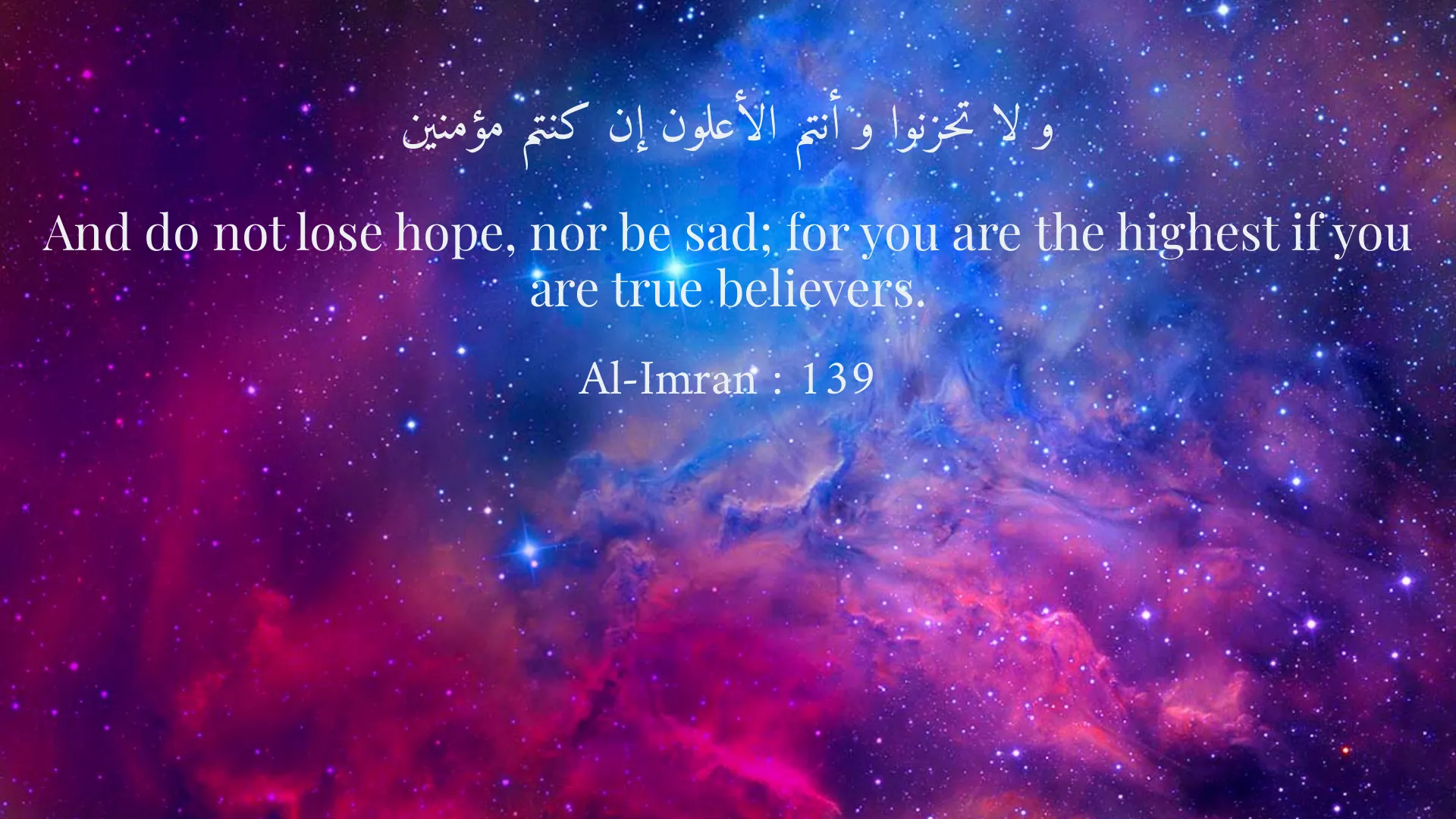
In the Holy Quran, the concept of success and failure is a fundamental theme that provides deep insight into the nature of human existence. Throughout the Quran, the teachings emphasize that both success and failure have their respective roles in the journey of life. It guides Muslims to embrace their destiny and accept the divine decree of Allah, instilling the belief that no matter the circumstances, there is a greater purpose at play. This philosophical understanding is particularly resonant in today’s world, where individuals often find themselves grappling with their personal victories and defeats. Central to this discussion is the principle that failure is not perceived as an end but rather as a valuable lesson and an experience meant for growth and improvement. The Quran conveys this message in various verses, each reinforcing the importance of resilience and faith in the face of adversity. One poignant instance is found in Surah Al-Imran, verse 139, which states, 'And do not lose hope, nor be sad; for you are the highest if you are true believers.' This verse serves as a reminder that challenges and setbacks should not lead to despair. Instead, they should inspire steadfastness and perseverance in one’s beliefs and faith. The notion of not losing hope even in the face of failure can often be challenging for many. Society tends to emphasize success as an absolute measure of worth, yet the Quran reassures believers that their value is not diminished by setbacks. Instead, the essence of one’s character is enhanced through the trials they endure. In this regard, it is worth noting that the Quranic perspective on failure is intertwined with the concept of patience. Patience, in this context, becomes a vital attribute that helps individuals navigate the tumultuous waters of life's tests. Moreover, in Surah Al-Baqarah, verse 155, Allah underscores the inherent trials of life, stating: 'And We will surely test you with something of fear and hunger and a loss of wealth and lives and fruits, and give good tidings to the patient.' This verse encapsulates the idea that life is inherently filled with challenges that test one’s faith and resolve. These tests may manifest in various forms, such as loss, grief, or setbacks in the pursuit of personal goals. The Quran reassures believers that these moments of trial are not punishments but are integral to their moral and spiritual development. The teachings delineate that acceptance of failure is closely linked to strong faith and patience. It is through trials that individuals can cultivate virtues like resilience, empathy, and appreciation for their blessings. This perspective holds that every failure is not just a setback but rather a new opportunity for learning and progress. While the human inclination may lean toward despair during difficult times, the Quranic teachings encourage believers to reflect and grow from their experiences, fostering an environment where they can emerge stronger and wiser. Furthermore, the importance of understanding Allah’s wisdom in one’s life cannot be overstated. Every incident—whether it leads to success or failure—is predestined for a reason, which may not always be evident at the moment. One’s trust in Allah's plan becomes a source of comfort, allowing them to maintain a broader perspective on life's challenges. This teaching serves to deepen the believer's relationship with their Creator, as they learn to view life's ups and downs as trials that have been tailored for their personal growth. In practical terms, this can translate into creating a mindset of gratitude and appreciation. When failures are approached with a positive outlook, it shifts the focus from what has been lost to what can be learned. For instance, in professional settings, encountering obstacles or failures can often provide insights that lead to better strategies and innovations. Similarly, in personal life, setbacks may encourage individuals to seek new paths that they may not have considered otherwise. This shift in perspective is crucial for personal development. Moreover, it’s essential to recognize that success also carries its lessons. Just as failure can be a catalyst for growth, so can success provide insights into what works and what does not. However, the Quran places significant emphasis on the behavior and mindset during both states. It advises that true success comes with humility and gratitude towards Allah rather than arrogance or complacency. Additionally, within the broader human context, embracing failure can lead to communal healing and understanding. When individuals openly discuss their challenges and defeats, it reduces the stigma around failure. In this way, the message in the Quran extends beyond personal development to societal transformation. Communities can foster environments that support resilience, empathy, and collaboration, reinforcing the idea that everyone faces challenges— and that together, they can rise above them. In conclusion, the Quran presents a profound philosophy on success and failure, viewing both as essential facets of the human experience. The teachings encourage believers not to lose hope in the face of difficulties, highlighting that tests in life are opportunities for growth, patience, and deeper faith. Each setback presents a new doorway for learning, while maintaining faith in Allah’s wisdom ensures that individuals remain centered and motivated amid life’s uncertainties. Ultimately, the Quran inspires a journey where both success and failure are stepping stones towards greater spiritual fulfillment and personal development.
Related Verses
و لا تحزنوا و أنتم الأعلون إن كنتم مؤمنين
And do not lose hope, nor be sad; for you are the highest if you are true believers.
Al-Imran : 139
و لنبلوتنكم بشيء من الخوف و الجوع و نقص من الأموال و الأنفس و الثمرات و بشر الصابرين
And We will surely test you with something of fear and hunger and a loss of wealth and lives and fruits, and give good tidings to the patient.
Al-Baqarah : 155
Short Story
One day, a man named Sajjad faced a significant failure in his life. Initially, he felt hopeless and thought everything was lost. However, after a few days, he remembered the verses of the Quran that say, 'Indeed, with hardship comes ease.' This verse made him realize that every failure is an opportunity for learning and growth. Sajjad decided to continue his path relying on Allah and to learn from his failure. Gradually, he managed to overcome his challenges and achieved even greater successes.