Quranic Answer
Achieving contentment with one's lot in life is one of the deepest human aspirations and a cornerstone of Quranic teachings. This contentment is not merely about accumulating material possessions or fulfilling every worldly desire; rather, it is a profound state of inner peace and heartfelt acceptance that transcends external circumstances. The Holy Quran offers a comprehensive roadmap for attaining this invaluable jewel, built upon several core pillars. The first, and perhaps most crucial, is a deep understanding that everything that unfolds in our lives, whether it be a blessing or a challenge, originates from a Wise and Merciful Lord. This profound insight lays the groundwork for gratitude, patience, reliance on God, and acceptance of divine decree. Shukr (Gratitude): The Key to Increased Blessings and Inner Peace The Quran repeatedly emphasizes the profound importance of gratitude. Shukr is not just an acknowledgment of divine blessings; it is a heartfelt state that shifts one's focus from what is lacking to what one possesses. When we look at what we have, even the smallest blessings, with an eye of appreciation, we open the doors to tranquility and abundance within ourselves. Allah states in Surah Ibrahim (14:7): “And [remember] when your Lord proclaimed, 'If you are grateful, I will surely increase you [in favor]; but if you deny, indeed, My punishment is severe.'” This verse clearly illustrates that gratitude not only contributes to contentment with one's current situation but also leads to an increase in blessings, thereby deepening the sense of satisfaction. Practical gratitude involves using blessings in ways that please Allah, helping others, and avoiding wastefulness. When a person genuinely believes that they are constantly enveloped in Allah's favors, comparisons with others and longing for what is absent are replaced by peace and contentment. This perspective opens one's eyes to countless hidden and manifest blessings, filling the heart with joy and satisfaction. It's a continuous practice of recognizing divine generosity in every breath and moment, transforming perceived deficiencies into opportunities for thankfulness. Sabr (Patience): The Power of Resilience in Adversity Life is not always a smooth path, and challenges are an undeniable part of it. In the face of hardships and decrees that may not align with our desires, patience and perseverance play a vital role in achieving contentment. From a Quranic perspective, Sabr is not merely passive endurance; it is an active, hopeful resilience in the face of adversity. In Surah Al-Baqarah (2:153), Allah says: “O you who have believed, seek help through patience and prayer. Indeed, Allah is with the patient.” This verse highlights patience as a powerful tool for navigating crises and maintaining inner peace. A patient person understands that every difficulty holds wisdom and comes from the Lord, and that behind every darkness, there is a hidden light. Patience enables an individual to seek solutions and hidden lessons within problems instead of succumbing to despair, ultimately achieving the tranquility that comes from surrendering to the divine will. This type of patience leads to spiritual growth and maturity, increasing one's capacity to accept their lot in life, whatever it may be. It is a testament to one's faith, knowing that Allah tests His servants to elevate their ranks and purify their souls, leading to a deeper appreciation for ease after hardship. Tawakkul (Complete Reliance on Allah): Releasing the Burden of Worries After striving and planning, complete reliance on Allah (Tawakkul) is the next crucial step toward contentment. Tawakkul means that after exhausting all efforts and utilizing one's full capacity, one entrusts the outcome to Allah Almighty. This surrender does not imply irresponsibility; rather, it is the pinnacle of trust in Allah's infinite wisdom and power. In Surah At-Talaq (65:3), it is stated: “And whoever relies upon Allah - He is sufficient for him. Indeed, Allah will accomplish His purpose. Allah has already set for everything a [decreed] extent.” Tawakkul eliminates the anxiety and worry stemming from the uncontrollability of outcomes, reassuring the individual that Allah will orchestrate the best for them. When a person believes with all their heart that Allah is their Sustainer and Manager of affairs, material concerns and futile comparisons give way to peace of mind and contentment with their current situation. This sense of reliance frees the heart from worldly anxieties and fills it with certainty and satisfaction. It transforms potential failures into lessons and successes into blessings, all attributed to the divine plan, fostering a profound sense of inner peace. Dhikr (Remembrance of Allah): The Source of Boundless Tranquility The Quran consistently reminds us that true peace is found only in the remembrance of Allah. Dhikr is not merely the repetition of divine names; it is a perpetual state of mindfulness and attention to Allah in all aspects of life. In Surah Ar-Ra'd (13:28), we read: “Those who have believed and whose hearts are assured by the remembrance of Allah. Unquestionably, by the remembrance of Allah hearts are assured.” This verse indicates that the primary path to inner peace and contentment is immersion in the remembrance of Allah. When the heart is nourished by the remembrance of Allah, the turbulences of life cannot disturb its tranquility. Prayer, recitation of the Quran, supplication (dua), and even contemplation of divine creation are all forms of Dhikr that help a person strengthen their connection with the Creator of the universe. From this connection, they derive an endless source of strength to accept and be content with their lot in life. This spiritual practice cultivates a constant awareness of Allah's presence, making one feel always connected, supported, and loved, which is the ultimate source of true contentment. Acceptance of Qada and Qadar (Divine Decree): Peace in the Face of What Is Destined One of the most significant factors in helping a person achieve contentment is a deep belief in Qada and Qadar. This belief does not imply fatalism or indifference, but rather, it means that after fulfilling one's duties and making every effort, one accepts with peace and submission what is beyond their control and has been decreed by divine destiny. In Surah Al-Hadid (57:22-23), it is stated: “No disaster strikes upon the earth or among yourselves except that it is in a register before We bring it into being - indeed that, for Allah, is easy - in order that you not despair over what has eluded you and not exult [arrogantly] over what He has given you. And Allah does not like every self-deluded and boastful disbeliever.” These verses explain the philosophy of Qada and Qadar for achieving peace and contentment: one should neither grieve over what has been lost nor become arrogant and boastful over what has been gained. This perspective saves a person from severe emotional fluctuations and helps them navigate whatever life brings with spiritual calm and balance. It fosters a deep understanding that everything occurs according to Allah's perfect plan, leading to inner serenity regardless of circumstances. Focus on the Hereafter and Avoiding Worldly Attachment: The True Measure of Values The Quran consistently reminds humanity that worldly life is fleeting and temporary, and the ultimate goal is to achieve divine pleasure and eternal bliss in the Hereafter. When a person shifts their gaze from material worldly comparisons and focuses on enduring spiritual values and the noble objective of the afterlife, many sources of discontent vanish. In Surah Al-Kahf (18:46), we read: “Wealth and children are [but] adornment of the worldly life. But the enduring good deeds are better to your Lord for reward and better for [one's] hope.” This verse teaches that true value lies in righteous deeds and earning Allah's pleasure, not in accumulating wealth or having many children. When a person grasps this truth, they no longer compare themselves to those who are materially more affluent, and they view their lot in life through a divine and spiritual lens. This perspective brings contentment and satisfaction because one knows that their real worth is not in the transient world but in their connection with Allah and their good deeds. It frees the heart from the relentless pursuit of more, bringing a deep sense of sufficiency and peace. In conclusion, attaining contentment with one's share in life is an ongoing process that requires continuous cultivation of the heart and soul. This path is paved with gratitude for blessings, patience in trials, absolute reliance on Allah after sincere effort, constant remembrance of Him, and acceptance of divine decree. When these Quranic principles are woven into the fabric of a person's being, they achieve a profound and lasting inner peace that no storm of life can shatter. This contentment is not only the key to happiness in this world but also an infinite asset for eternal success in the Hereafter.
Related Verses
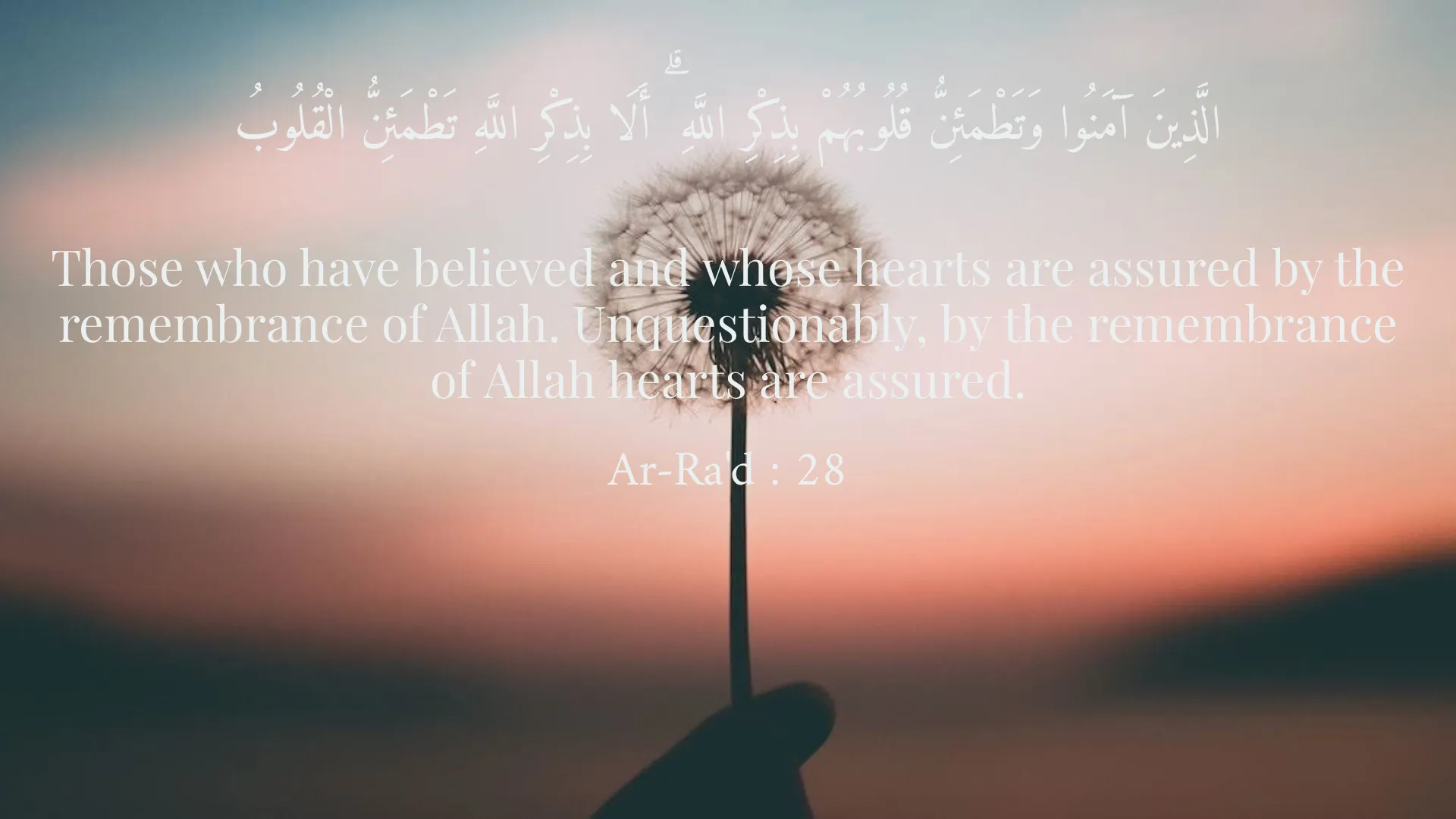
الَّذِينَ آمَنُوا وَتَطْمَئِنُّ قُلُوبُهُمْ بِذِكْرِ اللَّهِ ۗ أَلَا بِذِكْرِ اللَّهِ تَطْمَئِنُّ الْقُلُوبُ
Those who have believed and whose hearts are assured by the remembrance of Allah. Unquestionably, by the remembrance of Allah hearts are assured.
Ar-Ra'd : 28
وَإِذْ تَأَذَّنَ رَبُّكُمْ لَئِن شَكَرْتُمْ لَأَزِيدَنَّكُمْ ۖ وَلَئِن كَفَرْتُمْ إِنَّ عَذَابِي لَشَدِيدٌ
And [remember] when your Lord proclaimed, 'If you are grateful, I will surely increase you [in favor]; but if you deny, indeed, My punishment is severe.'
Ibrahim : 7
وَمَن يَتَوَكَّلْ عَلَى اللَّهِ فَهُوَ حَسْبُهُ ۚ إِنَّ اللَّهَ بَالِغُ أَمْرِهِ ۚ قَدْ جَعَلَ اللَّهُ لِكُلِّ شَيْءٍ قَدْرًا
And whoever relies upon Allah - He is sufficient for him. Indeed, Allah will accomplish His purpose. Allah has already set for everything a [decreed] extent.
At-Talaq : 3
مَا أَصَابَ مِن مُّصِيبَةٍ فِي الْأَرْضِ وَلَا فِي أَنفُسِكُمْ إِلَّا فِي كِتَابٍ مِّن قَبْلِ أَن نَّبْرَأَهَا ۚ إِنَّ ذَلِكَ عَلَى اللَّهِ يَسِيرٌ
No disaster strikes upon the earth or among yourselves except that it is in a register before We bring it into being - indeed that, for Allah, is easy -
Al-Hadid : 22
لِّكَيْلَا تَأْسَوْا عَلَىٰ مَا فَاتَكُمْ وَلَا تَفْرَحُوا بِمَا آتَاكُمْ ۗ وَاللَّهُ لَا يُحِبُّ كُلَّ مُخْتَالٍ فَخُورٍ
in order that you not despair over what has eluded you and not exult [arrogantly] over what He has given you. And Allah does not like every self-deluded and boastful disbeliever.
Al-Hadid : 23
Short Story
It is narrated that in ancient times, there was a dervish who had no shoes and constantly complained about it, showing ingratitude. One day, he arrived in Kufa and was walking through the marketplace when he suddenly saw a man who had no feet at all. Upon seeing the man, the dervish immediately came to his senses and said, "Now I understand that I should be grateful for God's blessings, for I have a problem with shoes, but he has no feet at all!" At that moment, he felt ashamed of his ingratitude and became content with what he had.