Quranic Answer
The question "How to achieve inner contentment?" finds a clear and comprehensive path in the Holy Quran. The Quran, as a book of guidance and light, not only addresses matters of worship and the afterlife but also offers profound and practical solutions for all dimensions of human life, including happiness and inner peace. Inner contentment, sometimes referred to as "peace of mind" or "tranquility of the soul," is a noble goal that every human being seeks. The central pillar for achieving inner contentment in the Quran is "Dhikr Allah" or the remembrance of God. Allah Almighty explicitly states in Surah Ar-Ra'd, verse 28: "Alladheena amanoo watatmainnu quloobuhum bidhikri Allahi ala bidhikri Allahi tatmainnul quloob" (Those who have believed and whose hearts are assured by the remembrance of Allah. Unquestionably, by the remembrance of Allah hearts are assured). This foundational verse identifies the primary key to peace and inner contentment as a continuous and deep connection with the Creator of the universe. Dhikr Allah is not merely the repetition of words; it encompasses reflecting on God's greatness, expressing gratitude for His countless blessings, reciting the Quran, performing prayers, and being mindful of His presence in every moment of life. When a person occupies their heart with the remembrance of God, they are liberated from worldly concerns and anxieties and connect with an infinite source of tranquility. This connection empowers individuals to face life's challenges and difficulties with a calm spirit and a confident heart. Another Quranic principle for inner contentment is "Tawakkul on Allah" or reliance on God. The Quran invites believers to truly trust in Allah. Tawakkul does not mean abandoning effort; rather, it means that after exerting all possible effort and fulfilling all duties, one entrusts the outcome to Allah and trusts in His wisdom and divine plan. When a person knows that Allah is the Administrator and Protector of their affairs, and that not a single leaf falls without His permission, their worries are minimized. This inner certainty removes a heavy burden of anxiety arising from an uncertain future or potential failures, guiding the individual towards contentment and peace. "Sabr" (Patience) and "Shukr" (Gratitude) are also crucial pillars for achieving inner contentment. The Holy Quran emphasizes the importance of patience in the face of calamities and gratitude for blessings in numerous verses. Patience is not merely passive endurance of hardships but active steadfastness and a positive outlook on challenges. When a person knows that every trial is from God and that there is wisdom behind every difficulty, they face it with a stronger spirit and ultimately attain peace of mind. Gratitude, too, purifies the heart from greed and envy, making one aware of the existing blessings in their life, no matter how few they may seem. This approach guides individuals towards contentment and satisfaction with what they possess. "Amal Salih" (righteous deeds) plays a significant role in fostering inner contentment. In Surah An-Nahl, verse 97, we read: "Man 'amila salihan min dhakarin aw untha wa huwa mu'minun falanuhyiyannahu hayatan tayyibatan walanajziyannahum ajrahum bi ahsani ma kanoo ya'maloon" (Whoever does righteousness, whether male or female, while he is a believer - We will surely cause him to live a good life, and We will surely give them their reward [in the Hereafter] according to the best of what they used to do). "Hayat Tayyibah" or a pure life, is precisely the inner contentment and worldly happiness that results from faith and righteous deeds. Helping others, showing kindness to parents, avoiding sins, and respecting people's rights all contribute to the purity of the soul and peace of heart. Furthermore, "recitation and reflection on the Quran" itself is a tremendous source of tranquility. The Quran is the word of God, and whenever a person approaches it with sincere intention, the light of guidance and peace descends upon their heart. Studying the stories of the prophets and past nations teaches valuable lessons and admonitions that help individuals face difficulties and correct their perspective on this world and the Hereafter. This reflection guides individuals toward a "Nafs al-Mutma'innah" (the tranquil and satisfied soul), the very soul addressed in the concluding verses of Surah Al-Fajr: "Ya ayyatuhan nafsul mutma'innah. Irji'ee ila rabbiki radiyatam mardiyyah. Fadkhulee fee 'ibadee. Wadkhulee jannatee" (O tranquil soul, Return to your Lord, well-pleased and pleasing [to Him], And enter among My [righteous] servants, And enter My Paradise). These verses illustrate the peak of inner contentment and the attainment of the highest degree of peace. Ultimately, achieving inner contentment hinges on understanding that this world is fleeting and what truly endures are righteous deeds and one's connection with Allah. Excessive attachment to materialism and worldly possessions is a primary cause of anxiety and dissatisfaction. The Quran constantly reminds us that wealth and children are but adornments of this world, and what is with Allah is lasting and better. Releasing these attachments and focusing on gaining Allah's pleasure leads to true and lasting peace. This contentment not only brings peace in this life but also prepares one for eternal bliss in the Hereafter. Therefore, to achieve inner contentment, one must turn wholeheartedly to Allah Almighty, keep His remembrance alive in the heart, trust in Him, be patient and grateful in the face of His decrees, and always strive on the path of righteous deeds. These are not merely theoretical solutions but practical commands for a life full of peace and satisfaction.
Related Verses
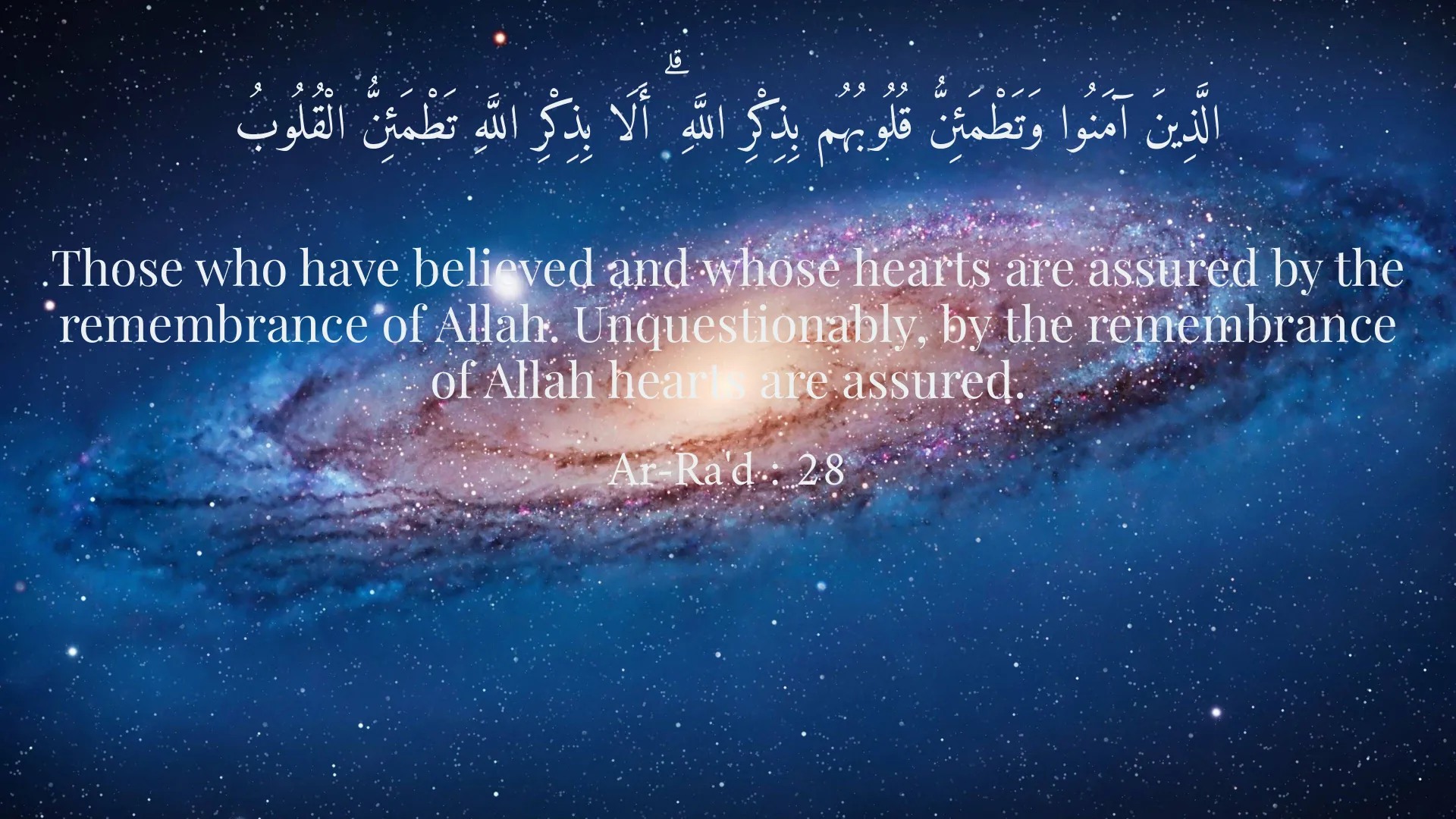
الَّذِينَ آمَنُوا وَتَطْمَئِنُّ قُلُوبُهُم بِذِكْرِ اللَّهِ ۗ أَلَا بِذِكْرِ اللَّهِ تَطْمَئِنُّ الْقُلُوبُ
Those who have believed and whose hearts are assured by the remembrance of Allah. Unquestionably, by the remembrance of Allah hearts are assured.
Ar-Ra'd : 28
مَنْ عَمِلَ صَالِحًا مِّن ذَكَرٍ أَوْ أُنثَىٰ وَهُوَ مُؤْمِنٌ فَلَنُحْيِيَنَّهُ حَيَاةً طَيِّبَةً ۖ وَلَنَجْزِيَنَّهُمْ أَجْرَهُم بِأَحْسَنِ مَا كَانُوا يَعْمَلُونَ
Whoever does righteousness, whether male or female, while he is a believer - We will surely cause him to live a good life, and We will surely give them their reward [in the Hereafter] according to the best of what they used to do.
An-Nahl : 97
يَا أَيَّتُهَا النَّفْسُ الْمُطْمَئِنَّةُ (27) ارْجِعِي إِلَىٰ رَبِّكِ رَاضِيَةً مَّرْضِيَّةً (28) فَادْخُلِي فِي عِبَادِي (29) وَادْخُلِي جَنَّتِي (30)
O tranquil soul (27), Return to your Lord, well-pleased and pleasing [to Him] (28), And enter among My [righteous] servants (29), And enter My Paradise (30).
Al-Fajr : 27
Short Story
It is narrated that a king, with a treasury full and a vast army, was constantly fearful of his enemies and never slept soundly. Meanwhile, a penniless dervish, possessing no wealth or property, slept peacefully on the bare ground. The king asked him, 'O dervish, you who own nothing, how do you sleep so soundly?' The dervish replied, 'O king, because I have nothing to lose, and no fear of losing it can shake my heart. My peace lies in detachment and freedom from worldly ties, not in possessing and accumulating.' This tale by Saadi reminds us that inner contentment is found not in gathering wealth and power, but in the contentment of the heart and liberation from the chains of this world, a truth echoed in the Quran.