Quranic Answer
Aligning our lives with the Holy Quran is one of the most significant approaches to achieving peace and happiness. The Quran, as the heavenly book of Muslims, contains a set of teachings and commands that provide guidance in all dimensions of life. As individuals navigating through the complexities of modern existence, we often find ourselves searching for meaning, direction, and solace. Embracing the teachings of the Quran offers a profound way to cultivate a life imbued with tranquility and purpose. The journey toward alignment with the Quran begins with the fundamental practice of recitation and understanding. In Surah Ash-Shura, verse 52, Allah articulates a powerful message: "And thus We have inspired to you a Spirit by Our command. You did not know what the Scripture was or what faith was, but We made it a light with which We guide whomever We will among Our servants; and indeed, you guide to a straight path." This verse underscores the idea that the Quran serves as a beacon of light, illuminating the path toward righteousness and ethical living. By immersing ourselves in its recitation, we not only enhance our spiritual connection but also acquire the knowledge necessary to navigate life's challenges. Understanding the Quran is equally crucial. It is not enough to merely recite its verses; we must also engage deeply with their meanings and implications. This reflective approach invites us to ponder the guidance that the Quran offers in various life situations, such as interpersonal relationships, moral dilemmas, and personal challenges. Fostering this reflective engagement can lead to significant shifts in our perspective and behavior. For instance, in Surah Al-Baqarah, verse 183, we read: "O you who have believed, decreed upon you is fasting as it was decreed upon those before you that you may become righteous." This verse highlights the importance of fasting, not only as a physical act of abstaining from food and drink but also as a spiritual exercise aimed at enhancing one's piety. Fasting during the holy month of Ramadan, for example, serves to fortify self-control, instill compassion for the less fortunate, and foster a deep sense of gratitude for the blessings we often take for granted. Moreover, fasting compels us to reflect on our lives, our choices, and our relationships with others. During Ramadan, the act of refraining from indulgences encourages a spirit of reflection and humility, allowing believers to reset their priorities and recalibrate their lives in accordance with Islamic teachings. This practice of self-discipline and spiritual reflection can transcend the boundaries of the holy month, providing valuable lessons and insights that can be integrated into our daily lives. In addition to fasting, the Quran provides ethical instructions that are applicable to our interactions with others. In Surah Luqman, verse 17, we find the guidance: "O my son, establish prayer and enjoin what is right and forbid what is wrong." This verse serves as a reminder of our responsibilities as members of society. Establishing prayer is not merely about performing rituals; it is about cultivating a consistent connection with Allah and grounding ourselves in faith. Through prayer, one finds solace and strength to navigate life's trials. Further, the command to enjoin what is right and forbid what is wrong indicates the Quran's emphasis on social responsibility. This ethical imperative calls upon individuals to actively participate in promoting justice, fairness, and morality in their communities. In a world often marred by injustice and inequality, those who align their lives with the teachings of the Quran can play a vital role in fostering positive change. The Quran’s teachings extend beyond personal spirituality, creating a framework for societal harmony and coexistence. Engaging with the Quranic wisdom cultivates virtues such as compassion, patience, and resilience, thereby enriching our interpersonal relationships. For instance, when facing conflict or adversity, the Quran encourages believers to adopt a forgiving heart and to seek reconciliation rather than harbor animosity. Such an approach will contribute to harmonious relations and ultimately lead to collective peace within our communities. Furthermore, the Quran addresses aspects of mental health and well-being that are increasingly relevant in today’s fast-paced world. The teachings discourage excessive grief over past events and promote hope and reliance on Allah’s mercy. In Surah Al-Inshirah, Allah reassures believers that with hardship comes ease, thereby instilling a sense of optimism during troubling times. Incorporating these teachings into our daily lives can pave the way for a more tranquil existence. Whether through acts of charity, kindness to others, or self-compassion, the Quran serves as a road map for achieving inner peace and happiness. Acknowledging our shortcomings and seeking forgiveness from Allah enables us to move forward, transforming negative experiences into opportunities for growth. In conclusion, aligning our lives with the Holy Quran is a transformative journey that invites us to embrace peace, happiness, and fulfillment. By reciting the sacred verses, understanding their meanings, and implementing the ethical guidelines, we can cultivate lives that reflect coherence and purpose. The Quran offers insights and solutions that remain timeless and relevant, regardless of the challenges we face. Thus, we must seize the opportunity to engage with this divine text, allowing its light to illuminate our paths and guide our actions. Embracing the teachings of the Quran empowers individuals to lead lives marked by faith, righteousness, and compassion, ultimately contributing to the well-being of ourselves and the communities we inhabit.
Related Verses
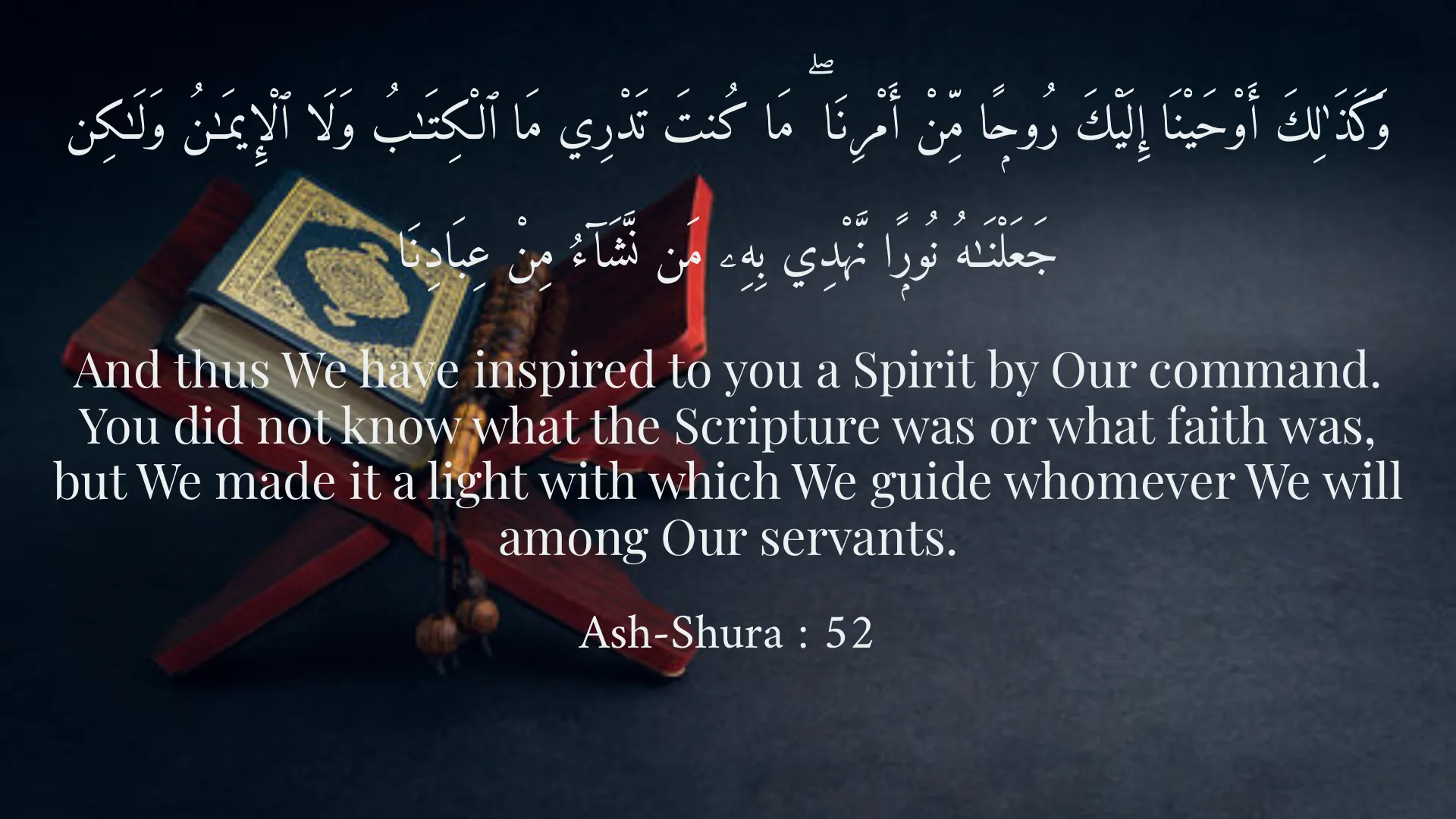
وَكَذَٰلِكَ أَوْحَيْنَا إِلَيْكَ رُوحًۭا مِّنْ أَمْرِنَا ۖ مَا كُنتَ تَدْرِي مَا ٱلْكِتَٰبُ وَلَا ٱلْإِيمَـٰنُ وَلَٰكِن جَعَلْنَـٰهُ نُورًۭا نَّهْدِي بِهِۦ مَن نَّشَآءُ مِنْ عِبَادِنَا
And thus We have inspired to you a Spirit by Our command. You did not know what the Scripture was or what faith was, but We made it a light with which We guide whomever We will among Our servants.
Ash-Shura : 52
يَا أَيُّهَا الَّذِينَ آمَنُوا كُتِبَ عَلَيْكُمُ الصِّيَامُ كَمَا كُتِبَ عَلَى الَّذِينَ مِن قَبْلِكُمْ لَعَلَّكُمْ تَتَّقُونَ
O you who have believed, decreed upon you is fasting as it was decreed upon those before you that you may become righteous.
Al-Baqarah : 183
يَا بُنَيَّ أَقِمِ الصَّلَاةَ وَأْمُرْ بِالْمَعْرُوفِ وَٱنْهَ عَنِ الْمُنْكَرِ
O my son, establish prayer and enjoin what is right and forbid what is wrong.
Luqman : 17
Short Story
Once upon a time, a man named Amir set out to find a way to improve his life. In his search, he remembered the verses of the Quran. He decided to read one verse from the Quran each day and implement it in his life. Days passed, and Amir noticed that every time he approached the Quran, his life took on a different color and the inner peace he sought was achieved. He also began inviting others to recite the Quran and shared the blessings it brought.