Quranic Answer
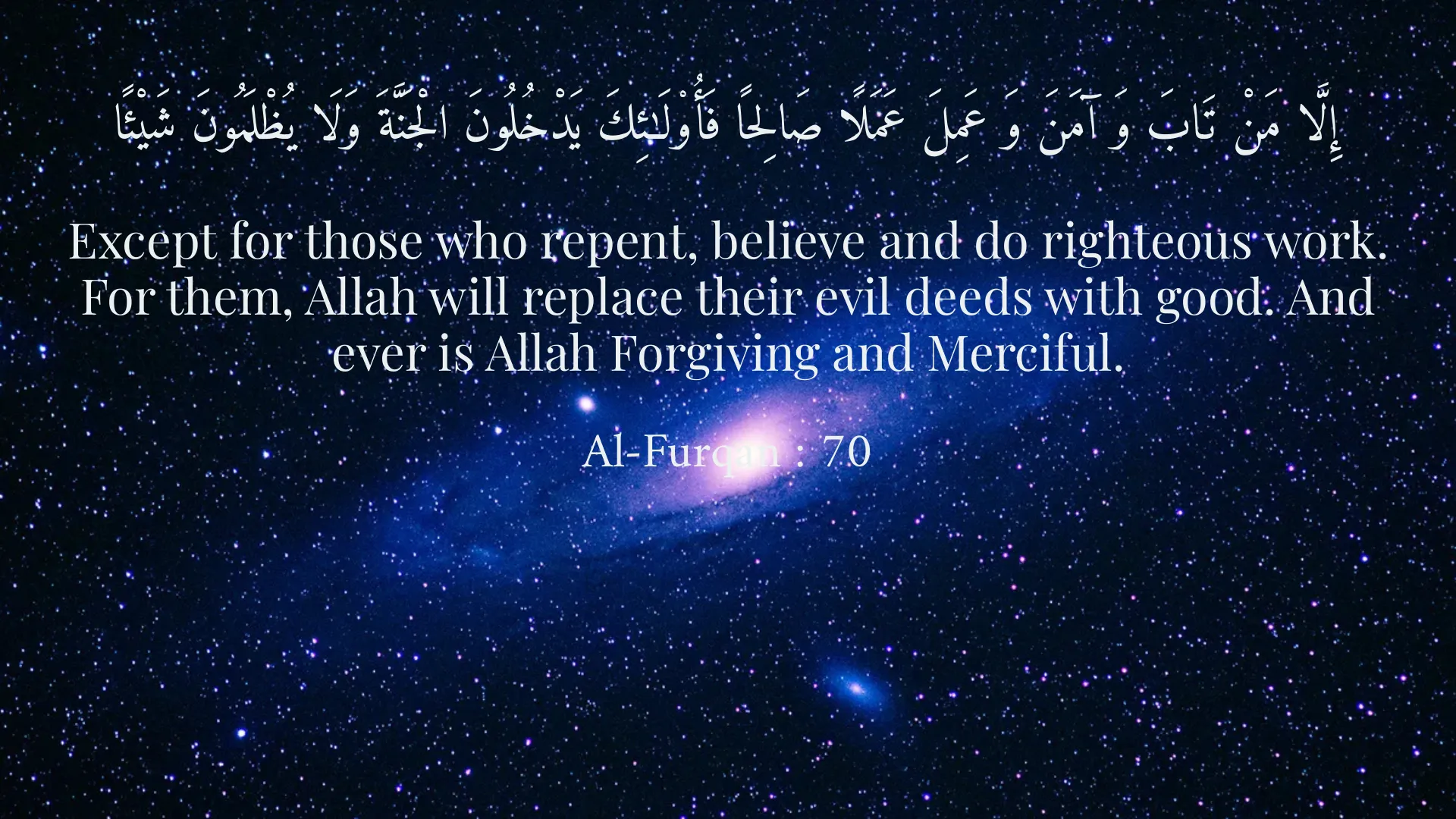
In Islam, seeking God's forgiveness is not just an act; it is an integral aspect of the faith, deeply embedded within the teachings of the Quran and the sayings of the Prophet Muhammad (peace be upon him). The concept of forgiveness is a continuous theme throughout the sacred texts, illustrating a pathway not only to reconciliation with Allah but also to spiritual growth and eternal salvation. This article explores the importance of seeking God's forgiveness in Islam, the conditions necessary for obtaining it, and the profound implications it has on a believer's life. One of the fundamental conditions for attaining divine forgiveness within Islamic teachings is sincere repentance, known as 'Tawbah.' It is not merely about reciting words; it necessitates a genuine turning back to God with a heart full of remorse for one's sins. In Surah Al-Furqan, verse 70, Allah states: 'Except for those who repent, believe and do righteous work. For them, Allah will replace their evil deeds with good. And ever is Allah Forgiving and Merciful.' This verse underscores a powerful promise: that true repentance leads to the erasure of sins and the rewarding of good deeds in their place. It emphasizes the mercy of Allah, offering hope and encouraging believers to seek His forgiveness without despair. The process of sincere repentance consists of three key steps. First, one must feel genuine remorse for the wrongdoings committed. This intrinsic feeling of guilt is vital, as it indicates a heart that is aware of its faults and is ready to make amends. Second, there is a need to abandon the sin immediately. This act of leaving the sin in the past signifies a commitment to change, both in personal behavior and spiritual orientation. Lastly, the individual should resolve not to return to that sin again, making a pact with oneself and Allah to strive for righteousness in the future. Following sincere repentance, another vital step in the quest for divine forgiveness is the act of prayer and supplication. In Surah Az-Zumar, verse 53, Allah encourages believers by saying: 'Say, 'O My servants who have believed, fear your Lord. For those who do good in this world is good, and the earth of Allah is spacious. Indeed, the patient will be given their reward without account.' This verse serves as a reminder that Allah's mercy and forgiveness are extensive enough to encompass everyone. By practicing piety and performing righteous acts, believers not only seek forgiveness but also enhance their standing in this world and in the Hereafter. The call to fear Allah reflects a consciousness of His greatness and creates a framework for moral behavior that draws believers closer through good deeds. Moreover, the Quran emphasizes that Allah is always ready to forgive those who earnestly seek His forgiveness. Surah At-Tawbah, verse 102 states: 'And others have acknowledged their sins; they had mixed a righteous deed with another that was evil. Perhaps Allah will turn to them in repentance. Indeed, Allah is Forgiving and Merciful.' This acknowledgment of wrongdoings is essential; it demonstrates a profound self-awareness and the understanding that one can falter but must strive to return to the path of righteousness. Allah’s doors of mercy are open to all who sincerely repent, regardless of the magnitude of their sins, offering a lifeline to those who feel lost or burdened by guilt. The implications of seeking God's forgiveness are profound and far-reaching. Firstly, it fosters a sense of spiritual cleansing and renewal. When believers sincerely repent, they are not only erasing their past sins in the eyes of Allah but also allowing themselves to heal personally. This healing can lead to improved mental well-being and a reduction in feelings of guilt and shame that may hinder one's spiritual journey. It cultivates a positive relationship with oneself, enabling a believer to move forward with hope and determination. In addition, seeking forgiveness nurtures a spirit of humility and gratitude. Acknowledging one's mistakes and striving for improvement instills a sense of humility before Allah and brings one closer to understanding the essence of being human—prone to errors yet capable of redemption. This ongoing cycle of sin and repentance highlights the mercy of Allah, reminding believers to be grateful for their chance at forgiveness. Furthermore, seeking forgiveness can strengthen community bonds. When individuals are open about their quest for redemption, it encourages others to reflect on their own actions and fosters a culture of forgiveness and mutual support. This transformative process can lead to a more compassionate society, where individuals are less judgmental and more empathetic toward each other's struggles. In conclusion, seeking God's forgiveness stands as a cornerstone in the Islamic faith. It is a dynamic process that requires sincere repentance, the practice of good deeds, and the continual reaffirmation of faith. As emphasized in various verses of the Quran, God's mercy is abundant, inviting all believers to return to Him no matter how far they may stray. By embracing the conditions of true repentance, engaging in prayer, and acknowledging one’s sins, Muslims can embark on a journey of spiritual growth, inner peace, and a strengthened connection with Allah. This relationship, nurtured by the constant striving for forgiveness, not only leads to personal salvation but fosters a community bound by shared values of compassion, understanding, and mutual support in the pursuit of righteousness.
Related Verses
إِلَّا مَنْ تَابَ وَ آمَنَ وَ عَمِلَ عَمَلًا صَالِحًا فَأُو۟لَـٰئِكَ يَدْخُلُونَ الْجَنَّةَ وَلَا يُظْلَمُونَ شَيْئًا
Except for those who repent, believe and do righteous work. For them, Allah will replace their evil deeds with good. And ever is Allah Forgiving and Merciful.
Al-Furqan : 70
قُلْ يَا عِبَادِيَ الَّذِينَ آمَنُوا اتَّقُوا رَبَّكُمْ لِلَّذِينَ أَحْسَنُوا فِي هَذِهِ الدُّنْيَا حَسَنَةٌ وَأَرْضُ اللَّهِ وَاسِعَةٌ إِنَّمَا يُوَفَّى الصَّابِرُونَ أَجْرَهُمْ بِغَيْرِ حِسَابٍ
Say, 'O My servants who have believed, fear your Lord. For those who do good in this world is good, and the earth of Allah is spacious. Indeed, the patient will be given their reward without account.'
Az-Zumar : 53
وَآخَرُونَ اعْتَرَفُوا بِذُنُوبِهِمْ خَلَطُوا عَمَلًا صَالِحًا وَآخَرَ سَيِّئًا عَسَى اللَّهُ أَنْ يَتُوبَ عَلَيْهِمْ إِنَّ اللَّهَ غَفُورٌ رَّحِيمٌ
And others have acknowledged their sins; they had mixed a righteous deed with another that was evil. Perhaps Allah will turn to them in repentance. Indeed, Allah is Forgiving and Merciful.
At-Tawbah : 102
Short Story
One day, a man named Hossein was searching for a way to gain God's forgiveness. He decided to go to God's door and ask for mercy. With a pure intention and a clean heart, he prayed, 'O God, forgive me and help me to walk the path of goodness.' After that, Hossein tried to engage in good deeds daily and was keen on helping others. After some time, he felt a greater joy and peace as he saw that Allah had answered his prayers.