Quranic Answer
Spiritual peace is one of the most crucial aspects of human life, and it is clearly addressed in the Holy Quran. The quest for spiritual tranquility transcends mere religious practices; it encompasses the very essence of being human. A significant amount of psychological research corroborates the assertion that spiritual practices can lead to improved mental health and overall wellness. To attain spiritual peace, the first and foremost step is to strengthen one's relationship with God and worship Him. The Quran, as a guide for millions, offers profound advice on establishing this connection and achieving inner serenity. In Surah Ar-Ra'd, verse 28, it states, 'Indeed, it is in the remembrance of Allah that hearts find tranquility.' This verse serves as a powerful reminder that the remembrance of God can be the primary source of calmness. The act of remembering Allah, whether through prayer, meditation, or reflection, can significantly reduce stress levels and bring about a sense of peace. By engaging in regular remembrance, believers can develop a sense of presence, grounding themselves in the knowledge that they are never alone and that divine support is always available. Furthermore, the role of prayer in achieving spiritual peace cannot be overemphasized. In Surah Al-Baqarah, verse 153, Allah instructs believers to seek assistance through patience and prayer. This scriptural advice not only encourages worship but highlights the psychological benefits of maintaining a constant connection with the Divine. In times of trouble and distress, prayer acts as a psychological refuge, where individuals can pour out their thoughts and emotions. The consistent act of prayer establishes a rhythm and routine that fosters inner peace. Prayer and connection with God are not merely acts of worship; they also provide psychological and spiritual comfort. Numerous studies have shown the positive link between prayer and mental well-being. Those who engage in regular prayer report higher levels of happiness, lower levels of anxiety and depression, and a greater sense of community. This can be attributed to a feeling of belonging to something greater than oneself, as well as a structured outlet for expressing fears and hopes. Moreover, spiritual peace is not solely dependent on one’s relationship with God. Other factors contribute significantly to achieving this tranquility. Treating family and friends kindly, helping those in need, and avoiding sins play pivotal roles in enhancing one’s spiritual condition. These external behaviors complement internal spirituality and serve to enrich one’s connection to God and to others. In Surah Al-Isra, verse 23, Allah emphasizes noble behavior toward parents, stating, 'And your Lord has decreed that you not worship except Him and to parents, good treatment.' This verse highlights the importance of familial relationships and the fruitfulness of treating one another with respect and kindness. Maintaining harmony with family members reduces interpersonal grievances, which in turn cultivates inner peace. The act of kindness, whether small or large, not only uplifts the recipient but also enhances the giver’s spiritual state. Extending kindness beyond family and towards society is another surefire way to attain spiritual peace. Engaging in charitable acts, serving the less fortunate, and contributing positively to communities fosters a sense of fulfillment. The Quran places great emphasis on charity (Sadaqah) and helping those in dire situations, reminding believers that acts of kindness can be an immense source of blessings and spiritual growth. Helping others creates a natural sense of connection and strengthens communal ties, contributing to overall societal and individual peace. On the other hand, avoiding sins and engaging in good deeds is crucial for maintaining spiritual peace. The burden of committing sins can weigh heavily on the conscience and obstruct one’s path to tranquility. The Quran consistently warns against actions that lead to evil and strife, urging believers to adhere to behaviors that foster righteousness. A clear conscience promotes a serene mind, enabling individuals to focus on their spiritual journey, devoid of the remorse and anxiety that accompany wrongdoing. In essence, spiritual peace is a multifaceted pursuit, deeply intertwined with individual behavior and relational dynamics. It relies not solely on a strong relationship with God and religious practices, but also on one’s conduct towards others and their commitment to living a life of virtue. Spiritual peace is cultivated through a commitment to personal growth, ethical living, and the nurturing of relationships, creating a ripple effect that can impact the wider community. As we navigate our daily lives, the quest for spiritual peace should remain at the forefront of our thoughts and intentions. In pursuing this peace, we can fill our lives with tranquility and happiness, equipping ourselves to face the inevitable challenges life presents. The wisdom found in the Quran serves as an enduring reminder of the path to spiritual fulfillment, inviting us to explore our relationship with God, to treat others with kindness, and to strive for righteousness. Ultimately, the journey toward spiritual peace is a lifelong endeavor, promising rewards that benefit not just ourselves, but the larger community around us.
Related Verses
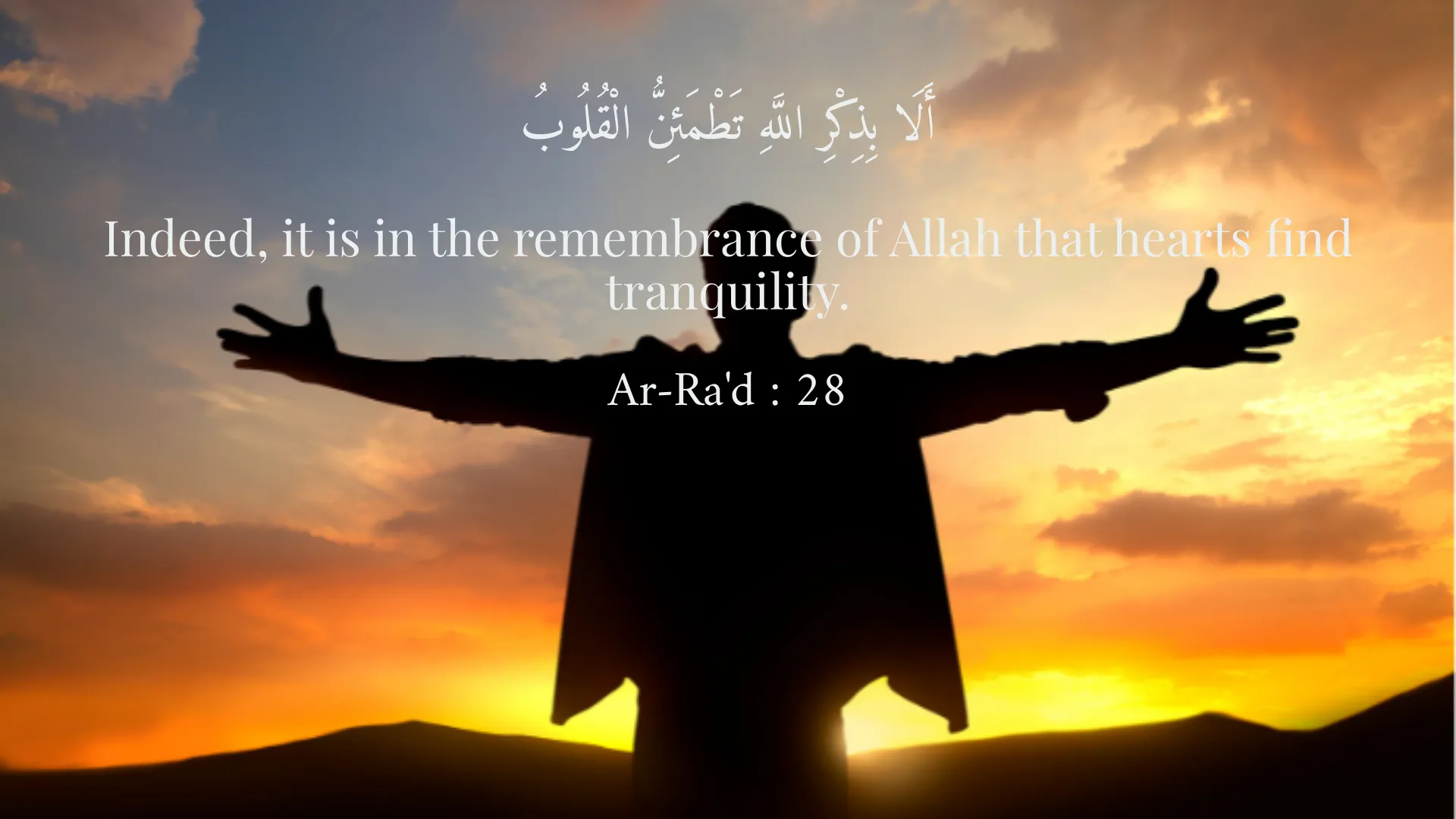
أَلَا بِذِكْرِ اللَّهِ تَطْمَئِنُّ الْقُلُوبُ
Indeed, it is in the remembrance of Allah that hearts find tranquility.
Ar-Ra'd : 28
يَا أَيُّهَا الَّذِينَ آمَنُوا اسْتَعِينُوا بِالصَّبْرِ وَالصَّلَاةِ ۚ إِنَّ اللَّهَ مَعَ الصَّابِرِينَ
O you who have believed, seek help through patience and prayer. Indeed, Allah is with the patient.
Al-Baqarah : 153
وَقَضَى رَبُّكَ أَلَّا تَعْبُدُوا إِلَّا إِيَّاهُ وَبِالْوَالِدَيْنِ إِحْسَانًا
And your Lord has decreed that you not worship except Him, and to parents, good treatment.
Al-Isra : 23
Short Story
Once upon a time, a person named Mahdi was striving to find peace in his life. He thought to himself, 'How can I attain peace?' After pondering and studying the verses of the Quran, he realized that only through the remembrance of God and acts of worship could he bring tranquility into his life. Mahdi decided to dedicate time each day to prayer and remembrance, while also showing kindness to his family and the needy. This approach transformed his life, bringing profound peace.