Quranic Answer
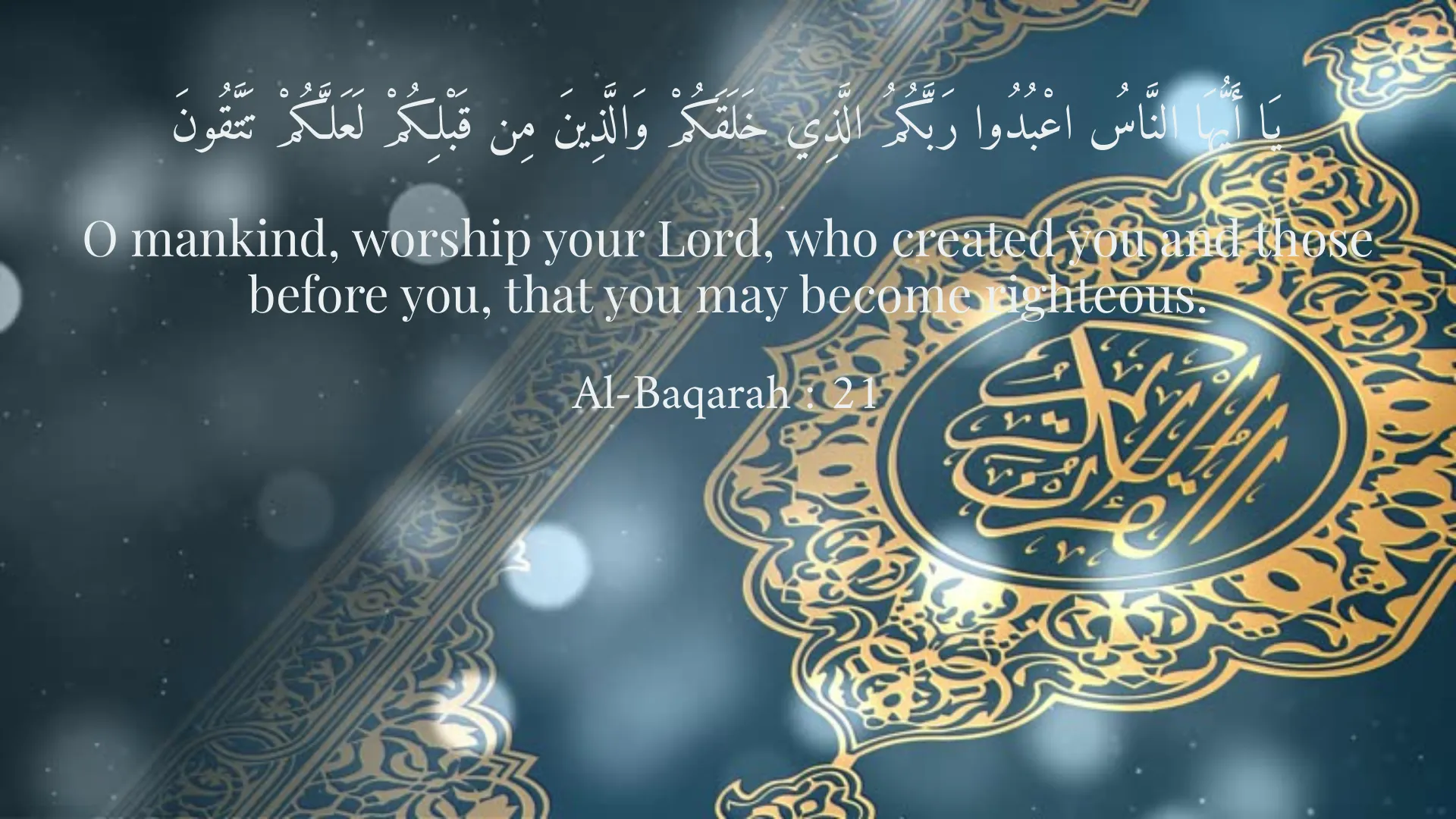
In the Holy Quran, worship is introduced as one of the most significant human responsibilities. It is not merely an act of obligation but rather a profound connection between the creator and the created. Worship is seen as an essential element in the relationship between Allah and humanity, as it acknowledges the magnificence of the Creator and the dependence of humans on Him. This basic understanding is vividly expressed in Surah Al-Baqarah, verse 21, where Allah calls out to mankind: "O mankind, worship your Lord, who created you from one soul." This verse serves as an invitation not only to worship but also to recognize the fundamental bond that ties all human beings together through their shared origin from a single soul. The invitation to worship emphasizes the idea that it is not merely an individual act but a communal one, fostering unity among all of humanity. Worship brings individuals together, reinforcing the principles of brotherhood, empathy, and mutual support, which are vital in our fast-paced and often disjointed modern world. However, the act of worship can sometimes lead to fatigue, especially when approached with a sense of monotony or obligation. Thus, it is essential to cultivate a deeper understanding of God's existence and the ultimate purpose of worship to find joy and fulfillment in these sacred acts. One significant way to avoid fatigue in worship is to introduce diversity in the forms and expressions of dedication to God. Just as life is dynamic and ever-changing, so too should our methods of worship be diverse and colorful. Consequently, variations in prayer and supplication can rejuvenate the soul. For instance, instead of reciting prayers in the same manner every day, one can explore various supplications tailored for specific occasions or attribute special significance to Fridays, which hold a unique position in the Islamic faith. Incorporating diverse practices such as engaging in Dhikr (remembrance of God), reading inspiring books about spirituality, or learning about the lives of the prophets can condense the experience of worship, making it more illuminating and fulfilling. Moreover, another powerful approach is to engage in contemplation over the verses of the Quran. The Holy Quran is not just a book of guidelines for living but a profound source of wisdom that offers a deep connection to the Divine. As stated in Surah Ar-Ra'd, verse 28: "Indeed, by the remembrance of Allah hearts are assured." This verse illustrates that the remembrance of Allah is directly linked to peace and tranquility within the heart, suggesting that true fulfillment comes from reflecting on and pondering the divine message. By delving deep into the meanings and applications of the Quranic verses, believers can find a renewed sense of purpose and connection in their worship. Reflection on one's intentions and purposes is essential in the journey of worship. When an individual finds themselves feeling fatigued or disengaged, it may be an opportune moment to reevaluate their motivation. Are they engaging in worship merely out of routine, or do they genuinely desire to draw closer to Allah? This critical introspection can often lead to a sense of renewed vigor and enthusiasm for worship. It encourages the believer to approach worship as a heartfelt journey rather than a burdensome obligation. By resetting one's intentions and seeking a deeper connection with God, individuals can transform their worship into a source of inspiration rather than a task. In a world filled with distractions, establishing habits that foster continuity and steadfastness in worship is paramount. This consistency can cultivate a heartfelt relationship with God, not only in times of hardship but also in times of joy and gratitude. Simple methods, such as setting daily reminders for prayer times or engaging with online religious lessons, can significantly bolster one's commitment to worship while reinforcing the sacredness of these moments. Furthermore, practicing gratitude is an essential element in the act of worship. Acknowledging the blessings and favors one has received from God can transform not only one's mindset towards worship but also daily life. By expressing gratitude through dedicated supplications, individuals invite serenity and appreciation into their lives, ultimately enriching their spiritual experiences. Another vital aspect of maintaining interest in worship is participating in collective acts of worship. Whether through communal prayers (Salah), attending study circles, or joining in discussions about spiritual topics, these activities create an uplifted atmosphere that can invigorate one's spirit. Engaging with others who share similar values can serve as a constant reminder of the joys of faith and the importance of worship. The bonding that occurs through communal worship harnesses emotional and spiritual support that diminishes feelings of fatigue and isolation. Additionally, employing creative strategies can be incredibly effective in keeping worship fresh and engaging. Exploring various forms of art, music, and literature that revolve around religious themes can inspire enthusiasm for worship. Engaging in community service as an act of worship adds a layer of practical expression to one's faith, allowing individuals to live their worship in action. Each of these activities helps build a meaningful relationship with God while avoiding the weariness that sometimes arises from routine practices. In conclusion, incorporating strategies that emphasize creativity, reflection, and community into our worship practices can significantly enhance our spiritual experience. In the grand scheme, Allah's call to worship is not just a command but a divine invitation to connect with Him, appreciate our existence, and fulfill our purpose as His creations. By diversifying our acts of worship, focusing on our intentions, establishing consistent practices, and fostering community connections, we can prevent the fatigue that sometimes plagues our spiritual lives. Worship should always be approached with renewed energy, enthusiasm, and creativity, making it a source of joy, peace, and unwavering mindfulness in our daily lives.
Related Verses
يَا أَيُّهَا النَّاسُ اعْبُدُوا رَبَّكُمُ الَّذِي خَلَقَكُمْ وَالَّذِينَ مِن قَبْلِكُمْ لَعَلَّكُمْ تَتَّقُونَ
O mankind, worship your Lord, who created you and those before you, that you may become righteous.
Al-Baqarah : 21
أَلَا بِذِكْرِ اللَّهِ تَطْمَئِنُّ الْقُلُوبُ
Indeed, by the remembrance of Allah hearts are assured.
Ar-Ra'd : 28
Short Story
One day, a believer named Ali complained about his fatigue in worship. He visited a religious scholar and sought a solution for his problem. The scholar said to him, "My dear Ali, have you abandoned the mosques and gatherings filled with guests of Allah?" Ali, with hesitation, replied, "Yes." The scholar continued, "Try to give importance to variety in your worship. Continue remembering God in your heart and with your tongue, and use different supplications and remembrances. This will rejuvenate your spirit." Following the scholar's advice, Ali felt that his worship had returned to life.