Quranic Answer
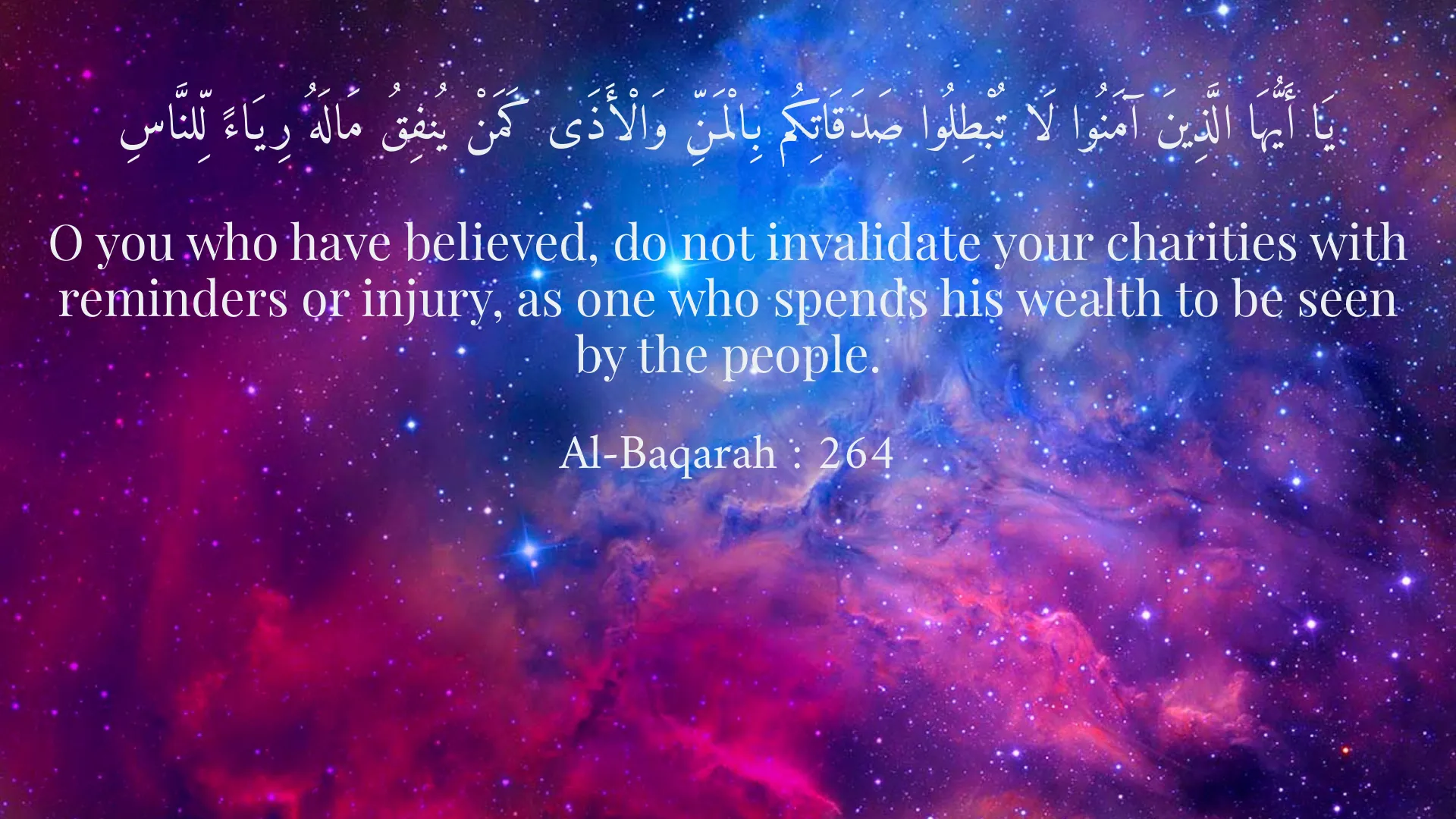
In Islam, worship is not merely an act of ritual; it is a profound expression of faith that aims to foster a deep connection between the worshipper and Allah. The essence of worship in Islam lies in its sincerity, known in Arabic as 'Ikhlas'. This concept underscores the importance of performing acts of devotion with pure intentions, solely for the purpose of drawing closer to Allah. The act of showing off, or 'Riya', in worship is not only discouraged but is vehemently condemned within Islamic teachings. The significance of sincerity in worship is articulated in the Holy Quran, particularly in Surah Al-Baqarah, verse 264. Allah, the Exalted, warns the believers with the statement: "O you who have believed, do not invalidate your charities with reminders or injury, as one who spends his wealth to be seen by the people." This verse serves as a stark reminder that any act done for the purpose of seeking approval or admiration from others undermines the act itself and nullifies its potential rewards. The concept of sincerity extends beyond mere charity and encompasses all forms of worship including prayer, fasting, and acts of kindness. In Surah Al-Ma'un, verses 4 and 5, Allah reiterates His warning: "So woe to those who pray, but who are heedless of their prayer—those who make show [of their deeds]." This passage emphatically points to the danger of hypocrisy, highlighting how even prayer, which is a direct form of communication with Allah, can lose its essence when tainted by insincerity. The implications of these teachings are profound for individual Muslims. To worship sincerely, one must first cultivate the right intentions. The heart is the center of intention, and thus, nurturing sincerity within the heart is paramount. To achieve this, Muslims are encouraged to engage in self-reflection and to consistently remind themselves of their purpose. Focusing on one’s own shortcomings can also serve as a powerful tool to minimize pride and ostentation in worship. When individuals recognize their own imperfections, they are more likely to understand the need for Allah’s mercy and guidance, which in turn, fosters a genuine desire for sincere worship. In addition to self-reflection, the act of repeating prayers for sincerity can be immensely beneficial. This involves not only the physical act of praying but also invoking the importance of pure intentions. By repeatedly reaffirming their commitment to worship Allah alone, individuals can reinforce their resolve against the temptation of performing acts of worship for the sake of reputation or recognition. The practice of consciously reminding oneself that Allah is All-Knowing and All-Aware plays a critical role in ensuring that heart and action align in the pursuit of sincere worship. Another aspect that aids in maintaining sincerity is the concept of 'Ikhlas' integrated into daily actions. Every deed, no matter how small, can be transformed into an act of worship when performed with the right intention. For example, helping others, engaging in community service, and even mundane tasks can be seen as acts of worship if done for Allah’s sake. This holistic approach not only enhances one’s worship but also fosters a sense of spirituality in everyday life. Community plays a significant role in nurturing sincere worship as well. Engaging with fellow believers who prioritize sincerity can reinforce one's own intentions. In congregational prayers, the sense of unity and shared faith can act as a reminder to remain humble and focused on the intention behind worship. The Prophet Muhammad, peace be upon him, exemplified such sincerity through his actions and teachings, continually emphasizing the importance of intention in all aspects of life. Muslims are encouraged to look to his life as a model for sincerity in worship, recognizing that true devotion to Allah is reflected not only in ritual acts but also in leading a life grounded in integrity, compassion, and humility. Moreover, the detrimental effects of insincerity and ostentation are further emphasized by numerous Hadiths, which also reinforce the Quranic teachings. One such Hadith narrates the Prophet Muhammad (peace be upon him) stating that on the Day of Judgment, individuals who performed good deeds to show off will be called upon to justify their actions before Allah. The fear of hypocrisy resulting in severe consequences should motivate believers to cultivate sincerity within their worship, thereby purifying their hearts and deeds. To summarize, worship in Islam is a multifaceted act that goes beyond rituals; it encapsulates the very essence of a Muslim's relationship with Allah. Sincerity plays a fundamental role in enhancing this relationship, ensuring that acts of devotion are performed solely with the intention of pleasing the Creator. The reminders found in the Quran and Hadith serve as essential guidelines, urging Muslims to reflect upon their intentions regularly. By focusing on sincere worship, embracing humility, and surrounding themselves with a supportive community, believers can make their acts of worship genuinely meaningful. In doing so, they can establish a profound connection with Allah that transcends the mere performance of rituals and leads to spiritual growth and fulfillment.
Related Verses
يَا أَيُّهَا الَّذِينَ آمَنُوا لَا تُبْطِلُوا صَدَقَاتِكُم بِالْمَنِّ وَالْأَذَى كَمَنْ يُنفِقُ مَالَهُ رِيَاءً لِّلنَّاسِ
O you who have believed, do not invalidate your charities with reminders or injury, as one who spends his wealth to be seen by the people.
Al-Baqarah : 264
فَوَيْلٌ لِّلْمُصَلِّينَ
So woe to those who pray,
Al-Ma'un : 4
الَّذِينَ هُمْ عَنْ صَلَاتِهِمْ سَاهُونَ
those who are heedless of their prayer—
Al-Ma'un : 5
Short Story
One day, in a beautiful garden, two friends were sitting and discussing worship. One of them said, "I always pray loudly so that everyone can hear!" The other smiled and replied, "Try to keep your worship hidden from the eyes of the people, as Allah is only in our hearts." They decided to make their worship more sincere and remember that Allah is the best friend who sees in solitude.