Quranic Answer
The modern world often presents a significant challenge for individuals striving to maintain a strong spiritual connection amidst demanding professional lives. Many find themselves grappling with the question of how to effectively balance extensive work commitments with their religious obligations and personal worship. Islam, as a comprehensive way of life, offers profound guidance on this very dilemma, advocating for a harmonious integration of worldly pursuits and spiritual devotion rather than a rigid separation. It is a faith that does not preach monasticism or complete withdrawal from society; instead, it encourages active participation in both spheres, ensuring neither is neglected. At its core, Islam views life as a grand test and an opportunity for believers to earn rewards that transcend this temporary existence. The Quran and the Sunnah of Prophet Muhammad (peace be upon him) provide clear directives on the importance of striving for sustenance while never losing sight of one's ultimate purpose: to worship Allah. The Prophet himself was a successful merchant before his prophethood, and later a statesman and leader, demonstrating that engagement in worldly affairs is not incompatible with deep spiritual devotion. The Holy Quran explicitly encourages believers to seek lawful sustenance through hard work. For instance, in Surah Al-Mulk (67:15), Allah says, “It is He who made the earth subservient to you, so walk upon its regions and eat from His provision. And to Him is the resurrection.” This verse highlights that seeking livelihood by moving through the land and utilizing its resources is a Divinely ordained activity. Work, when undertaken with sincerity, honesty, and a good intention – such as providing for one’s family, contributing to society, or avoiding dependency – can itself be elevated to an act of worship. This transforms mundane tasks into acts of devotion, imbuing daily labor with spiritual significance. Islam champions the dignity of labor, rejecting idleness and encouraging productivity. The Prophet Muhammad (PBUH) stated, “No one has ever eaten a better meal than that which he has eaten from the work of his own hands.” This shows the high regard for self-sufficiency and honest work. However, alongside the encouragement for worldly endeavor, the Quran unequivocally places paramount importance on the remembrance and worship of Allah. The five daily prayers (Salat) are the cornerstone of a Muslim’s spiritual life, serving as regular, disciplined moments of connection with the Creator. These prayers are not just rituals; they are spiritual anchors that ground a believer, reminding them of their purpose and their accountability. Allah says in Surah An-Nisa (4:103), “Indeed, prayer has been decreed upon the believers a decree [to be observed at] fixed times.” And in Surah Al-Ankabut (29:45), “Recite what has been revealed to you of the Book and establish prayer. Indeed, prayer prohibits immorality and wrongdoing, and the remembrance of Allah is greater.” This verse beautifully illustrates the transformative power of prayer, which purifies the soul and guards against evil. The crucial principle of balance is perhaps best articulated in Surah Al-Jumu'ah (62:9-10). Allah instructs, “O you who have believed, when [the adhan] is called for the prayer on the day of Jumu'ah [Friday], then proceed to the remembrance of Allah and leave trade. That is better for you, if you only knew. And when the prayer has been concluded, disperse through the land and seek from the bounty of Allah and remember Allah much that you may succeed.” This passage provides a clear blueprint for integrating worship and work. It commands believers to temporarily suspend their worldly transactions when the call to prayer is heard, prioritize congregational prayer, and then, once the prayer is over, to return to their economic activities, all while remembering Allah frequently. This demonstrates that neither activity should completely override the other; rather, they should coexist harmoniously, with prayer taking precedence at its appointed times. Another profound verse that encapsulates this balance is from Surah Al-Qasas (28:77): “But seek, through that which Allah has given you, the home of the Hereafter; and [yet], do not forget your portion of the world…” This verse is a direct command to strive for the afterlife using the blessings and resources Allah has provided, while simultaneously acknowledging that one has a legitimate share and responsibility in this world. It cautions against excessive asceticism that neglects one’s worldly responsibilities, as well as against heedless materialism that forgets the ultimate destination. The “portion of the world” refers to one’s legitimate needs, duties, and permissible enjoyment, all to be pursued within Islamic guidelines. Achieving this balance requires conscious effort and practical strategies. Firstly, Niyyah (Intention) is paramount. By consciously intending to worship Allah through one’s work – whether by earning honestly to support family, serving others, or contributing to the betterment of society – the work itself becomes an act of devotion. Secondly, Time Management and Prioritization are essential. Setting aside specific times for prayers and adhering to them, even amidst a busy schedule, is crucial. This might involve planning work around prayer times, utilizing break times for quick acts of remembrance, or making up for missed opportunities. Modern tools like prayer apps and reminders can be helpful. Thirdly, Integrating Dhikr (Remembrance of Allah) into daily life beyond formal prayers is vital. This means remembering Allah in one’s thoughts, words, and actions throughout the day. Simple acts like saying “Bismillah” before starting a task, “Alhamdulillah” upon completing one, or reflecting on Allah’s blessings while working can keep the heart connected. This constant awareness transforms daily activities into avenues for spiritual growth. Fourthly, Avoiding Extremism is key; neither becoming a recluse entirely devoted to worship at the expense of worldly responsibilities nor becoming a workaholic who neglects spiritual duties. Islam promotes a moderate path (wasatiyyah). Lastly, understanding that true Barakah (Blessings) in one’s work and life stems from aligning with Allah’s commands. When one prioritizes Allah, Allah blesses one’s time, efforts, and provisions. In conclusion, the Quran offers a beautiful and practical framework for balancing extensive work with worship. It emphasizes that both are essential components of a fulfilling life in Islam. By viewing work as a means of worship, by diligently fulfilling prayer obligations, by incorporating constant remembrance of Allah into daily routines, and by adopting a moderate approach to worldly pursuits, a believer can achieve a harmonious balance. This balance not only leads to inner peace and contentment in this life but also secures ultimate success and reward in the Hereafter. It is a continuous journey of striving, self-reflection, and seeking Allah’s guidance and blessings in every endeavor.
Related Verses
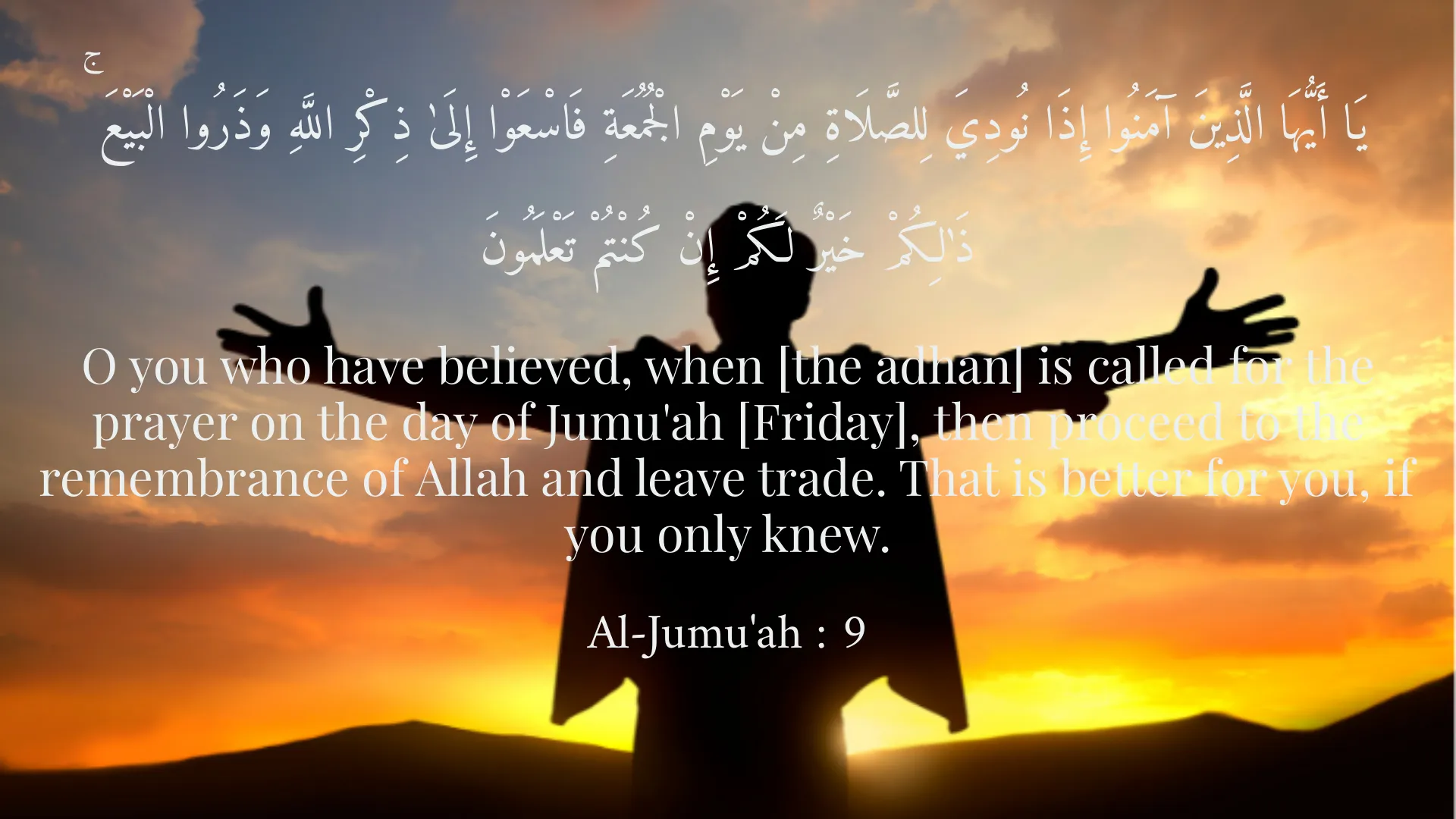
يَا أَيُّهَا الَّذِينَ آمَنُوا إِذَا نُودِيَ لِلصَّلَاةِ مِنْ يَوْمِ الْجُمُعَةِ فَاسْعَوْا إِلَىٰ ذِكْرِ اللَّهِ وَذَرُوا الْبَيْعَ ۚ ذَٰلِكُمْ خَيْرٌ لَكُمْ إِنْ كُنْتُمْ تَعْلَمُونَ
O you who have believed, when [the adhan] is called for the prayer on the day of Jumu'ah [Friday], then proceed to the remembrance of Allah and leave trade. That is better for you, if you only knew.
Al-Jumu'ah : 9
فَإِذَا قُضِيَتِ الصَّلَاةُ فَانْتَشِرُوا فِي الْأَرْضِ وَابْتَغُوا مِنْ فَضْلِ اللَّهِ وَاذْكُرُوا اللَّهَ كَثِيرًا لَعَلَّكُمْ تُفْلِحُونَ
And when the prayer has been concluded, disperse through the land and seek from the bounty of Allah and remember Allah much that you may succeed.
Al-Jumu'ah : 10
وَابْتَغِ فِيمَا آتَاكَ اللَّهُ الدَّارَ الْآخِرَةَ ۖ وَلَا تَنْسَ نَصِيبَكَ مِنَ الدُّنْيَا ۖ وَأَحْسِنْ كَمَا أَحْسَنَ اللَّهُ إِلَيْكَ ۖ وَلَا تَبْغِ الْفَسَادَ فِي الْأَرْضِ ۖ إِنَّ اللَّهَ لَا يُحِبُّ الْمُفْسِدِينَ
But seek, through that which Allah has given you, the home of the Hereafter; and [yet], do not forget your portion of the world; and do good as Allah has done good to you; and desire not corruption in the land. Indeed, Allah does not like corrupters.
Al-Qasas : 77
اتْلُ مَا أُوحِيَ إِلَيْكَ مِنَ الْكِتَابِ وَأَقِمِ الصَّلَاةَ ۖ إِنَّ الصَّلَاةَ تَنْهَىٰ عَنِ الْفَحْشَاءِ وَالْمُنْكَرِ ۗ وَلَذِكْرُ اللَّهِ أَكْبَرُ ۗ وَاللَّهُ يَعْلَمُ مَا تَصْنَعُونَ
Recite what has been revealed to you of the Book and establish prayer. Indeed, prayer prohibits immorality and wrongdoing, and the remembrance of Allah is greater. And Allah knows that which you do.
Al-Ankabut : 45
Short Story
In the tales of Bustan by Saadi, it is recounted that a wealthy king was constantly engrossed in expanding his dominion and increasing his treasures, seldom giving thought to rest or the remembrance of God. His ministers always found him at the peak of his busy schedule, with no sign of leisure. One day, a wise old man from the path of poverty and contentment entered his court. The king asked him, "O wise elder, what is the purpose of all this toil and effort? Is there no rest in this world except through work and gain?" The old man replied, "O King, true rest lies in the heart, not in wealth. Worldly pursuits are like seawater; the more you drink, the thirstier you become. But the remembrance of God and worship are like a spring from which the more you drink, the more quenched you become." The king, astonished by the elder's words, said, "Then how can one both govern a kingdom and not neglect the heart from the remembrance of God?" The old man answered, "O King, do not occupy your heart with the world, but rather use your hands for worldly affairs and your heart for the affairs of the Hereafter. Every action performed with a good intention and for the pleasure of the Truth is itself an act of worship. When you establish your prayer, then seek lawful sustenance, but leave your heart with your Beloved. Your example should be like that of a bird that comes to the ground for a seed, but its eyes are always on the sky, lest it fall into a snare. When you remember the commands of God amidst your busiest work and cease your trade for prayer, and then return to your work with His remembrance, you will have truly achieved balance." From that day forth, the king made the remembrance of God his constant companion in his affairs and realized that blessing lay not in the abundance of wealth, but in the tranquility of the heart and the pleasure of the Truth. He established a beautiful balance between managing the affairs of the kingdom and remembering God, and through this, both his worldly life and his afterlife prospered.