Quranic Answer
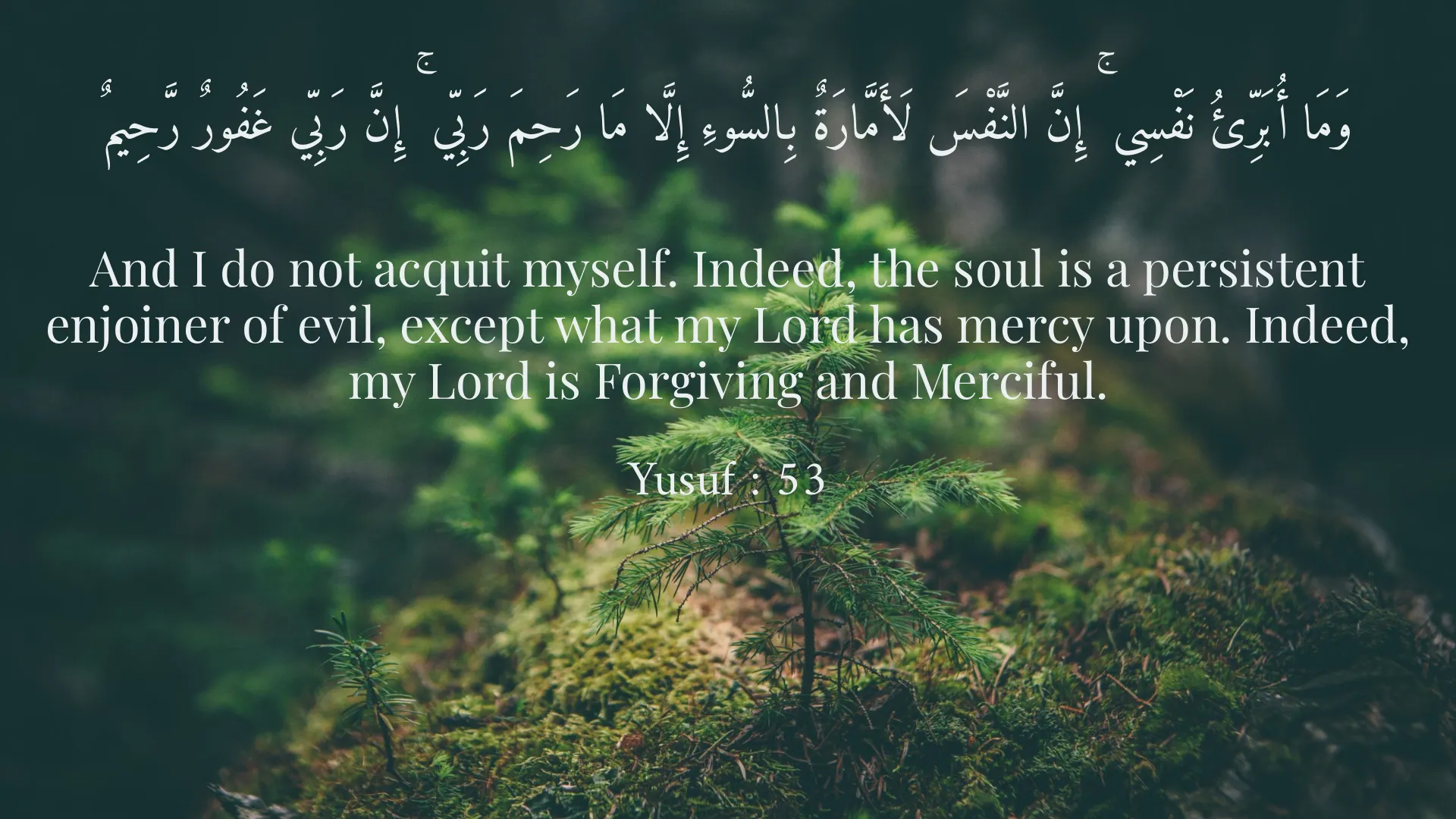
The question, "How to be honest with oneself?", delves into profound aspects of self-refinement and spiritual growth. While the exact phrase "honesty with oneself" may not be explicitly mentioned in the Holy Quran, its fundamental concepts are deeply embedded within various layers of divine revelation, particularly in verses concerning the "Nafs" (self/soul), "Taqwa" (God-consciousness), "Ikhlas" (sincerity), and "Muhasabah an-Nafs" (self-accountability). Honesty with oneself, in essence, means a truthful understanding of one's own being, an awareness of strengths and weaknesses, underlying motives and intentions, and refraining from deceiving oneself about one's true state. This path guides an individual towards inner purity and a more authentic connection with the Divine. Understanding the Nafs and its States: The Quran refers to different states of the human soul, and the first step towards honesty with oneself is to comprehend these states. 1. Nafs al-Ammara bis-Su' (The Soul that Commands Evil): This is the part of the human being that inclines towards desires, sins, and selfishness. In Surah Yusuf, verse 53, Allah states: "And I do not acquit myself. Indeed, the soul is a persistent enjoiner of evil, except what my Lord has mercy upon. Indeed, my Lord is Forgiving and Merciful." (12:53). Honesty with oneself means acknowledging the existence of these inclinations within oneself, rather than denying or justifying them. If one refuses to admit that their soul can lead them astray, they will never strive to rectify it. This admission is the starting point for change and for combating negative tendencies. It is a realistic acceptance, not out of despair, but out of awareness and for planning to overcome these inclinations. This acknowledgment of human fallibility is crucial; it prevents arrogance and fosters humility, making one more receptive to divine guidance. 2. Nafs al-Lawwama (The Self-Reproaching Soul): This soul represents the awakened conscience that reproaches a person after they commit a mistake, calling them towards repentance and reform. Allah swears by this soul in Surah Al-Qiyamah, verse 2: "And I swear by the self-reproaching soul." (75:2). Allah's oath by the self-reproaching soul signifies its profound importance and exalted status within the human being. Honesty with oneself means listening to these inner reproaches, not ignoring them or silencing the conscience with false justifications. When a person is honest with their conscience, they pave the way for sincere repentance (Tawbah Nasuh) and a return to the right path. This self-reproach is a sign of living faith and spiritual wakefulness, which prevents one from completely drowning in sin and allows for continuous self-correction and improvement. 3. Nafs al-Mutma'inna (The Tranquil Soul): This is the highest state of the soul, having found peace and assurance in the remembrance of Allah, freed from satanic whisperings. In Surah Al-Fajr, verses 27-30, Allah says: "O tranquil soul, Return to your Lord, well-pleased and pleasing [to Him], And enter among My [righteous] servants, And enter My Paradise." (89:27-30). Honesty with oneself means striving continuously to attain this state of inner peace and divine pleasure. This is the ultimate goal of the journey of self-knowledge and self-purification, achieved through inner sincerity and righteous deeds. It implies aligning one's actions, thoughts, and intentions so perfectly with divine will that the soul finds ultimate serenity. Sincerity (Ikhlas) in Intention and Action: One of the most significant manifestations of honesty with oneself is Ikhlas. Ikhlas means purity of intention and performing deeds solely for the pleasure of Allah, without any trace of showing off (riya'), hypocrisy, or seeking worldly gain. In Surah Az-Zumar, verse 2, Allah states: "Indeed, We have sent down to you the Book in truth. So worship Allah, [being] sincere to Him in religion." (39:2). One must be honest with oneself and question whether their acts of worship and good deeds are truly for Allah or for gaining people's attention, reputation, or personal benefits. This deep self-examination requires unadulterated honesty with oneself. A hypocrite is someone whose outward appearance differs from their inner reality, and this internal dishonesty is the root of many corruptions. Therefore, honesty with oneself means eradicating any form of hypocrisy and duality, even towards oneself. This level of sincerity ensures that one's efforts are genuinely directed towards spiritual ascent rather than worldly approval. Self-Accountability (Muhasabah an-Nafs): The Quran and the Prophetic tradition heavily emphasize the importance of Muhasabah an-Nafs, which means continuously reviewing one's actions, words, and even thoughts, and evaluating them. In Surah Al-Hashr, verse 18, Allah says: "O you who have believed, fear Allah. And let every soul look to what it has put forth for tomorrow - and fear Allah. Indeed, Allah is Acquainted with what you do." (59:18). This verse directly points to honesty with oneself, as looking at what one has prepared for tomorrow (the Hereafter) necessitates honest self-assessment. Are we truly moving on the right path? Do we acknowledge our shortcomings and sins, and do we strive to make amends? This critical and honest self-reflection helps one avoid self-deception and undue pride. Self-accountability, not only at the end of each day but also in every moment of life, can help us prevent small deviations and constantly tread the path of inner and outer honesty. It allows for consistent correction and ensures that one's spiritual compass remains true. Repentance (Tawbah) and Turning to Allah: Acknowledging sins and mistakes is the pinnacle of honesty with oneself. When a person honestly admits to themselves that they are a sinner and are in need of forgiveness, the path to genuine repentance opens up. The Quran repeatedly emphasizes the importance of Tawbah. This is not a superficial, verbal repentance, but a sincere one (Tawbah Nasuh) accompanied by heartfelt regret and a firm resolve to abandon the sin in the future. Honesty in repentance means that one is truly ashamed of their sin, not just outwardly but inwardly, and genuinely intends to stop it. This act is a sign of a healthy soul and a desire for purity. It signifies a profound humility and recognition of one's dependence on divine mercy. Avoiding Self-Deception and Awareness of Satan's Whispers: Satan constantly tries to deceive humans and distances them from their true selves. One of Satan's tactics is to induce self-deception, causing individuals to justify their sins or refuse to see their flaws. Honesty with oneself means being aware of these stratagems and resisting them. The Quran warns that Satan is a clear enemy to humanity and commands evil and indecency. By being honest with oneself, one can distinguish between divine inspirations and satanic whispers, preventing falling into the trap of self-deception. Constant Remembrance of Allah (Dhikr and Taqwa): Taqwa, or God-consciousness and piety, is the primary foundation for honesty with oneself. One who constantly feels the presence of Allah and knows that Allah is aware of all their thoughts and actions (Surah Al-Anfal, verse 24: "And know that Allah intervenes between a person and his heart and that to Him you will be gathered."), cannot lie to themselves or others. Constant remembrance of Allah and reflection on divine verses guide a person towards true self-knowledge and inner honesty. This continuous state of awareness acts as a spiritual mirror, reflecting one's true state back to them, making self-deception almost impossible. In conclusion, honesty with oneself is a continuous journey and an internal struggle. This honesty not only leads to purity of soul and tranquility of heart but also deepens one's relationship with the Almighty and keeps them steadfast on the path of true servitude. By truly understanding the Nafs, cultivating sincerity in deeds, practicing constant self-accountability, offering sincere repentance, and maintaining God-consciousness (Taqwa), we can take effective steps towards honesty with ourselves and attain the "Nafs al-Mutma'inna." This path is prescribed by Allah for human success and salvation. It is the only way for a person to be freed from internal and external hypocrisy and achieve personal integrity. A person honest with themselves sees their flaws, accepts them, and strives to correct them. They not only recognize their strengths but are also aware of their weaknesses, knowing that absolute perfection belongs only to Allah and that they are always in need of divine grace and forgiveness. This inner honesty prevents arrogance and pride, leading to humility and genuine servitude. Living by this honesty results in inner contentment and lasting peace, as there is no contradiction between one's outward appearance and inner reality.
Related Verses
وَمَا أُبَرِّئُ نَفْسِي ۚ إِنَّ النَّفْسَ لَأَمَّارَةٌ بِالسُّوءِ إِلَّا مَا رَحِمَ رَبِّي ۚ إِنَّ رَبِّي غَفُورٌ رَّحِيمٌ
And I do not acquit myself. Indeed, the soul is a persistent enjoiner of evil, except what my Lord has mercy upon. Indeed, my Lord is Forgiving and Merciful.
Yusuf : 53
وَلَا أُقْسِمُ بِالنَّفْسِ اللَّوَّامَةِ
And I swear by the self-reproaching soul.
Al-Qiyamah : 2
يَا أَيُّهَا الَّذِينَ آمَنُوا اتَّقُوا اللَّهَ وَلْتَنظُرْ نَفْسٌ مَّا قَدَّمَتْ لِغَدٍ ۖ وَاتَّقُوا اللَّهَ ۚ إِنَّ اللَّهَ خَبِيرٌ بِمَا تَعْمَلُونَ
O you who have believed, fear Allah. And let every soul look to what it has put forth for tomorrow - and fear Allah. Indeed, Allah is Acquainted with what you do.
Al-Hashr : 18
Short Story
It is related in Saadi's Gulistan that a king once asked a wise man, "Who is your greatest enemy?" The wise man paused and replied, "Myself." The king was astonished and said, "Can one's own self be one's enemy?" The wise man answered, "Yes, if you do not know your soul (nafs) and are not honest with it, it will lead you down paths that no external enemy could. Many deviations and hypocrisies stem from the fact that a person is not honest with their own self, and what they hold within does not match their outward appearance. Until a person truly understands their inner self and battles the whisperings of the commanding soul (nafs al-ammara), they will never taste true salvation." The king was awakened by these words and from then on, devoted himself more to self-knowledge and honesty with his soul, finding a peace he had never before experienced in his reign. This story teaches us that our greatest battle is within ourselves, and honesty with the self is the key to victory in this struggle.