Quranic Answer
In today's fast-paced world, where the relentless pursuit of productivity and non-stop work often pushes individuals towards a mechanistic existence, the question "How to be human and not just a working machine?" holds profound significance. The Holy Quran, as a comprehensive guide for life, offers a deep and multifaceted answer that transcends any purely material or economic definition of a human being. Islam views humans not merely as a labor force or a tool for work, but as a vicegerent on Earth, a being endowed with spiritual, intellectual, emotional, and social dimensions, possessing a higher purpose than simply accumulating wealth or performing assigned tasks. The first and perhaps most crucial principle the Quran lays out for being truly human is understanding the purpose of creation. In Surah Adh-Dhariyat, verse 56, Allah states: "And I did not create the jinn and mankind except to worship Me." This verse does not exclusively refer to ritualistic acts of worship, but rather, "worship" in the Quranic sense encompasses every action performed with sincere intention and for the pleasure of Allah. Work and earning a livelihood, serving one's family, seeking knowledge, helping the needy, and even resting, if undertaken with a divine intention, can all be considered acts of worship. A person who sees their primary purpose as serving God will never find themselves trapped in the confines of being a mere working machine, because every activity becomes part of a spiritual and purposeful journey. This perspective imbues their work with deeper meaning and value, saving them from emptiness and meaninglessness. The second principle is humanity's role as Allah's "Khalifa" (vicegerent) on Earth. In Surah Al-Baqarah, verse 30, it is mentioned: "And [mention, O Muhammad], when your Lord said to the angels, 'Indeed, I will make upon the earth a successive authority.'" This status of vicegerency not only places upon humanity the responsibility of managing and developing the Earth but also necessitates the duty to uphold justice, spread goodness, and establish the divine order. A working machine is solely focused on output and efficiency, but a human vicegerent considers the consequences of their actions, their impact on society, and the sustainability of resources. They understand that they are accountable before God and His creation. This sense of responsibility prevents humans from becoming indifferent or self-centered, transforming them into active, influential, and conscientious beings. The third Quranic teaching emphasizes "balance" and "moderation" in all aspects of life. The Quran does not push humans towards extremism or negligence but calls for a balanced life. In Surah Ar-Rahman, verses 7 to 9, Allah says: "And the heaven He raised and set the balance. That you may not transgress [due to] the balance. And establish weight in justice and do not make deficient the balance." These verses, although primarily addressing cosmic and social justice, also impart a vital lesson about balance in individual life. A human should not devote all their time and energy solely to work and earning money; rather, they must allocate time for worship, for family, for self-reflection and learning, for rest, and for helping others. A machine that only works will wear out and break down; a human who only works will suffer spiritually and emotionally, preventing their growth and advancement. Achieving this balance helps individuals cultivate various dimensions of their being and evolve into a more complete entity. Fourth is the "care of the soul and mind" and "remembrance of the Hereafter." The Quran repeatedly warns against being completely engrossed in worldly pleasures and distractions, urging individuals not to forget their ultimate goal. In Surah Al-Jumu'ah, verses 9 and 10, Allah states: "O you who have believed, when [the adhan] is called for the prayer on the day of Jumu'ah, then proceed to the remembrance of Allah and leave trade. That is better for you, if you only knew. And when the prayer has been concluded, disperse through the land and seek from the bounty of Allah, and remember Allah often that you may succeed." These verses clearly show that even amidst intense economic activities, a human must maintain their connection with the Creator and purify their soul through the remembrance of Allah. A machine deprived of spiritual fuel will cease to function. The remembrance of the Hereafter and life after death helps individuals set their priorities and avoids tying their entire worth to their productivity or possessions. The fifth aspect is the "importance of ethics and human interactions." The Quran, in numerous verses, emphasizes good character, justice, benevolence, honesty, patience, and kindness. True humanity is contingent upon these qualities. A machine merely executes a program, but a human, with their heart and intellect, shows kindness to others, forgives mistakes, and rushes to the aid of the oppressed. Surah Al-Ma'un (verses 1-7) condemns those who pray but do not help orphans or feed the poor. This indicates that mere work and worship, without attention to social and ethical dimensions, are incomplete. Humans must empathize with others, establish healthy relationships, and be beneficial to society. These are the qualities that distinguish them from a purely mechanical entity. In conclusion, to be truly human and not merely a working machine, one must always pay attention to these points: make the remembrance and worship of Allah the primary purpose of life; recognize and fulfill one's responsibility as Allah's vicegerent on Earth; establish balance between material and spiritual, individual and social, work and rest; never neglect one's spirituality and remember the Hereafter; and at all times, make ethics and humanity the guiding principles of one's actions. This comprehensive approach, rooted in Quranic teachings, helps us lead a meaningful, purposeful, and fully human life, rather than an empty, mechanistic existence.
Related Verses
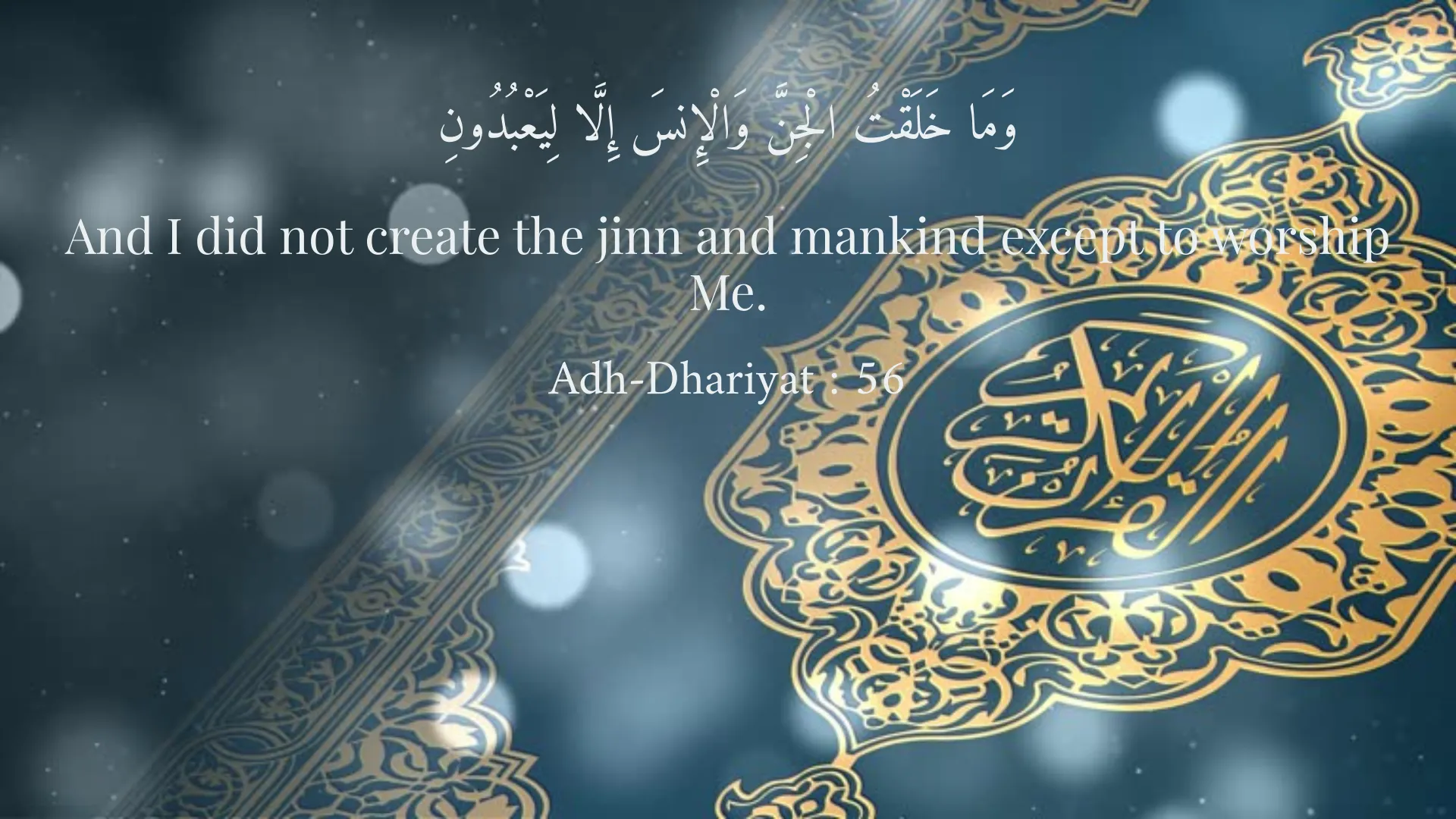
وَمَا خَلَقْتُ الْجِنَّ وَالْإِنسَ إِلَّا لِيَعْبُدُونِ
And I did not create the jinn and mankind except to worship Me.
Adh-Dhariyat : 56
وَإِذْ قَالَ رَبُّكَ لِلْمَلَائِكَةِ إِنِّي جَاعِلٌ فِي الْأَرْضِ خَلِيفَةً ۖ قَالُوا أَتَجْعَلُ فِيهَا مَن يُفْسِدُ فِيهَا وَيَسْفِكُ الدِّمَاءَ وَنَحْنُ نُسَبِّحُ بِحَمْدِكَ وَنُقَدِّسُ لَكَ ۖ قَالَ إِنِّي أَعْلَمُ مَا لَا تَعْلَمُونَ
And [mention, O Muhammad], when your Lord said to the angels, 'Indeed, I will make upon the earth a successive authority.' They said, 'Will You place upon it one who will cause corruption therein and shed blood, while we declare Your praise and sanctify You?' Allah said, 'Indeed, I know that which you do not know.'
Al-Baqarah : 30
يَا أَيُّهَا الَّذِينَ آمَنُوا إِذَا نُودِيَ لِلصَّلَاةِ مِنْ يَوْمِ الْجُمُعَةِ فَاسْعَوْا إِلَىٰ ذِكْرِ اللَّهِ وَذَرُوا الْبَيْعَ ۚ ذَٰلِكُمْ خَيْرٌ لَكُمْ إِنْ كُنْتُمْ تَعْلَمُونَ
O you who have believed, when [the adhan] is called for the prayer on the day of Jumu'ah, then proceed to the remembrance of Allah and leave trade. That is better for you, if you only knew.
Al-Jumu'ah : 9
Short Story
They say there was a merchant in Shiraz who, from dawn till dusk, thought of nothing but accumulating wealth. There was no heartfelt laughter, no kind word, as if he were a hand that moved only to count silver and gold. People admired him in business, but in secret, they called him 'the Money Machine.' One day, a wise dervish was passing through the bazaar and saw the merchant, even during a short break, with his eyes fixed on his ledger and his lips murmuring profits and losses. The dervish, with a gentle smile, said: 'My friend, what is all this toil for? You build a house in this fleeting world, but what abode do you prepare for your own soul?' The merchant, impatiently, replied: 'Life means work, and honor means wealth!' The dervish sighed and said: 'Your body is the mount for your soul. If you constantly feed the mount but starve the rider, how far will this journey take you? To be human is not merely about acquisition; it is about a living heart that connects with God and His creation, about an eye that sees beauty and a hand that offers help. When you are such, you are no longer just a working machine, but a soul on the path to perfection.' The dervish's words were like water on the fire of the merchant's greed. From then on, though he continued his trade, he began to dedicate hours to contemplation, to helping the poor, and to sitting with his family. He saw that not only did his wealth not diminish, but he also found true peace and joy, and he no longer saw himself merely as a cog in the world's factory, but as a human with a free soul and an open heart.