Quranic Answer
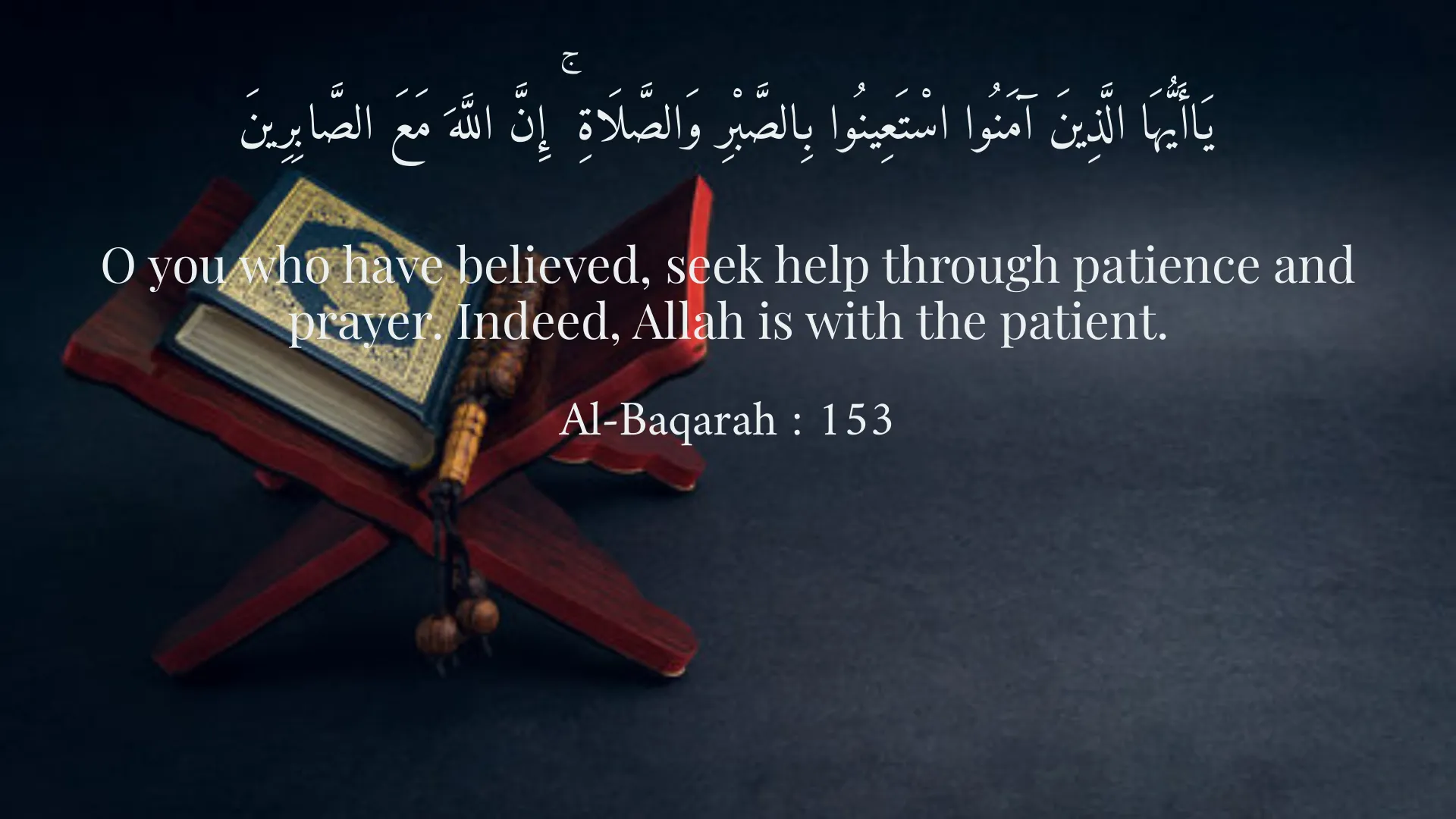
In the Holy Quran, patience is highlighted as one of the prominent traits of believers. Allah commands the believers in Surah Al-Baqarah, verse 153, 'O you who have believed, seek help through patience and prayer. Indeed, Allah is with the patient.' This profound verse encapsulates the essence of patience in the life of a believer, particularly during challenging times. It illustrates that patience and prayer are not merely practices but vital instruments in fortifying one's spirit and soothing the heart amidst turmoil. To develop a deeper understanding of the significance of patience in the Islamic paradigm, we must explore its implications in both spiritual and practical dimensions. The concept of patience in Islam, known as 'Sabr,' transcends mere endurance; it embodies a proactive response to adversity that requires strength of character. In moments of distress, patience empowers individuals to confront their trials with a steadfast heart. It is essential to remember that every affliction we encounter is part of divine destiny; thus, embracing patience becomes an act of faith. By acknowledging that our struggles are divinely ordained, believers can cultivate a sense of peace and resilience, recognizing that they are not alone in their trials. Further elaboration of this concept can be found in Surah Al-Imran, verse 186, which reminds us, 'You will surely be tested in your properties and your own selves, and you will certainly hear from those who were given the Scripture before you and from those who associate others with Allah much abuse. But if you remain patient and fear Allah - indeed, that is of the matters [worthy] of determination.' This verse reinforces the notion that tests and challenges are an integral part of life. It also serves as a vivid reminder of the importance of patience and the necessity to maintain faith in Allah, particularly when faced with hardship or abuse. The trials mentioned are not arbitrary; they are carefully designed to test the mettle of a believer's faith. In confronting adversity, maintaining a positive mindset and acceptance can be advantageous. Patience allows believers to navigate through life’s challenges with grace and composure, transforming obstacle into opportunity. Positive reflection plays a critical role in this transformative process. It is essential to understand that afflictions may signify God's mercy, leading to spiritual growth and strength. This perspective allows believers to view their struggles not as punishment but rather as opportunities for development, inviting a deeper connection with their Creator. Moreover, the Quran emphasizes the importance of maintaining good thoughts about God. This aspect of patience is crucial; it guides believers to remain steadfast and calm amidst challenges. It encourages a mindset that recognizes divine wisdom even in the face of hardship. Patience requires not only endurance but also optimism, as believers are urged to trust in Allah's plan. This trust can foster a spirit of hope and resilience, transforming moments of despair into stepping stones toward personal and spiritual growth. The role of community and support cannot be understated when discussing patience among believers. The Quran teaches us the value of unity and camaraderie, which serves as a practical means of nurturing patience. Support from family, friends, and the broader community can provide the necessary encouragement during trying times. Surah Al-Hujurat reminds believers of the importance of community, stating, 'And hold firmly to the rope of Allah all together and do not become divided.' This unity fosters patience, as individuals can lean on one another for moral support, encouragement, and strength, thus emphasizing that enduring hardship is never a solitary path but a collective journey. Ultimately, the implementation of patience in practice goes beyond mere survival; it is about thriving through adversity. It entails the cultivation of virtues such as forgiveness, empathy, and understanding, as patience often requires a change in perspective. Through patience, one learns to forgive not only others but also oneself. It nurtures an understanding that while mistakes are part of the human experience, growth is achievable through resilience and self-reflection. The teachings of the Prophet Muhammad further illuminate the ideal of patience. Through his life and experiences, he exemplified unwavering patience in the face of hostility and trials. His ability to maintain composure during adversity serves as a guiding light for believers, encouraging them to adopt similar behaviors in their own lives. The Prophet’s patience manifested in his interactions with others, reminding us that kindness and understanding are indispensable components of a patient heart. In conclusion, patience is a multifaceted virtue essential for every believer's journey in life. It is a commandment from Allah that serves as a testament of one's faith, resilience, and unwavering trust in divine wisdom. By integrating patience into our daily practices, we align ourselves with the high standards set forth in the Quran. In doing so, we cultivate an enduring spirit capable of overcoming adversity while paving the way for personal and spiritual growth. As believers, the affirmation that 'Indeed, Allah is with the patient' offers profound comfort and strength, molding a path of perseverance, steadfastness, and unwavering faith.
Related Verses
يَاأَيُّهَا الَّذِينَ آمَنُوا اسْتَعِينُوا بِالصَّبْرِ وَالصَّلَاةِ ۚ إِنَّ اللَّهَ مَعَ الصَّابِرِينَ
O you who have believed, seek help through patience and prayer. Indeed, Allah is with the patient.
Al-Baqarah : 153
لَتُبْلَوُنَّ فِي أَمْوَالِكُمْ وَأَنفُسِكُمْ وَ لَتَسْمَعُنَّ مِنَ الَّذِينَ أُوتُوا الْكِتَابَ مِن قَبْلِكُمْ وَمِنَ الَّذِينَ أَشْرَكُوا أَذًى كَثِيرًا ۚ وَإِن تَصْبِرُوا وَتَتَّقُوا فَإِنَّ ذَٰلِكَ مِنْ عَزْمِ الْأُمُورِ
You will surely be tested in your properties and your own selves, and you will certainly hear from those who were given the Scripture before you and from those who associate others with Allah much abuse. But if you remain patient and fear Allah - indeed, that is of the matters [worthy] of determination.
Al-Imran : 186
فَاصْبِرْ إِنَّ وَعْدَ اللَّهِ حَقٌّ ۖ فَإِمَّا نَخْلُكُم أوْ نُعَذِّبَكُمْ فِي الدُّنْيَا
So be patient. Indeed, the promise of Allah is truth.
Ghafir : 55
Short Story
Once there was a man named Ali who faced many challenges in his life. He was unsure how to remain patient in the face of these difficulties. He remembered the verses of the Quran and decided to seek help from Allah through patience and prayer. Ali would stand to pray every day, and through his supplications and patience, he stood firm against life’s challenges. Over time, he realized that patience gave him tranquility and strength. He benefited from these experiences and taught others to remember God and be patient during hard times.