Quranic Answer
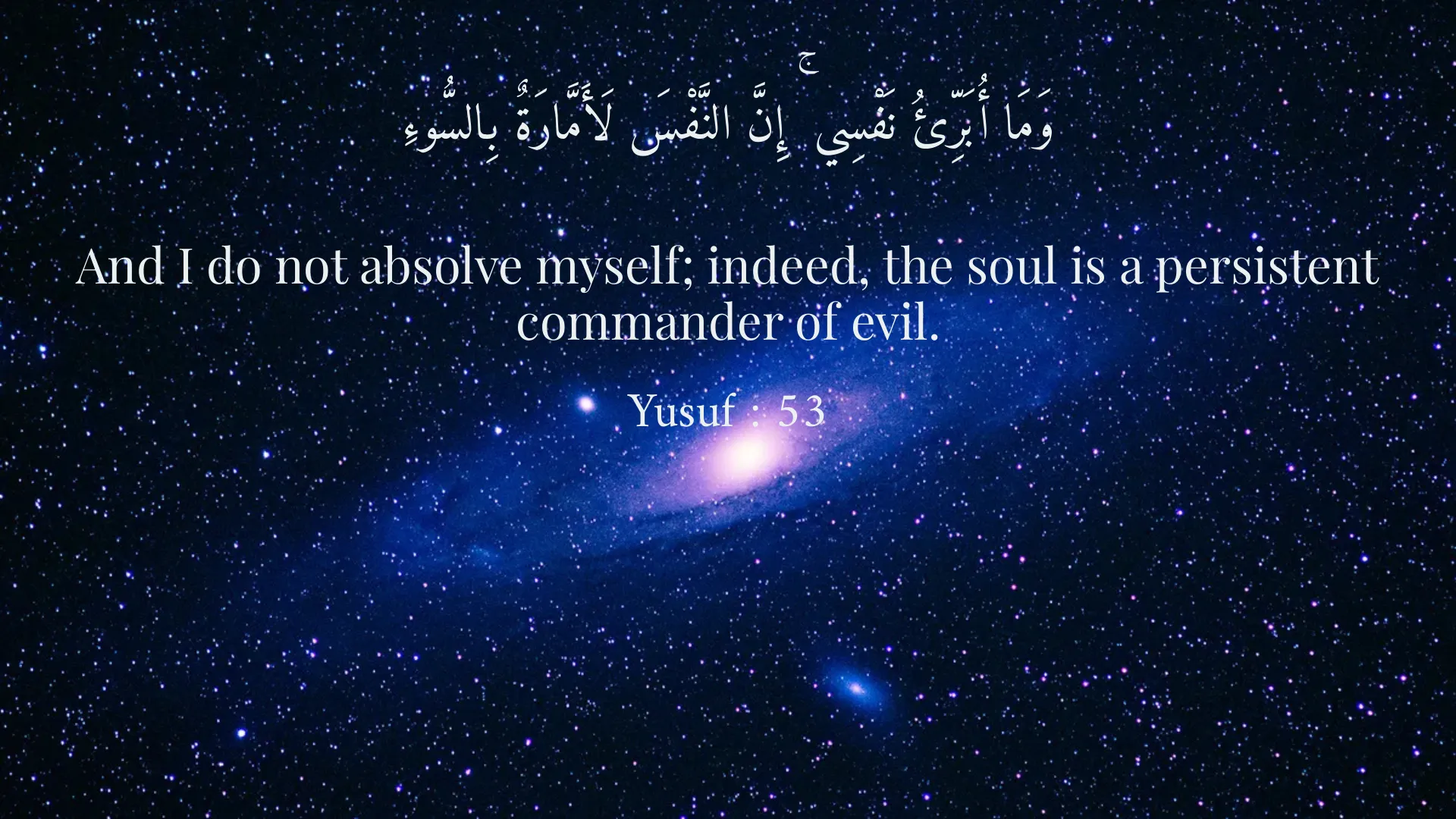
Human beings are creatures of desire. From the earliest moments of existence, individuals are driven by an array of wants and yearnings — a thirst for love, validation, success, and material possessions. Yet, the inner conflict between these desires and the higher moral standards that societies espouse often creates a tumultuous struggle within. Rooted in various philosophical, spiritual, and psychological frameworks, this duality is intrinsic to the human experience. While desires may be natural, they can also lead individuals astray if not properly managed. In this context, the guidance provided in religious texts can be particularly illuminating. Among these, the Quran serves as a profound source of wisdom, offering insights into the nature of desires and the ways through which individuals can navigate their complexities. One of the critical verses that address this inner struggle can be found in Surah Yusuf, verse 53, which states, "And I do not absolve myself; indeed, the soul is a persistent commander of evil." This verse underscores the idea that the human soul is inherently inclined toward negativity and that self-restraint requires conscious effort and vigilance. The depiction of the soul as a 'persistent commander of evil' serves as a reminder of the constant battle individuals face — a battle that must be fought not only with external tools but also with internal fortitude and self-awareness. This intrinsic understanding of the self is the first step towards achieving mastery over one's desires. It beckons individuals to recognize their tendencies towards evil and to approach them with mindfulness. In seeking to overcome these tendencies, a close relationship with God emerges as a foundational strategy. The bond between human beings and the divine offers solace and guidance, steering individuals towards making choices aligned with their higher selves. Surah Al-Baqarah, verse 186, beautifully encapsulates this notion: "And when My servants ask you concerning Me, indeed I am near. I respond to the supplicant when he calls upon Me." This verse emphasizes the omnipresence of Allah and His readiness to assist His servants in their times of need. It reassures believers that divine support is always within reach, reinforcing the importance of seeking refuge in prayer and supplication. In seeking God's help, individuals can find strength and clarity, which become essential tools in resisting the pull of their base desires. An essential element of this spiritual journey is patience and resilience, particularly when faced with challenges. Surah Al-Imran, verse 135 states, "And those who, when disaster strikes them, say, 'Indeed we belong to Allah, and indeed to Him we will return.'" This verse speaks volumes about the attitude of acceptance and the recognition of a higher purpose during testing times. Challenges and calamities are part of the human experience, but the approach one takes in responding to them can either diminish or enhance one's spiritual strength. By invoking patience and steadfastness, individuals can navigate through storms of life with grace, allowing them to transcend the immediate allure of negative behaviors born out of desperation or despondency. Beyond prayer and reliance on divine help, the practice of self-awareness plays a pivotal role in the management of desires. This conscious awareness involves deep reflection on one’s behaviors, motivations, and outcomes. Engaging in self-monitoring allows individuals to identify patterns of desire-driven actions and consider the possible consequences of succumbing to these impulses. It is through this cycle of reflection that people can begin to align their choices with their values and beliefs. The relevance of listening to and absorbing religious teachings cannot be overstated in the pursuit of mental and spiritual tranquility. The Quran and Hadith provide a rich tapestry of guidance, urging individuals to live in accordance with truth and virtue. By immersing oneself in the wisdom of these teachings, individuals can cultivate a strong ethical compass that helps delineate right from wrong. The ability to discern between fleeting desires and enduring virtues can significantly impact one's overall well-being, fostering a sense of peace in the process. Moreover, the spiritual path often requires diligent efforts and a commitment to growth. As individuals progress in their journey, they develop resilience against the temptations of the self. By integrating principles of self-restraint, patience, and continuous reflection into their daily lives, they can build immunity against the often overwhelming forces of desire. The cultivation of virtues such as discipline, gratitude, and humility are essential in fortifying one's character, enabling them to navigate life’s complexities with poise and integrity. In conclusion, the Quran provides timeless guidance for humanity, particularly in understanding and managing our desires. The recognition of the soul's inclination towards evil, coupled with a proactive approach involving divine support and self-awareness, creates a comprehensive framework for personal growth and spiritual fulfillment. As individuals deepen their relationship with God and engage meaningfully with the teachings of Islam, they lay the groundwork for a life marked by purpose and resilience. Ultimately, the journey towards overcoming desires is not merely about restraint; it is about transformation — an evolution towards becoming one's best self in the service of God and humankind. Through patience, reflection, and unwavering commitment, individuals can achieve not only mental and spiritual tranquility but also a profound connection to the divine that guides them in their earthly endeavors.
Related Verses
وَمَا أُبَرِّئُ نَفْسِي ۚ إِنَّ النَّفْسَ لَأَمَّارَةٌ بِالسُّوءِ
And I do not absolve myself; indeed, the soul is a persistent commander of evil.
Yusuf : 53
وَإِذَا سَأَلَكَ عِبَادِي عَنِّي فَإِنِّي قَرِيبٌ ۖ أُجِيبُ دَعْوَةَ الدَّاعِ إِذَا دَعَانِ
And when My servants ask you concerning Me, indeed I am near. I respond to the supplicant when he calls upon Me.
Al-Baqarah : 186
وَالَّذِينَ إِذَا أَصَابَهُم مُّكَارِهٌ سَتَرَتْهُمْ أَبَصَارُهم
And those who, when disaster strikes them, say, 'Indeed we belong to Allah, and indeed to Him we will return.'
Al-Imran : 135
Short Story
One day, Ali decided to control his desires. In his solitude, he engaged in prayer and Quran recitation, realizing he needed to get closer to God. Day by day, with prayers and reflection, he felt more at peace and managed his desires better. One night after prayer, he felt a profound tranquility in his heart and said, 'God is always by my side, and I must constantly fight against my self-desires.'