Quranic Answer
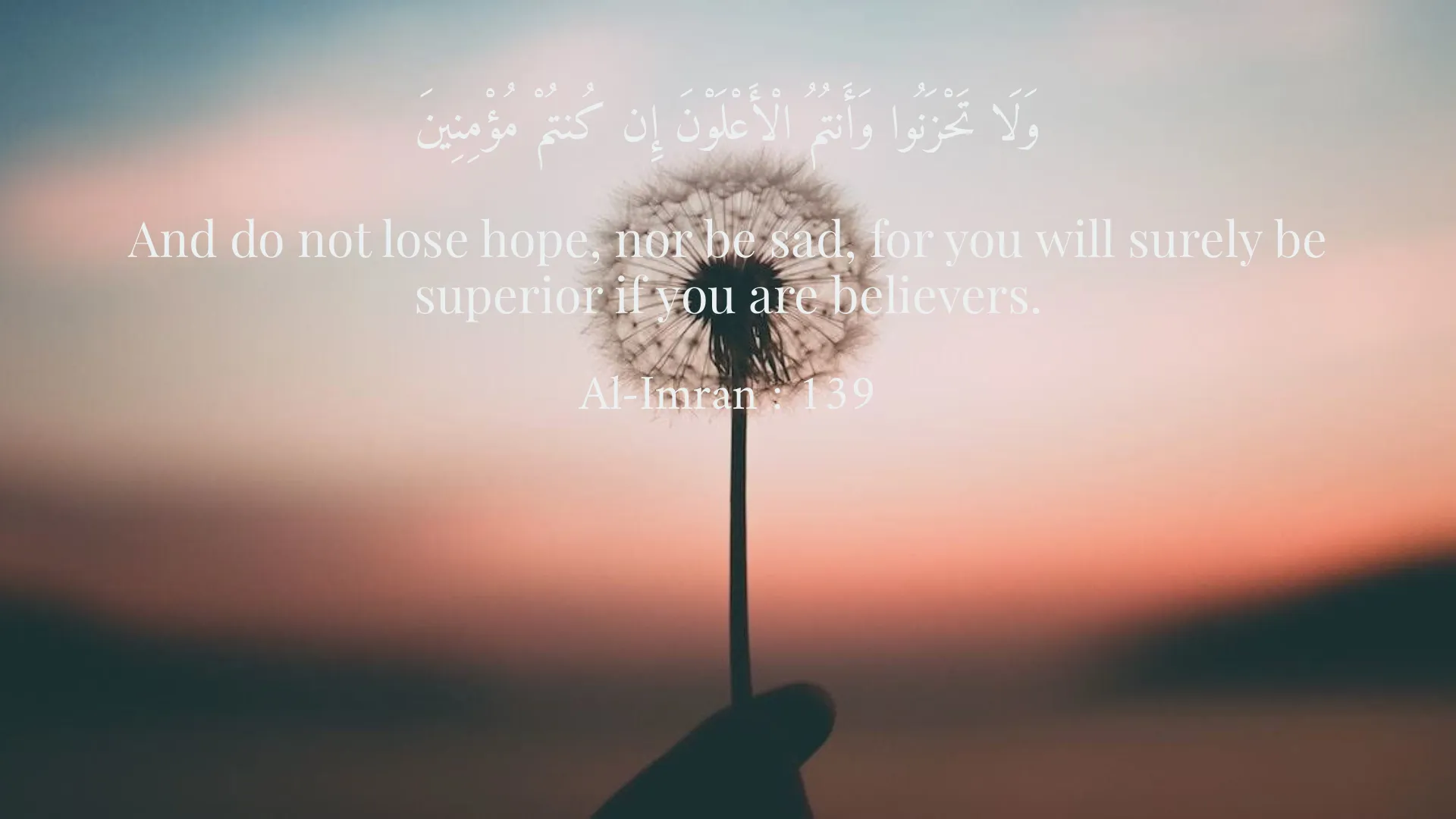
Coping with despair and fostering hope amidst challenges is a theme that resonates deeply throughout the Holy Quran. The verses within this sacred text provide guidance and reassurance, particularly during times of difficulty and disorder. The teachings encapsulate the power of faith and the importance of maintaining an optimistic outlook, no matter how dire the situation may seem. The Quran provides solace to the believers, emphasizing that despair is not an option when faith in Allah is steadfast. One of the most profound verses in this regard is found in Surah Al-Imran, verse 139, which states, 'And do not lose hope, nor be sad, for you will surely be superior if you are believers.' This verse serves as a reminder that our belief in Allah can serve as a powerful tool against life's challenges. The call to not lose hope invites believers to focus on their faith, which can act as a buffer against despair. It emphasizes that adversities can be handled with strength when one maintains a strong belief and a firm grasp on hope. The Quran acknowledges the trials of life and reassures readers that they are not alone in their struggles. The message conveyed here is one of empowerment; it firmly asserts that belief in Allah is a pathway to resilience. When faced with adversity, it is essential to remember this promise of superiority for the believers. The notion of superiority is not just in worldly success but is deeply rooted in spiritual fulfillment and inner peace. Furthermore, Surah Al-Baqarah, verse 286 enhances this sentiment by stating, 'Allah does not burden a soul beyond that it can bear.' This foundational verse provides the assurance that every hardship has a stability point; there is no issue in life that we cannot manage. It serves as a comforting reminder that Allah's wisdom guides the limits of our struggles. Each challenge, no matter how daunting it may seem, is within our capacity to endure. This acknowledgment of one's strength instills a sense of hope, providing believers with the strength to confront and manage their difficulties. At the core of coping with despair is the strengthening of one's faith in God. Faith stands as a shield against negative thoughts and emotions that often arise in challenging circumstances. When individuals reinforce their belief in Allah and trust in His plan, they cultivate a sense of assurance that they can navigate through life's trials. Positive thinking, fueled by faith, can be transformative. The significance of prayer in fostering hope cannot be neglected. Prayer and the remembrance of Allah are two key elements that help facilitate peace and hopefulness. The act of turning to God in prayer reminds individuals of their dependence on Him and the support that is always available to them. Each supplication or act of remembrance is a step away from despair and a move toward calmness and assurance. An illustrative example of these principles in action is found in Surah Ta-Ha, verse 45, where Moses and his brother Aaron are instructed to trust in God and pray for success in their mission. In this instance, prayer becomes a form of divine communication and reassurance. The directive to trust highlights the importance of reliance on Allah while undertaking significant responsibilities. It showcases that even leaders and prophets experienced challenges needing divine intervention and support. This narrative is a reminder to believers that they are encouraged to seek Allah’s guidance through prayer, especially in their moments of despair. In the context of community, this connection to God can be mirrored in the relationships fostered among believers. Supporting each other in faith acts as a collective buffer against despair and facilitates a culture rooted in hope and positive reinforcement. Each individual has their struggles, and shared belief can create a sense of unity, allowing all members to uplift each other with encouragement and spiritual reminders. The Quran not only provides guidance to individuals but also reinforces communal strength and solidarity. The journey through despair and towards hope is often more manageable when shared with others. Being surrounded by a community of believers acts as an additional pillar of support that enhances one’s ability to cope with challenges. In conclusion, the Holy Quran offers a comprehensive framework for coping with despair and engendering hope amidst life’s challenges. The verses within highlight the empowerment found in faith, the necessity of positive thoughts, and the importance of maintaining a relationship with Allah through prayer and remembrance. The promises outlined in the Quran, such as the assurance that Allah does not burden a soul beyond its capacity, serve as foundations of hope. Additionally, the encouragement to share one’s burdens with fellow believers fosters an environment where collective faith acts as a source of strength. Ultimately, the principles of faith, patience, and supplication are emphasized in the Quran as essential tools to combat despair. By embodying these teachings, believers can navigate through life’s adversities with resilience and optimism, ensuring that hope remains a guiding light through even the darkest of times.
Related Verses
وَلَا تَحْزَنُوا وَأَنتُمُ الْأَعْلَوْنَ إِن كُنتُمْ مُؤْمِنِينَ
And do not lose hope, nor be sad, for you will surely be superior if you are believers.
Al-Imran : 139
لَا يُكَلِّفُ اللَّهُ نَفْسًا إِلَّا وُسْعَهَا
Allah does not burden a soul beyond that it can bear.
Al-Baqarah : 286
فَأَقْلِمَا إِلَى فِرْعَوْنَ إِنَّهُ طَغَى
So go to Pharaoh. Indeed, he has transgressed.
Ta-Ha : 45
Short Story
Once upon a time, a man named Hossem faced numerous challenges in his life. He felt hopeless and distressed. One day, while contemplating his problems, he turned to the Quran. The uplifting verses embraced him and reminded him that faith in God could save him. After a while, Hossem began to pray and supplicate. He found inner peace and reminded himself that there was no problem beyond his ability to overcome. With time, his life improved, and he continued learning from the verses of the Quran.