Quranic Answer
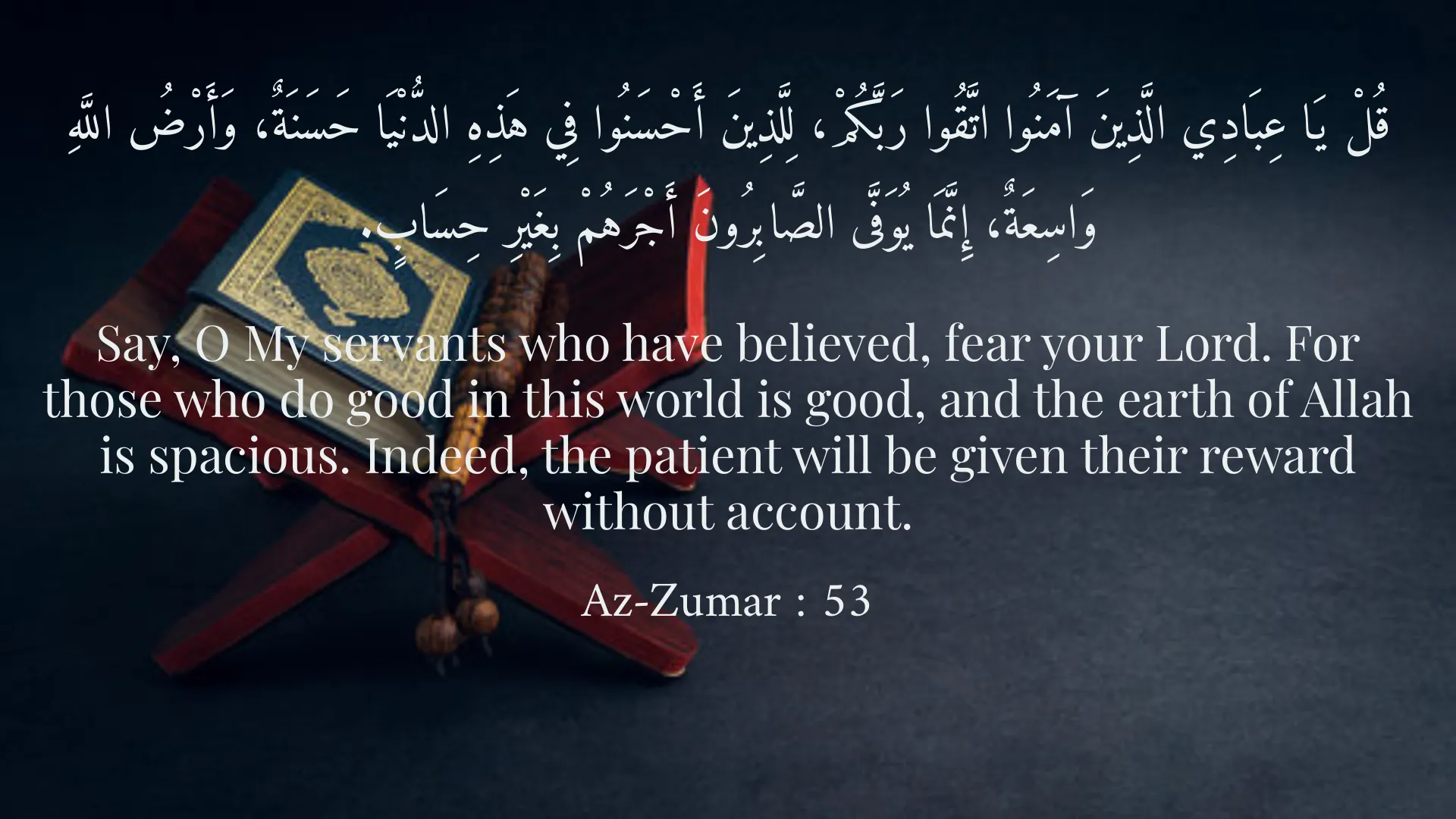
Despair is an emotion that can affect all human beings at various points in their lives. It can stem from numerous sources, including personal loss, social issues, economic challenges, or even feelings of isolation. However, for believers in Allah, the Holy Quran offers a continuous reminder that such despair need not be permanent. Instead, it is often a reflection of one’s faith. The Holy Quran acts as a guiding light meant to illuminate the pathway to hope and faith, encouraging Muslims to keep their spirits high no matter the challenges they face. In the Surah Az-Zumar, verse 53, Allah explicitly addresses His servants, saying, ‘Say, O My servants who have believed, fear your Lord. For those who do good in this world is good, and the earth of Allah is spacious. Indeed, the patient will be given their reward without account.’ This passage serves as a potent reminder to believers to cultivate their relationship with Allah and strive to do good deeds, no matter the circumstances. It gently beckons individuals toward patience—an essential virtue in Islam—while highlighting that the rewards for steadfastness and good action are endless. To further analyze this verse, one can note the call for believers to have 'Taqwa' (fear and consciousness of Allah) and to engage in righteous actions. In doing so, believers are reassured that, regardless of the trials they encounter, there exists both a world of goodness and vastness in Allah’s mercy. The phrase, 'the earth of Allah is spacious,’ reminds individuals of the numerous opportunities available to them, reinforcing that despair is often translated into action, and there is a remedy for every ailment if one's heart remains anchored in faith. When the mind is filled with thoughts of Allah’s kindness and forgiveness, despair begins to dissipate. Moreover, the assertion that ‘the patient will be given their reward without account’ encapsulates a critical belief that Allah honors those who exercise patience during their trials. Life’s challenges are inevitable, but what is paramount is the individual's response to those challenges. By adopting patience, believers can combat the negative feelings that often accompany despair. Patience—also known as 'Sabr' in Arabic—is a recurring theme in Islamic teachings, often signifying resilience in times of hardship. Following this, Surah Al-Imran, verse 139 contains another crucial lesson about despair and faith. Allah advises, ‘And do not weaken or grieve, for you will be superior if you are believers.’ This verse can be seen as a source of encouragement during difficult times, urging believers to maintain hope and strength as they navigate through life’s adversities. The importance of faith becomes central in this context; it becomes a source of empowerment that lifts individuals above their despair. By addressing the feelings of weakness or grief that believers may encounter, Allah inspires a profound sense of self-worth and strength in faith. The message is not just about enduring difficulties but also about recognizing that with faith comes a path to superiority, success, and eventual triumph over hardships. This affirmation builds a sense of community among believers who are reminded that they are not alone in their struggles; there exists both divine support and the collective strength of fellow believers. The idea that faith can elevate an individual both spiritually and socially fosters a sense of unity in the Islamic community, encouraging members to uplift each other and combat despair collectively. In another powerful reminder, Surah Al-Baqarah, verse 286 states: ‘Allah does not burden a soul beyond that it can bear.’ This perception introduces a comforting notion to believers that the burdens they experience in life are not random or excessively heavy—they are tailored to individual capacities. The essence of this verse is not just about recognizing the presence of challenges but understanding that these challenges are intentional and purposeful. It suggests that every trial comes with the related potential for growth and understanding. This concept can transform one's view of despair; instead of exacerbating negative emotions, these experiences can be reinterpreted as opportunities for personal development and spiritual refinement. Recognizing that there is ‘always a solution for problems’ becomes a powerful message of faith—one that inspires resolve as believers encounter inevitable challenges. In summary, the Quran provides a multifaceted approach to combatting despair through a strengthened faith in Allah and an encouragement of key Islamic virtues such as patience, resilience, and communal support. By keeping a close connection to their faith and regularly seeking Allah's mercy and guidance, believers can navigate through life's trials with dignity, ultimately fostering hope rather than despair. Instead of succumbing to hopelessness, Muslims are urged to strengthen their reliance on Allah’s wisdom and call for patience as they journey through life’s hardships. Therefore, in times of despair, the teachings of the Quran encourage believers to look beyond their current struggles, focusing instead on the promises of divine mercy and the inherent strength offered by unwavering faith. The journey through despair, therefore, becomes not just about enduring but also about growing, healing, and ultimately returning to a state of hope driven by reliance on God.
Related Verses
قُلْ يَا عِبَادِي الَّذِينَ آمَنُوا اتَّقُوا رَبَّكُمْ، لِلَّذِينَ أَحْسَنُوا فِي هَذِهِ الدُّنْيَا حَسَنَةٌ، وَأَرْضُ اللَّهِ وَاسِعَةٌ، إِنَّمَا يُوَفَّى الصَّابِرُونَ أَجْرَهُمْ بِغَيْرِ حِسَابٍ.
Say, O My servants who have believed, fear your Lord. For those who do good in this world is good, and the earth of Allah is spacious. Indeed, the patient will be given their reward without account.
Az-Zumar : 53
وَلَا تَهِنُوا وَلَا تَحْزَنُوا وَأَنتُمُ الْأَعْلَوْنَ إِن كُنتُم مُّؤْمِنِينَ.
And do not weaken or grieve, for you will be superior if you are believers.
Aali Imran : 139
لَا يُكَلِّفُ اللَّهُ نَفْسًا إِلَّا وُسْعَهَا.
Allah does not burden a soul beyond that it can bear.
Al-Baqarah : 286
Short Story
One day, Sepehr felt sorrow and despair in his heart. He remembered the verses of the Quran and decided to focus on his faith. He prayed and relied on Allah. Over time, he realized that despair helped him none and eventually joy and hope returned to him.