Quranic Answer
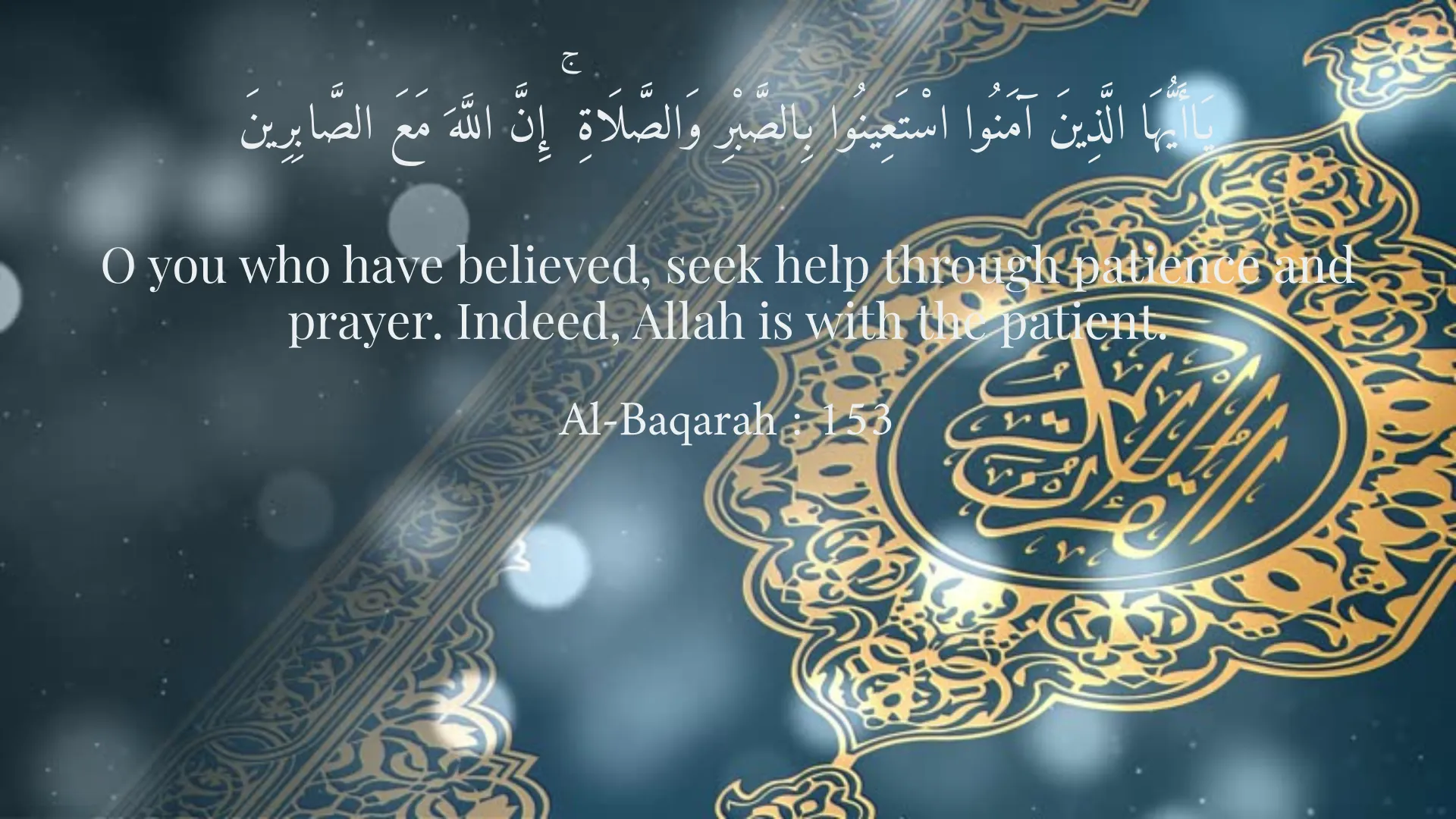
In the Holy Quran, Allah teaches us to be patient and steadfast in the face of life's difficulties and challenges. This notion of patience is not merely a passive waiting but an active engagement that helps forge a stronger moral character, one that aligns itself with the values of faith and perseverance. The significance of patience in our lives can be gleaned profoundly from the sacred scripture. In Surah Al-Baqarah, verse 153, Allah declares, 'O you who have believed, seek help through patience and prayer. Indeed, Allah is with the patient.' This verse acts not only as counsel for personal struggles but also as guidance for collective experiences among believers. Here, Allah emphasizes that we are not alone in our battles; rather, we have divine support as we journey through life's trials. The call for patience indicates that it is inevitable to face adversities during our existence. Life, in its essence, is replete with uncertainties and challenges, which often test our faith and resolve. The teachings from this verse urge us to seek refuge in two critical avenues when confronting trials: patience and prayer. Patience is the enduring capacity to withstand difficult circumstances without losing hope or faith. It is about maintaining an an inner calmness that manifests itself even in turbulent times. Prayer, on the other hand, serves as the lifeline to our Creator, providing emotional solace and spiritual grounding. Together, they act as essential tools for coping with hardships and adversities, allowing believers to foster a deep connection with Allah while navigating the complexities of life. In another powerful verse, Surah Al-Imran, verse 139, Allah reminds us: 'And do not weaken and do not grieve, and you will be superior if you are [true] believers.' This verse conveys a powerful message of resilience, urging believers not to succumb to despair. Instead, it reassures us that our faith and reliance on Allah will ultimately lead to victory. The phrase 'do not weaken' serves as a reminder that moments of vulnerability should not define our character. Rather, it suggests that recognizing our weaknesses is a part of growing stronger in our faith. To illustrate this, one may consider the context of a believer faced with loss or suffering. Instead of yielding to grief, a steadfast heart maintains trust in Allah's plan and mercy. This is essential in maintaining a strong spiritual compass. The assurance that victory follows faith can be a powerful motivator, encouraging believers to push through adversity rather than allowing it to undermine their resolve. The Quran continuously reassures its followers that they are not alone in their struggles. Indeed, the myriad stories of prophets and believers throughout the holy text manifest the promise that patience leads to growth and ultimate success. Each narrative embodies the divergence of paths taken when faced with trial. Some falter, while others rise, demonstrating the transformative effects of placing trust in Allah amidst daunting circumstances. Tackling challenges effectively requires an understanding that these adversities are not simply obstacles, but rather profound opportunities for personal and spiritual growth. They invite introspection, compelling us to reevaluate our purpose and objectives in life. Through embracing difficulties, we become more resilient, learning to trust in ourselves, others, and most importantly, Allah. This interaction and engagement with our struggles foster a sense of empathy towards others undergoing personal battles. We learn to support one another, creating a community rooted in compassion and patience, reminiscent of the communal solidarity emphasized in Islamic teachings. Furthermore, it is crucial to recognize that patience and prayer are not finite resources. They can be cultivated and nurtured. They are skills that we can develop over time through practice and reflection. Daily prayers act as a constant reminder of our connection to Allah and serve to fortify our resolve to remain patient. During moments of distress, our supplications become the bridge connecting our hearts to the divine, allowing us to pour out our concerns and seek guidance. This deep sense of connection fosters tranquility in our hearts and minds, laying the foundation for resilience. Building resilience is fundamental in confronting life’s adversities. It requires acknowledging that suffering is an inherent part of existence. Rather than viewing challenges as barriers, we should approach them with an attitude of growth and improvement. The most profound lessons often come from navigating through hardships. In achieving a better understanding of ourselves through trials, we cultivate inner strength and conviction that carry forward into future experiences. Moreover, the practice of patience can also manifest itself in our interactions with others. In a world filled with chaos, misunderstanding, and fast-paced living, embodying patience serves as an anchor for communities, fostering peace, understanding, and empathy. When individuals maintain patience, they encourage others to do the same, thereby fostering an environment conducive to collective growth and support. A society that upholds patience as a virtue stands to benefit from enhanced social harmony and cohesion. In conclusion, the teachings of patience and prayer in the Holy Quran are central to achieving success in the face of life’s challenges. They equip us with the tools necessary to withstand adversity while nurturing our spiritual connection with Allah. Through developing resilience, we position ourselves not merely to survive obstacles but to thrive in the aftermath. Each hardship, as illustrated within the Islamic teachings and narratives, serves as a catalyst for enhancement, a chance to reinforce our faith, strengthen our community ties, and deepen our understanding of life's purpose. Ultimately, patience and prayer are not merely acts of endurance, but pathways toward enlightenment and fulfillment. In adopting this perspective, believers can find solace in their struggles and a renewed commitment to their faith, fully trusting in Allah’s infinite mercy and boundless compassion.
Related Verses
يَاأَيُّهَا الَّذِينَ آمَنُوا اسْتَعِينُوا بِالصَّبْرِ وَالصَّلَاةِ ۚ إِنَّ اللَّهَ مَعَ الصَّابِرِينَ
O you who have believed, seek help through patience and prayer. Indeed, Allah is with the patient.
Al-Baqarah : 153
وَلا تَهِنُوا وَلَا تَحْزَنُوا وَأَنتُمُ الْأَعْلَوْنَ إِن كُنتُم مُؤْمِنِينَ
And do not weaken and do not grieve, and you will be superior if you are [true] believers.
Al-Imran : 139
Short Story
Once upon a time, a young man named Ahmad faced many difficulties in his life. He felt trapped and very hopeless. One day, he met a counselor who reminded him of the verses of the Quran and said, "Remember that Allah is always with the patient." Ahmad decided to let go of his despair and turn to prayer and supplication. He began to endure the hardships, and after some time, he realized that his life had changed and peace had settled in his heart.