Quranic Answer
Title: Embracing Failure: A Path to Resilience and Spiritual Growth Introduction Failure is often perceived as a dreadful experience, a setback that halts progress and stifles ambitions. However, failure can also be a catalyst for growth, insight, and spiritual development. The Holy Quran, regarded by Muslims as the divine revelation and guidance for humanity, offers profound wisdom pertaining to patience, endurance, and the inherent value of facing life's challenges. Verses like those found in Surah Al-Baqarah and Surah Al-Imran illuminate pathways through adversity, suggesting that trials should not be viewed solely as obstacles but also as experiences imbued with lessons and opportunities for rejuvenation. This article seeks to explore the Islamic perspective on failure, resilience, and the lessons drawn from adversity while emphasizing the significance of patience and faith in overcoming life's challenges. The Nature of Failure Life’s inherent unpredictability guarantees that everyone will face failure at some point. Whether in personal relationships, career endeavors, or spiritual pursuits, setbacks can take various forms. Often, our initial reactions to failure include feelings of despair, frustration, and hopelessness. Instead of succumbing to these negative emotions, we can change our mindset to view failure as a constructive component of our journeys. In Islam, this alteration in perspective is essential; seeking solace in faith can transform the bitterness of failure into an opportunity for development and self-discovery. Quranic Teachings on Trials and Patience The Quranic verses serve as a guiding light for navigating difficulties. Surah Al-Baqarah, verse 155 states, "And We will surely test you with something of fear and hunger and a loss of wealth and lives and fruits, but give good tidings to the patient." The verse articulates the reality of the human experience, where fear, hunger, and loss are inevitable. However, it simultaneously reminds believers that patience in the face of such adversities is rewarded. This patience, known as 'Sabr', is not merely passive endurance; rather, it is a proactive step toward maintaining faith and hope. This signifies that, as believers, we are called to embrace trials with grace and composure, embodying resilience rather than despair. Surah Al-Imran, verse 139 echoes a similar sentiment: "So do not weaken and do not grieve, and you will be superior if you are [true] believers." This reminder reinforces the notion that faith can empower individuals to rise above their circumstances. By refusing to weaken or succumb to grief, believers cultivate inner strength. This verse implores us to recognize that our spiritual beliefs can fortify us against the challenges that life presents. Lessons from Failure Every setback carries a treasure trove of lessons that can help us evolve. In the face of failure, individuals are often propelled to reassess their goals, strategies, and personal values. Reflecting on failures helps us identify deeper personal truths—what truly matters to us, what our passions are, and where our true strengths lie. This reflection is part and parcel of the Islamic teaching of self-accountability (Muhasabah), encouraging individuals to introspect and align their actions with their values. In many cases, failure leads to a newfound sense of direction. Individuals may discover new passions or alternative career paths that were previously unknown to them. For instance, a failed business venture can unveil hidden talents in entrepreneurship or highlight the importance of collaborative work. Failure can build character and fortify resilience, teaching individuals the value of perseverance. This principle is well-aligned with the Quranic concepts of trials as substantial learning opportunities that develop and strengthen faith. Cultivating Resilience through Faith and Community Support One of the most profound ways to find solace in failure is through reliance on Allah and engaging in prayers and supplications. In moments of desperation and uncertainty, turning to Allah can provide comfort, clarity, and renewed strength. Prayers serve as a channel for expressing grief, seeking guidance, and reinforcing faith. The act of supplication (Dua) becomes a powerful tool, reaffirming our reliance on divine wisdom. This relationship fosters resilience, encouraging believers to emerge from challenging situations with a sense of purpose and renewed determination. Moreover, the role of community is indispensable as we navigate through failures. Engaging with fellow believers and sharing experiences of hardship can create a sense of unity and support. Communities can offer emotional and spiritual encouragement, allowing individuals to perceive challenges as shared human experiences rather than isolated encounters. In this communal fabric, individuals derive strength from collective resilience, drawing inspiration from one another’s stories of overcoming adversity. Conclusion Failure is an indelible aspect of the human experience, offering invaluable lessons that can propel personal growth, resilience, and spiritual development. The teachings in the Quran remind us that life’s trials are not solely punitive but serve as opportunities for believers to demonstrate patience, steadfastness, and unwavering faith. By adopting a perspective that embraces failure as a precursor to growth, individuals can effectively channel their experiences and emerge even stronger and more enlightened than before. Through prayer, reliance on Allah, and the support of a nurturing community, we discover that every setback may indeed be the precursor to a new beginning. Embracing the belief that every failure is an opportunity to rise again fuels our journey toward success and fulfillment, both in this life and the hereafter.
Related Verses
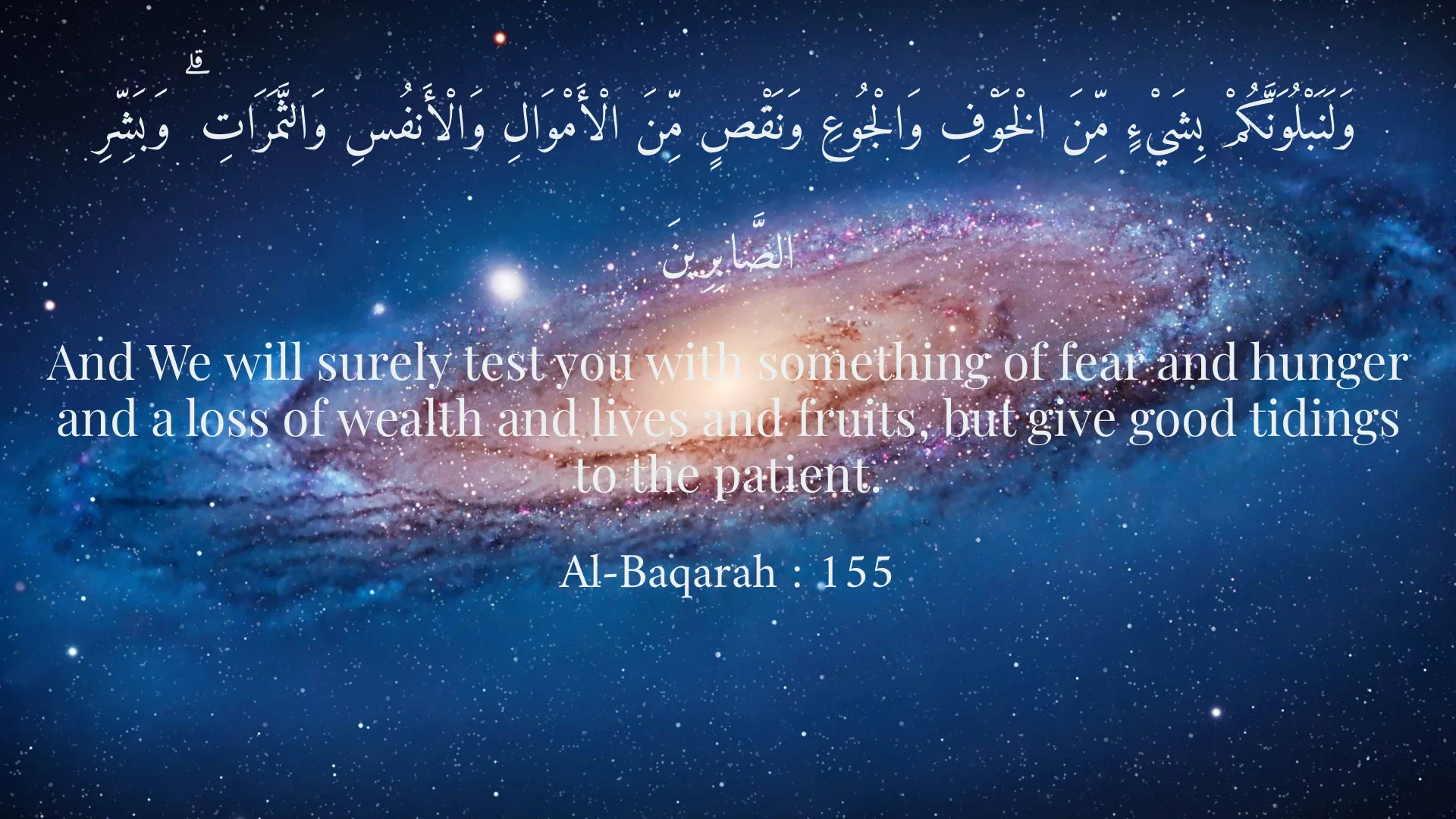
وَلَنَبْلُوَنَّكُمْ بِشَيْءٍ مِّنَ الْخَوْفِ وَالْجُوعِ وَنَقْصٍ مِّنَ الْأَمْوَالِ وَالْأَنفُسِ وَالثَّمَرَاتِ ۗ وَبَشِّرِ الصَّابِرِينَ
And We will surely test you with something of fear and hunger and a loss of wealth and lives and fruits, but give good tidings to the patient.
Al-Baqarah : 155
وَلَا تَهِنُوا وَلَا تَحْزَنْوا وَ أَنتُمُ الْأَعْلَوْنَ إِن كُنتُم مُّؤْمِنِينَ
So do not weaken and do not grieve, and you will be superior if you are [true] believers.
Al-Imran : 139
Short Story
On a cold winter day, Meysam felt deeply saddened and discouraged due to his failure in an exam. He recalled verses from the Quran and realized that life is always filled with challenges. Remembering a verse from Surah Al-Baqarah, he decided to disarm his despair and focus on preparing again for the exam. Instead of dwelling on his failure, he looked to the future with hope and faith in God, and as a result, he succeeded in his next attempt.