Quranic Answer
In the realm of religious texts, the Holy Quran stands out as a profound source of guidance for millions of believers worldwide. Among its many themes, justice and inequality emerge as particularly significant focal points, resonating through its verses in various contexts. The Quran serves not only as a spiritual guide but also as a moral compass, urging the faithful to engage actively with the pressing social issues of their time. The verses that address justice speak to universal truths, advocating for an equitable society and the urgent need to combat injustice. Humans navigate a complex landscape marked by a myriad of challenges throughout their lifetimes. Among these challenges are social and economic injustices that have plagued societies across history. From systemic discrimination to poverty, the Quran addresses these issues head-on, urging believers to adopt a stance of active engagement against oppression. One particularly poignant verse in the Quran can be found in Surah An-Nisa, verse 135, which states, 'O you who have believed, be persistently standing firm in justice, witnesses for Allah.' This verse serves as a powerful reminder of the importance of justice in the eyes of God and emphasizes the believer's duty to uphold this principle unwaveringly. The phrase 'persistently standing firm in justice' encapsulates the essence of what it means to be a true follower, one who is willing to confront injustice, regardless of the circumstances. Furthermore, the call to be 'witnesses for Allah' emphasizes the spiritual significance of standing against injustice. It conveys a sense of accountability, urging individuals to testify to the truth and advocate for what is right in the face of societal challenges. The Quran does not advocate for passive observation of injustice; rather, it champions the notion of active involvement in rectifying wrongs. In a similar vein, Surah Aal-e-Imran, verse 18, further underscores the importance of justice by stating, 'Allah witnesses that there is no deity except Him, and [so do] the angels and those of knowledge, [who] maintain the cause of justice.' This verse privileges knowledge and witness as integral components of justice. It acknowledges that those who possess knowledge have an even greater responsibility to stand for justice. Moreover, the collective witness of angels alongside humans signifies a divine endorsement of justice, reinforcing its critical importance in the broader cosmic order. The verses reveal a clear message: silence in the face of oppression is not an option. Believers are called to bear witness to the truth and defend justice, embodying the principles of equity and fairness not just in their personal lives, but in society as a whole. This active participation is rooted in a profound understanding of universal human dignity and the desire to uplift the marginalized and the oppressed. In light of the persistent global injustices faced today, it becomes increasingly crucial that individuals remain steadfast in their commitment to justice. The Quran provides the necessary framework, encouraging believers to lead with patience and prayer while working towards correcting systemic inequalities. Justice requires a multifaceted approach; it is not merely about addressing the symptoms of inequality but also understanding the underlying causes that perpetuate these issues. Moreover, Surah Al-Baqarah, verse 177, highlights the significance of good deeds and the imperative to assist those in need. It states, ‘Righteousness is not that you turn your faces towards the east or the west, but [true] righteousness is in one who believes in Allah, the Last Day, the Angels, the Book, and the Prophets and gives his wealth, in spite of love for it, to relatives, orphans, the needy, the traveler, those who ask [for help], and for freeing slaves; [and who] establishes prayer and gives zakah; [those who] fulfill their promise when they promise; and [those who] are patient in poverty and hardship and during battle. Those are the ones who have been true, and it is those who are the righteous.' This verse beautifully captures the essence of righteousness where active engagement in charity and support for those in need equates to a duty for believers. It alleviates the concept of righteousness beyond mere personal devotion to God, illustrating the interconnectedness of faith and social responsibility. The collective teachings of the Quran highlight a profound understanding: confronting global injustice is not merely an individual endeavor; it is a collective journey necessitating patience, endurance, and consistent striving for justice. The principles of good deeds and community support emphasized in the Quran serve as the foundation for meaningful societal transformation. As believers take small steps towards justice, they contribute to significant changes within their communities—each good deed reverberating through the lives of others. As individuals rally together, embodying the principles of compassion, equity, and justice, they create a ripple effect that challenges the status quo and inspires broader societal reform. In conclusion, the Quran’s teachings on justice and inequality serve as a call to action for all believers. It invites them to engage with the world, to bear witness to the truth, and to strive for a society built on fairness and equity. As humanity continues to grapple with injustice, the lessons embedded within the Quran remain ever relevant, reminding us of our moral obligations and the transformative power of collective action. Through the steadfast pursuit of justice and the alignment of faith with action, we can aspire to create a world where equity prevails and the dignity of all individuals is respected and upheld.
Related Verses
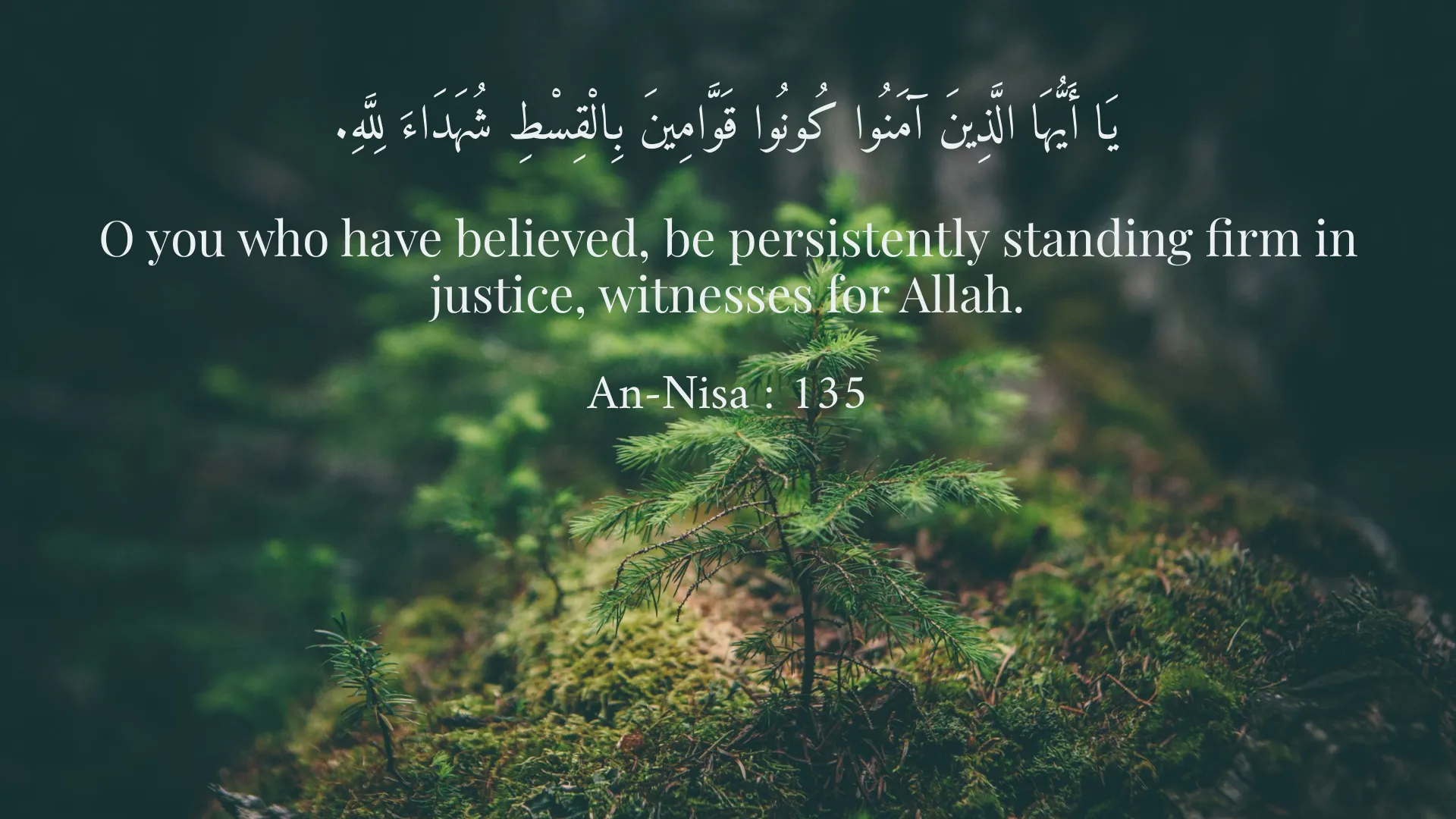
يَا أَيُّهَا الَّذِينَ آمَنُوا كُونُوا قَوَّامِينَ بِالْقِسْطِ شُهَدَاءَ لِلَّهِ.
O you who have believed, be persistently standing firm in justice, witnesses for Allah.
An-Nisa : 135
اللَّهُ يَشْهَدُ أَنَّهُ لَا إِلَٰهَ إِلَّا هُوَ وَالْمَلَائِكَةُ وَأُولُو الْعِلْمِ قَائِمًا بِالْقِسْطِ.
Allah witnesses that there is no deity except Him, and [so do] the angels and those of knowledge, [who] maintain the cause of justice.
Aal-e-Imran : 18
لَيْسَ الْبِرَّ أَنْ تُوَلُّوا وُجُوهَكُمْ قِبَلَ الْمَشْرِقِ وَالْمَغْرِبِ وَلَـٰكِنَّ الْبِرَّ مَن آمَنَ بِاللَّهِ وَالْيَوْمِ الْآخِرِ وَالْمَلَائِكَةِ وَالْكِتَابِ وَالنَّبِيِّينَ.
Righteousness is not that you turn your faces toward the east or the west, but [true] righteousness is in one who believes in Allah, the Last Day, the Angels, the Book, and the Prophets.
Al-Baqarah : 177
Short Story
One day a man named Hassan had worries in his heart about global injustices. He went to the mosque and sought forgiveness from Allah. There, he met someone who told him, 'If each of us practices justice in our lives and does good to others, the world will gradually become a better place.' Reflecting on these words, Hassan decided to start helping those in need and fighting against oppression.