Quranic Answer
The Holy Quran, the central religious text of Islam, not only serves as a guide for moral and spiritual conduct but also addresses the prevailing issues in the human psyche. Among these issues, the emotion of fear stands out as a significant theme. Fear is a natural human emotion that can either paralyze individuals or motivate them to take action. In the context of Islamic teachings, the Quran provides valuable insights on how to understand, confront, and navigate through fear in a way that strengthens faith and reliance on God. In Surah Al-Imran, verse 173, believers are reminded of the inevitability of challenges and hardships. The verse states, "Whenever harm befalls you, it will lead to your increase in strength, and Allah promises support to the believers." This message serves as a powerful reminder for Muslims that life will undoubtedly present trials, yet it is through these challenges that one can attain greater spiritual strength. The emphasis here is on trusting in God's promises and surrendering to His will. When confronting our inner fears, this verse encourages us to see beyond our immediate struggles and recognize that they may ultimately lead to personal and spiritual growth. Moreover, Surah Al-Baqarah, verse 286 reinforces the idea that God does not place upon a soul a burden greater than it can bear. This profound declaration empowers individuals by recognizing their innate capacity to handle life’s challenges. It reminds believers that every trial comes with an inherent strength and capability to overcome it. Fear often stems from feeling overwhelmed by circumstances, but understanding that one has been equipped to deal with trials can instill confidence and resilience. Muslims can draw on this verse to motivate themselves to face their fears head-on, with the assurance that they possess the strength to emerge victorious. Another crucial verse that can bring solace during times of fear is found in Surah Maryam, verse 30, which states, "Indeed, I am just a human like you." This affirmation serves to humanize even the most revered figures in Islamic tradition, such as the prophets. It highlights that they too faced vulnerabilities, anxieties, and fears. Therefore, believers are encouraged to accept that feelings of anxiety and fear are an integral part of the human experience. Acknowledging that fear is universal can help individuals feel less isolated in their struggles. Furthermore, this recognition paves the way for individuals to confront their fears with faith and reliance on God, rather than succumbing to despair. The impact of prayer and communication with God in times of fear cannot be overstated. Engaging in regular prayer allows for an intimate dialogue between the believer and the Creator, who is the ultimate source of peace and solace. The act of praying not only serves as a means of seeking guidance and strength, but also fosters a sense of connectedness that can alleviate feelings of loneliness and fear. In sacred moments of worship, Muslims can lay bare their fears and anxieties, seeking refuge in divine assurance. The Quran, therefore, becomes more than a text; it transforms into a companion during turbulent times, offering verses that resonate with the emotional struggles faced by believers. Additionally, reciting the Quran and reflecting on its verses can provide inspiration and tranquility in moments of fear. The rhythm and cadence of the Quran can be soothing, creating a mindfulness practice that helps to ground the individual in the present moment. For instance, the verse in Surah Al-Fatehah, which reads, “You alone we worship, and You alone we ask for help,” serves as a powerful affirmation of dependence on God. Such expressions of devotion can recalibrate the mind and redirect thoughts from fear to trust in the divine. Furthermore, fear can often be exacerbated by the external pressures of society and the challenges inherent in daily life. In navigating these pressures, the Quran encourages believers to cultivate a supportive community, which is essential for emotional well-being. In Surah Al-Hujurat, verse 10, it is mentioned that believers are brothers and should strive to maintain peace and harmony among themselves. The importance of fostering connections with fellow Muslims and creating a supportive environment can serve as a buffer against fear and anxiety. When individuals surround themselves with a community that embodies faith, trust, and encouragement, they are more likely to draw strength from one another. In conclusion, the theme of fear is a comprehensive topic deeply embedded within the teachings of the Quran. Through various verses, believers are reminded of their innate strength, the importance of turning to God in times of distress, and the universal nature of fear as a facet of the human experience. The Quran offers a framework for understanding and confronting fear, emphasizing that reliance on God's promises and engaging in prayer can significantly mitigate its grip. By reaffirming faith, nurturing community ties, and engaging with the divine through scripture and supplication, Muslims can not only overcome their fears but emerge from their trials strengthened and more resilient. Such teachings continue to resonate today, providing both spiritual and emotional support to those grappling with fear and anxiety in modern life.
Related Verses
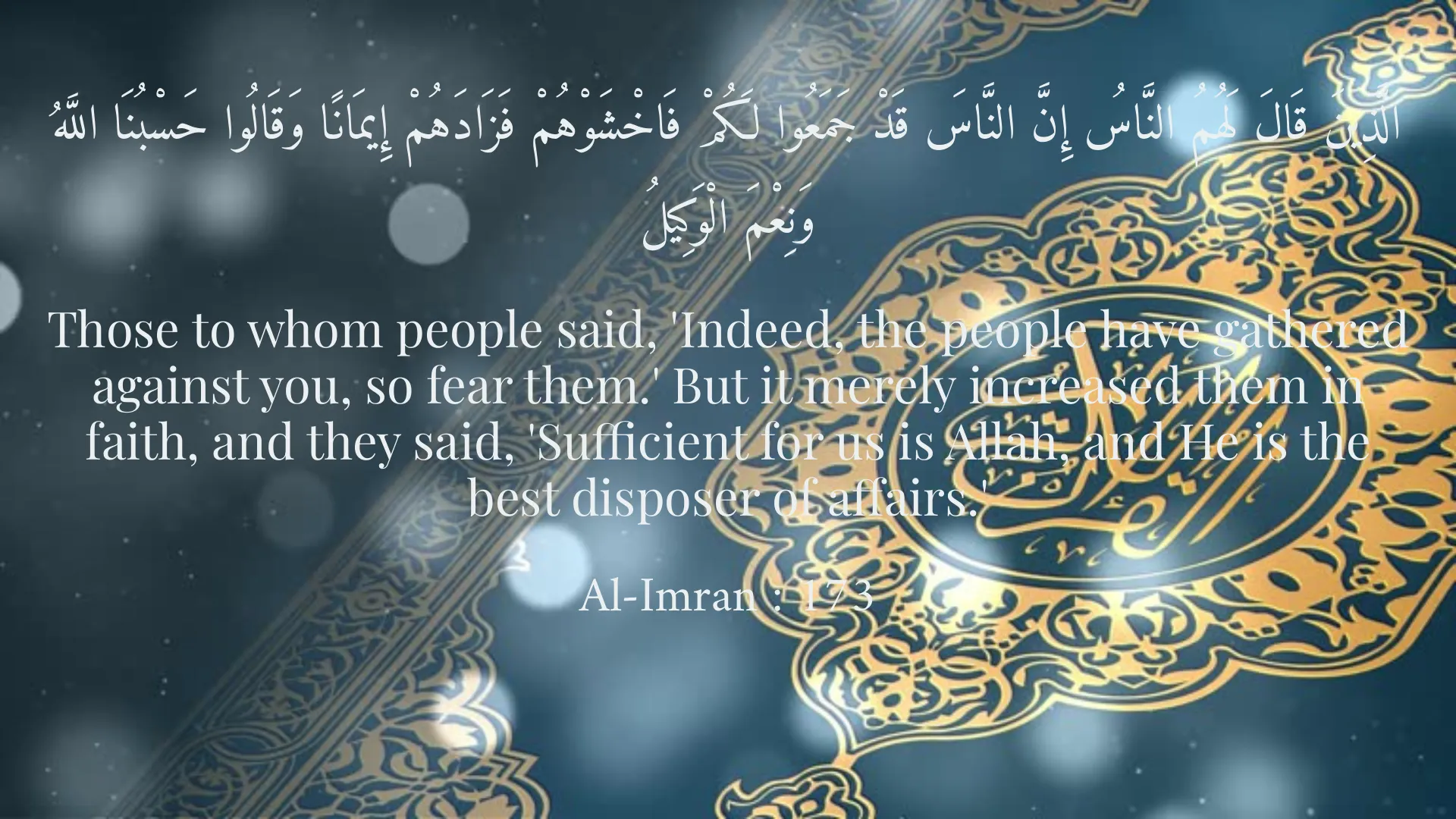
الَّذِينَ قَالَ لَهُمُ النَّاسُ إِنَّ النَّاسَ قَدْ جَمَعُوا لَكُمْ فَاخْشَوْهُمْ فَزَادَهُمْ إِيمَانًا وَقَالُوا حَسْبُنَا اللَّهُ وَنِعْمَ الْوَكِيلُ
Those to whom people said, 'Indeed, the people have gathered against you, so fear them.' But it merely increased them in faith, and they said, 'Sufficient for us is Allah, and He is the best disposer of affairs.'
Al-Imran : 173
لَا يُكَلِّفُ اللَّهُ نَفْسًا إِلَّا وُسْعَهَا
Allah does not burden a soul beyond that it can bear.
Al-Baqarah : 286
إِنَّمَا أَنَا بَشَرٌ مِّثْلُكُمْ
Indeed, I am just a human like you.
Maryam : 30
Short Story
One day, Sara, a young girl, was overwhelmed with fear and worry in her heart. She decided to turn to God and wished to be free from her fears. One dark night, she recited the Quran and felt calm while recalling the divine verses. Suddenly, she realized that her fears had lessened and her faith had grown stronger. She also remembered that God was always by her side, instilling her with a sense of security.