Quranic Answer
Mental fatigue is a state of mental and emotional exhaustion, often resulting from prolonged stress, intense pressure, or extended exposure to challenging circumstances. This condition can severely diminish an individual's energy, focus, and ability to cope with daily life. While the term 'mental fatigue' itself is a modern construct, the Holy Quran and Islamic teachings offer profound and fundamental solutions for achieving peace of mind and combating spiritual and psychological distress. These teachings provide not merely temporary relief but a comprehensive approach to cultivating a resilient spirit and a tranquil heart. One of the most central and potent remedies presented in the Quran for any form of distress or mental fatigue is 'Dhikr' or the remembrance of Allah. In Surah Ar-Ra'd, verse 28, Allah states: "Those who have believed and whose hearts are assured by the remembrance of Allah. Unquestionably, by the remembrance of Allah hearts are assured." This verse encapsulates a fundamental psychological and spiritual truth. The remembrance of Allah is not limited to mere verbal recitation of praises; it encompasses contemplation of His greatness, recitation of the Quran, understanding its meanings, performing prayers with full presence of heart, and generally any act that connects a person to the divine presence and boundless power of Allah. When the mind and heart are occupied with the remembrance of Allah, they are freed from the whispers of doubt, worldly anxieties, and negative thoughts that contribute to mental exhaustion. This focus on the sublime grants an individual a perspective beyond daily troubles and reinforces a sense of divine support and presence, which is an immense source of tranquility. Continuous remembrance acts as a refuge against emotional storms, relieving the heart from agitation and anxiety. It systematically redirects one's inner narrative from self-centered worries to a profound connection with the Creator, fostering a sense of security and belonging that significantly counters the feelings of isolation and overwhelmingness often associated with mental fatigue. The regularity of Dhikr helps in building a spiritual routine that grounds the individual, much like a steady anchor in turbulent waters, promoting sustained inner peace and mental clarity. Secondly, a crucial strategy repeatedly emphasized in the Quran is 'Sabr' (patience) and 'Salat' (prayer). In Surah Al-Baqarah, verse 153, Allah says: "O you who have believed, seek help through patience and prayer. Indeed, Allah is with the patient." Patience is not passive resignation but an active endurance and steadfastness in the face of adversity. It is a form of inner resilience and maintaining composure despite hardships. When grappling with mental fatigue, patience helps us avoid rushing into hasty decisions and instead encourages us to seek sustainable solutions rather than succumbing to pressure. Prayer, the pillar of faith and the believer's ascension, offers an opportunity for direct communication with the Creator, allowing for the discharge of psychological burdens and spiritual rejuvenation. The moments of prayer are a sacred pause in the commotion of life, enabling one to breathe, detach from materialism, and nourish the soul with divine energy. The structured movements, repetition of supplications, and contemplation of meanings all contribute to fostering calm and reducing stress. Prayer, in particular, due to its systematic nature and requirement for heart-felt presence, brings about a spiritual form of 'mindfulness' that is highly effective in combating mental exhaustion. It provides a structured release, allowing the individual to surrender worries, express gratitude, and re-center themselves in a divine presence, thereby alleviating the cumulative stress that leads to mental weariness. This disciplined approach to spiritual well-being systematically recharges one's inner resources, making the mind more capable of handling daily pressures without succumbing to overwhelming fatigue. 'Tawakkul' (reliance upon Allah) is another cornerstone in combating mental fatigue. When a person truly relies on Allah, entrusting their affairs to Him with certainty that Allah will ordain the best outcome, a significant burden is lifted from their shoulders. In Surah Al-Imran, verse 160, it is stated: "If Allah should aid you, no one can overcome you; but if He should forsake you, then who is there that can aid you after Him? And upon Allah let the believers rely." Tawakkul does not imply abandoning effort; rather, it means putting forth one's best effort and then surrendering the outcome to the Wise and All-Powerful Lord. This approach mitigates anxieties about 'what will happen' and instills inner peace, assuring that even if the desired outcome is not achieved, divine wisdom and good are inherent in it. This sense of security and trust in a higher power is immensely helpful in reducing psychological pressure and preventing emotional burnout. It shifts the burden of absolute control from the individual to the Divine, providing a profound sense of relief and liberation from incessant worry. By accepting that ultimate control rests with Allah, one can navigate life's uncertainties with greater equanimity, thereby protecting oneself from the relentless mental strain that often culminates in fatigue. Furthermore, 'Shukr' (gratitude) and appreciation for Allah's blessings can profoundly shift one's outlook from negativity to positivity, boosting morale. In Surah Ibrahim, verse 7, Allah declares: "If you are grateful, I will surely increase you [in favor]; but if you deny, indeed, My punishment is severe." Focusing on what one possesses and the blessings, even the smallest ones, frees the mind from dwelling on deficiencies and problems, thereby increasing feelings of contentment and inner peace. This change in perspective is a powerful antidote to mental exhaustion. By consciously acknowledging blessings, individuals cultivate a positive cognitive bias that counters the downward spiral of negative thoughts often associated with fatigue. This practice builds resilience, enabling the mind to recognize and appreciate the abundance in life, rather than being overwhelmed by perceived lacks or challenges. The Quran also emphasizes 'serving humanity' and helping others. When an individual moves beyond self-centeredness and focuses on assisting others, they experience a sense of purpose and worth. This benevolent act generates positive energy and can alleviate feelings of fatigue and lethargy, as it imbues a person with a sense of connection and importance. Moreover, adhering to 'Halal and Tayyib (pure and good) sustenance' and observing 'moderation' in all aspects of life, including sleep and work, contributes to physical and mental well-being. A healthy body provides a foundation for a healthy mind, and physical exhaustion can certainly lead to mental fatigue. The Quran generally prohibits extremism and recommends a balanced path, which implicitly includes sufficient rest and balanced work. By engaging in acts of kindness and community service, individuals experience a boost in their own well-being, as giving to others can be a powerful antidote to inward-focused stress and self-pity, promoting a sense of fulfillment that energizes the spirit. Finally, by reminding humanity of the 'transience of this world' (Dunya) and emphasizing the ultimate goal of meeting the Lord, the Quran helps individuals detach from excessive attachment to material possessions and worldly outcomes. This transcendent perspective reduces the pressure stemming from failures and setbacks in this world, providing solace that a greater purpose lies ahead. This deep insight helps individuals not to lose hope in the face of challenges and fatigue, but to maintain optimism for a brighter future under divine grace. Thus, the Quran is not merely a book of religious guidance but a comprehensive manual for achieving mental well-being and a life full of tranquility and meaning. It provides a spiritual anchor that allows one to navigate the storms of life with a profound sense of inner peace and resilience, transforming mental fatigue into spiritual strength and renewed vigor.
Related Verses
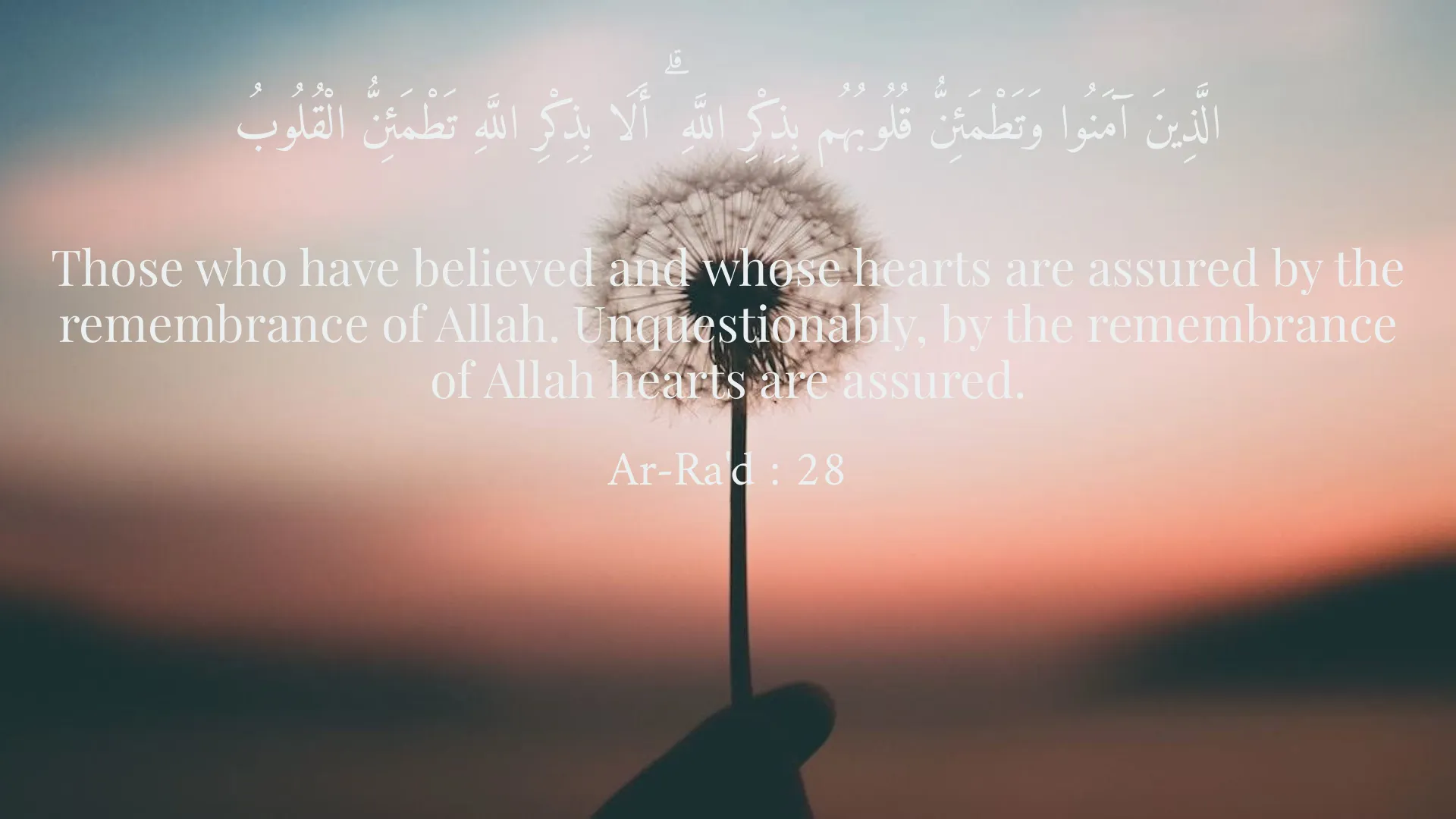
الَّذِينَ آمَنُوا وَتَطْمَئِنُّ قُلُوبُهُم بِذِكْرِ اللَّهِ ۗ أَلَا بِذِكْرِ اللَّهِ تَطْمَئِنُّ الْقُلُوبُ
Those who have believed and whose hearts are assured by the remembrance of Allah. Unquestionably, by the remembrance of Allah hearts are assured.
Ar-Ra'd : 28
يَا أَيُّهَا الَّذِينَ آمَنُوا اسْتَعِينُوا بِالصَّبْرِ وَالصَّلَاةِ ۚ إِنَّ اللَّهَ مَعَ الصَّابِرِينَ
O you who have believed, seek help through patience and prayer. Indeed, Allah is with the patient.
Al-Baqarah : 153
إِن يَنصُرْكُمُ اللَّهُ فَلَا غَالِبَ لَكُمْ ۖ وَإِن يَخْذُلْكُمْ فَمَن ذَا الَّذِي يَنصُرُكُم مِّن بَعْدِهِ ۗ وَعَلَى اللَّهِ فَلْيَتَوَكَّلِ الْمُؤْمِنُونَ
If Allah should aid you, no one can overcome you; but if He should forsake you, then who is there that can aid you after Him? And upon Allah let the believers rely.
Al-Imran : 160
Short Story
It is narrated that a man, distraught and weary from the world's burdens, approached a wise sheikh and said: "O Master, I am overwhelmed by the heavy load of worries and mental fatigue. No matter how hard I try, my heart finds no peace, and my mind is never free from distressing thoughts. Guide me, so I may escape this grasp of sorrow and anguish." The sheikh smiled kindly and said: "My son, your story is like that of a merchant whose ship was caught in a storm, and all his worldly possessions were on the verge of ruin. He fell ill from extreme worry. Yet, a servant who was with him stood calmly watching the sea. The merchant angrily asked him: 'Why are you not grieved?' The servant replied: 'I possess no wealth to worry about losing. Whatever my master owns, it is his, and its fate is in the hands of another.'" The sheikh continued: "O young man, if you carry the burden of the world on your own shoulders, you will indeed become weary and worn out. But if you know who the true Owner of the world is, and that all affairs are in His hands, your heart will find peace, and you will gain strength from His remembrance. Rely on Him and be at ease, for He is the best Planner, and there is no power above Him. True tranquility lies in accepting His decree and in His constant remembrance." The man took the sheikh's advice to heart, turned to remembrance and reliance on God, and gradually tasted the sweetness of ease and peace.