Quranic Answer
The concept of repentance, or 'Tawbah', occupies a central place in Islamic teachings and is meticulously addressed throughout the Holy Quran. It is a powerful act that embodies the core values of humility, remorse, and the pursuit of spiritual redemption. The emphasis on repentance is not merely a theological point but serves as an essential pillar for moral and ethical behavior within the Muslim community. Allah, in His infinite wisdom, provides guidance on how individuals can seek forgiveness and return to Him, demonstrating His mercy and compassion for all of His creation. This article seeks to explore various Quranic verses that highlight the importance of repentance and its significance in fostering a connection with the Divine. One of the most poignant verses addressing this theme is found in Surah At-Tahrim, verse 8: "O you who have believed, repent to Allah with sincere repentance." This particular verse serves as both a command and an invitation. It calls upon believers not only to acknowledge their faults but to engage in a sincere act of returning to God. The term 'sincere' is crucial here; it underscores the need for genuine remorse and a heartfelt commitment to change. Repentance is not a mere ritualistic act but involves a deep emotional response to one’s misdeeds and a commitment to improvement. Furthermore, the weight of Allah's forgiveness is elaborated in Surah Al-Furqan, verse 70: "Except for the one who repents, believes and does righteousness. For those will enter Paradise and will not be wronged at all." This verse encapsulates the transformative journey that repentance can spark—a triad of actions encapsulated in repentance, belief, and righteous deeds. The promise of Paradise reinforces the idea that forgiveness is attainable and that there is a clear pathway to spiritual elevation. Allah’s justice is balanced with His mercy, reassuring believers that even after a fall, they can redeem themselves through sincere efforts. The notion of a fresh start is further echoed in Allah's proclamation in Surah Az-Zumar, verse 53: "O My servants who have believed, fear your Lord. For those who do good in this world is good, and the earth of Allah is spacious. Indeed, the patient will be given their reward without account." Here, Allah extends an invitation to all His servants, reinforcing the concept that no matter how far one has strayed, the door to repentance remains open. This verse also emphasizes the significance of patience, suggesting that the journey of repentance and personal development requires time and perseverance. Moreover, the expansive earth symbolizes the broad opportunities for repentance and reform that Allah has placed before humanity. The psychological and emotional ramifications of seeking forgiveness cannot be underestimated. Repentance provides an individual with the chance to remove the burdens of guilt and shame. As human beings, we often grapple with past mistakes, which can significantly affect our mental and spiritual well-being. The act of turning back to Allah can bring about profound relief, as it encourages individuals to confront their errors and make a conscious effort to live a life that aligns with divine principles. Repentance also has a broader social impact. When individuals engage in this transformative act, they set a powerful example for those around them. In a world where negative influences sometimes dominate societal narratives, demonstrating the willingness to seek forgiveness and improve can inspire others to embark on their own paths toward reform. This ripple effect highlights the communal benefits of personal repentance, fostering an environment where mutual support and moral encouragement thrive. Moreover, it is essential to recognize that the concept of repentance in Islam is deeply connected with the idea of hope. Every verse that speaks of Allah’s mercy instills hope within believers, a hope that is especially important in today's fast-paced and often unforgiving world. The reassurance that Allah’s mercy transcends even the gravest of sins fosters resilience and helps individuals to navigate life's challenges with a sense of purpose and optimism. In summary, the Quran places a significant emphasis on the act of repentance, portraying it as a vital means of seeking forgiveness and revitalizing one's faith. Verses such as those in Surah At-Tahrim, Surah Al-Furqan, and Surah Az-Zumar collectively offer a holistic view of what it means to repent sincerely. This spiritual practice is not only about personal redemption but also carries the potential to contribute positively to the community at large. By nurturing a culture of repentance and forgiveness, individuals can uplift each other, fostering a compassionate society grounded in the principles of love, understanding, and mutual respect. Ultimately, the journey of repentance reflects the essence of the human experience—striving for betterment, seeking forgiveness, and finding a path back to the Divine.
Related Verses
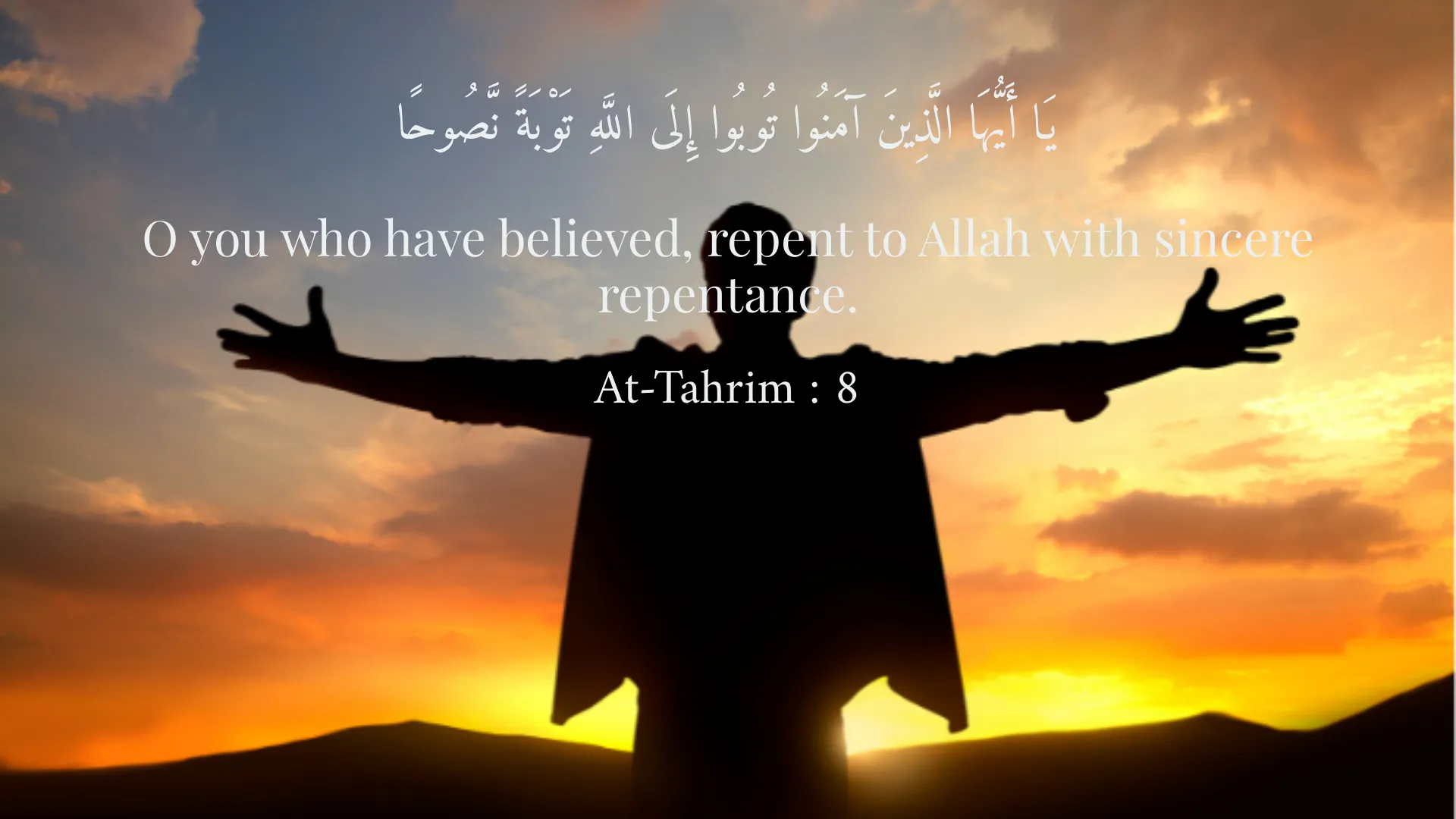
يَا أَيُّهَا الَّذِينَ آمَنُوا تُوبُوا إِلَى اللَّهِ تَوْبَةً نَّصُوحًا
O you who have believed, repent to Allah with sincere repentance.
At-Tahrim : 8
إِلَّا مَنْ تَابَ وَآمَنَ وَعَمِلَ عَمَلًا صَالِحًا فَأُولَـٰئِكَ يُبَدِّلُ اللَّهُ سَيِّئَاتِهِمْ حَسَنَاتٍ
Except for the one who repents, believes and does righteousness; for those will enter Paradise and will not be wronged at all.
Al-Furqan : 70
يَا عِبَادِيَ الَّذِينَ آمَنْتُمْ قَالُوا لَا تَقْنَطُوا مِن رَّحْمَةِ اللَّهِ
O My servants who have believed, fear your Lord. For those who do good in this world is good.
Az-Zumar : 53
Short Story
Once upon a time, there was a man named Ali who was confused about the path of his life. He had committed many sins and felt the weight of those sins heavily upon him. He visited one of the religious sages and asked him how he could live with that guilt. The sage told him, "You must repent and lift the burden of sin from your shoulders, for God's mercy is vast and He promises that whoever returns to Him, He will accept them." Ali found peace in the sage's words and decided to truly return to Allah. From that day on, he strived to make up for his past shortcomings through worship and good deeds.