Quranic Answer
The Holy Quran, the central religious text of Islam, serves as a comprehensive guide for various aspects of life, including how to cope with stress and the numerous challenges that we encounter on our life journey. In the fast-paced world we live in today, where anxiety and pressure from multiple sources can feel overwhelming, the teachings of the Quran offer peace and solace through its divine wisdom. One of the key verses that provide insight into managing stress is found in Surah Al-Baqarah, specifically verse 153, where Allah commands the believers to seek help through patience and prayer. This directive is not just a mere suggestion, but it is a profound lesson on the significance of these two practices in overcoming life's hurdles. Patience, or 'Sabr' in Arabic, is the virtue that encourages individuals to withstand difficulties without losing hope or faith. It teaches us that persistence in the face of adversity is essential. On the other hand, prayer, or 'Salah', acts as a vital channel through which believers establish a connection with God, facilitating a sense of peace and relaxation in their hearts and minds. Moreover, prayer is not limited to scheduled times; it can be a spontaneous outpouring of one's thoughts and feelings towards God, allowing individuals to express their worries and seek guidance. Through continuous engagement in prayer, individuals often find a renewed perspective on their challenges, enabling them to approach their problems with clarity and resilience. The Quran also frequently emphasizes the importance of remembering Allah during times of distress. For instance, in Surah Ar-Ra'd, verse 28, Allah states, 'Indeed, in the remembrance of Allah do hearts find rest.' This verse highlights a profound truth in Islamic spirituality: that the act of remembering Allah brings tranquility to one’s heart. In the overwhelming nature of life's trials, it can be easy to become consumed by our problems. However, the Quran encourages us to redirect our focus from our worries to the divine, offering a form of mental and spiritual refuge. In practical terms, this can mean engaging in Dhikr, which refers to the remembrance of God through various forms of supplication and reflection. Whether through reciting specific phrases or simply contemplating God’s attributes, such practices provide comfort and remind believers that they are not alone in their struggles. This reminder is crucial, as it helps to foster a sense of community and connection to a higher purpose, which can alleviate feelings of isolation during tough times. Furthermore, the Quran teaches us the principle of trusting in Allah's wisdom, especially during adversities. Surah Al-An'am, verse 17, reassures believers that if Allah allows a trial to befall them, then no one else can remove it except Him. It further states that if He intends good for them, then no one can repel His grace. This verse illustrates that everything that happens is under God's control, and it encourages believers to trust in His plan. This can be especially poignant during moments of despair when it feels as if the world is collapsing around us. Trusting in God's wisdom allows individuals to resign their worries and accept the greater good that may come from their current difficulties. In a practical sense, this reliance on God can manifest through various forms of worship and reflection. Believers may be encouraged to keep a journal of their prayers, reflecting on how God has guided them through previous challenges. By recounting these experiences, individuals can combat feelings of despair and cultivate a sense of gratitude, reinforcing their trust in Allah’s overarching plan for them. Moreover, the Quran's teachings emphasize the importance of community and support during times of trials and tribulations. By connecting with others – whether through shared prayers, attending congregational services, or simply reaching out to friends and family – individuals can create a support network that reinforces the lessons of patience and prayer. This communal aspect of faith helps remind believers that they are part of a larger community, fostering a shared resilience that can uplift all involved. In addition, looking toward the future through a spiritual lens as advised in the Quran can assist with combating stress. The assurance that every hardship will eventually lead to ease can be found in multiple verses, reinforcing an optimistic outlook and encouraging perseverance. Surah Ash-Sharh, for instance, states, 'Indeed, with hardship comes ease.' This repetitive reminder serves to reassure believers that trials are temporary and that relief is on the horizon. Conclusively, the Quran offers a multi-faceted approach to coping with stress and life's challenges. The virtues of patience and prayer, along with the practice of remembering Allah, help to cultivate a mindset geared towards resilience and hope. Trusting in God's wisdom and seeking the support of community truly transforms the way we navigate adversities. In essence, the teachings within the Quran not only provide solace during turbulent times but also empower believers to find inner peace and strength through reliance on God. By incorporating these spiritual practices into daily life, Muslims can enhance their mental and emotional well-being, ultimately leading to a more balanced and fulfilling life. Thus, as we face life's inevitable challenges, let us take these teachings to heart and seek solace through prayer, patience, and remembrance, thereby cultivating peace within ourselves.
Related Verses
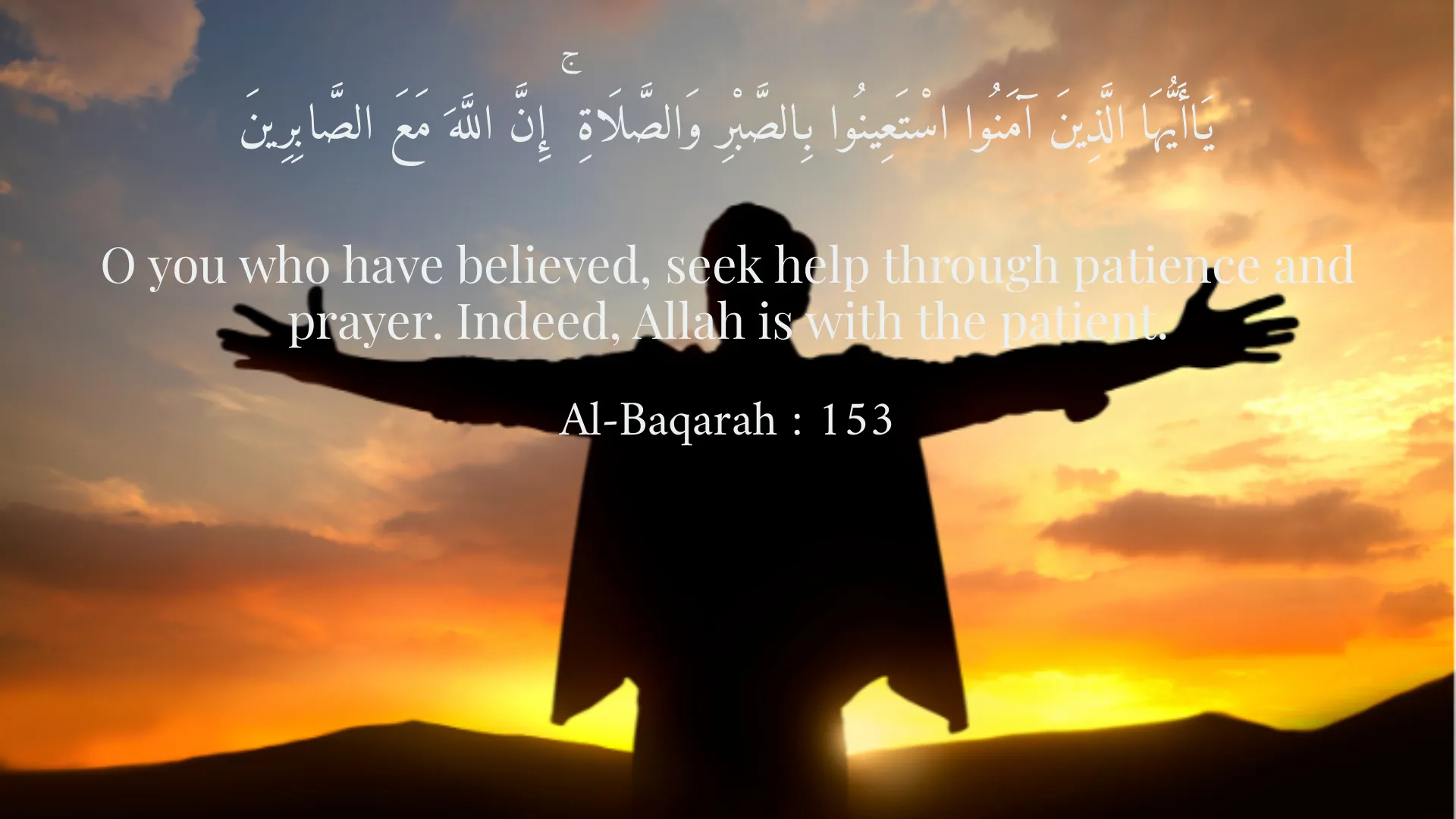
يَاأَيُّهَا الَّذِينَ آمَنُوا اسْتَعِينُوا بِالصَّبْرِ وَالصَّلَاةِ ۚ إِنَّ اللَّهَ مَعَ الصَّابِرِينَ
O you who have believed, seek help through patience and prayer. Indeed, Allah is with the patient.
Al-Baqarah : 153
أَلَا بِذِكْرِ اللَّهِ تَطْمَئِنُّ الْقُلُوبُ
Indeed, in the remembrance of Allah do hearts find rest.
Ar-Ra'd : 28
وَإِن يُصِبْكَ بِخَيْرٍ فَلَا رَادَّ لِنِعْمَتِهِ ۖ وَإِن يُصِبْكَ بِسُوءٍ فَهُوَ عَلَى كُلِّ شَيْءٍ قَدِيرٌ
And if Allah touches you with harm, there is no one to remove it except Him; and if He intends good for you, there is no repelling His bounty.
Al-An'am : 17
Short Story
One day, a man named Ali was seeking solutions to his problems and recalled the verses of the Quran. He decided to spend more time in prayer and remembering God. After a while, he felt greater peace and managed his challenges better.