Quranic Answer
Life is a journey filled with numerous challenges and sufferings that often come to us without any clear explanation or reason. This complex aspect of life is something that every individual grapples with at different stages of their existence. It is crucial to recognize that such experiences aren't meant to simply test us but can also serve as catalysts for personal growth and spiritual development. The Holy Quran provides guidance on how to navigate these troubled waters. In Surah Al-Baqarah, verse 153, Allah invites the believers to seek help through patience and prayer, stating, "O you who have believed, seek help through patience and prayer. Indeed, Allah is with the patient." This verse serves as a powerful reminder during our most troubled times to turn to Allah, seek His assistance, and exercise patience in facing our tribulations. Patience is a profound response to hardship. It is often said that patience is a virtue, and indeed, in the context of life’s trials, it is an invaluable tool. When we encounter challenges, it is easy to succumb to a sense of despair; however, adopting a patient approach enables us to cope more resiliently. Acknowledging that challenges may not have a specific reason does not lessen their burden but rather highlights the fact that life's unpredictability is a shared human experience. Moreover, by embracing patience, we can begin to see these difficult times as opportunities for spiritual growth. The Quran teaches us that hardships can enhance our faith and strengthen our connection with Allah. In times of suffering, we often find ourselves reflecting deeply on our beliefs, leading us to a more profound understanding of our faith. It allows for introspection and can spark a transformative journey toward self-betterment, encouraging us to cultivate inner strength and resilience. It is also essential to remember the role of social support during challenging times. Connecting with family and friends can be instrumental in alleviating feelings of isolation. These close-knit relationships provide unconditional love and support. When faced with adversity, the presence of loved ones reminds us that we are not alone in our struggles. They can serve as sounding boards, allowing us to share our fears and uncertainties. By doing so, we create a sense of community that can ease the emotional burden associated with life's challenges. As per the teachings of the Quran, social support aligns perfectly with the principle of seeking assistance from both Allah and our fellow beings. Additionally, prayer and supplication are vital components of this journey through suffering. Prayer serves as a medium through which we can express our innermost feelings, frustrations, and fears while also seeking help and guidance from Allah. Engaging in prayer can bring comfort during turbulent times, transforming despair into hope. It can also establish a deeper connection to the Divine, reinforcing our belief that we are under Allah's care. Such spiritual practices can enrich our lives and provide a sense of peace amid chaos. In Surah Al-Imran, verse 139, Allah reassures the believers: "And do not be grieved or saddened, for you will be the most superior if you are believers." This verse illustrates that hope and faith can offer significant support, even in the face of adversity. It serves as a reminder that while hardships may come our way, they do not define our worth or potential as individuals. Instead, these times can be viewed as an invitation to deepen our spiritual journey, reinforcing the belief that eventually, with faith, we will emerge from our trials even stronger than before. Reflecting upon life's blessings can also aid in combating the negativity that often accompanies suffering. By shifting our focus to the positives in our lives, we can establish a more balanced perspective that allows us to appreciate what we have, rather than fixating on what we lack. Practicing gratitude can be transformative, guiding us away from feelings of deprivation and instead encouraging a mindset of abundance. This shift can provide the emotional armor needed to confront life's adversities with courage and resilience. To conclude, the teachings of the Quran offer profound insights into how we may navigate and grow from life's inevitable sufferings. Rather than perceiving challenges as mere trials, we can embrace them as opportunities for personal and spiritual development. Allah’s guidance to be patient, coupled with the support of loved ones and the power of prayer, empowers us to confront our hardships meaningfully. By reflecting on the blessings of life and nurturing a positive mindset, we can distance ourselves from the heavy burdens of suffering, transforming them into stepping stones toward a more robust and spiritually enriched existence. Ultimately, the Quran teaches us that our sufferings are not merely tests but essential elements of our divine journey, crafting our unique stories of resilience, faith, and growth.
Related Verses
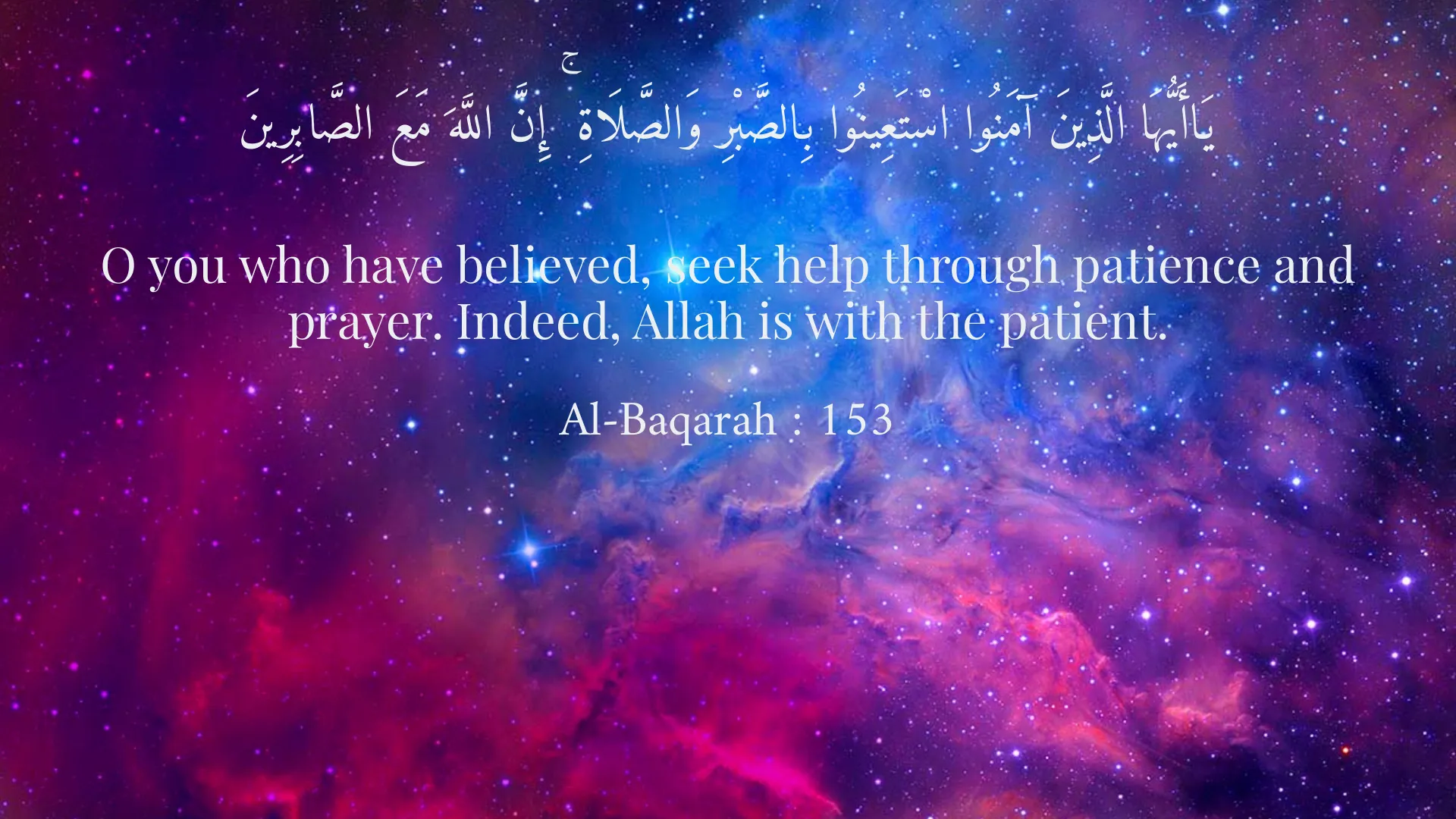
يَاأَيُّهَا الَّذِينَ آمَنُوا اسْتَعِينُوا بِالصَّبْرِ وَالصَّلَاةِ ۚ إِنَّ اللَّهَ مَعَ الصَّابِرِينَ
O you who have believed, seek help through patience and prayer. Indeed, Allah is with the patient.
Al-Baqarah : 153
وَلَا تَهْنُوا وَلَا تَحْزَنُوا وَأَنْتُمُ الْأَعْلَوْنَ إِن كُنتُم مُّؤْمِنِينَ
And do not be grieved or saddened, for you will be the most superior if you are believers.
Al-Imran : 139
Short Story
Once upon a time, a young man named Amir faced significant troubles in his life. He couldn't find the reason for his pains and felt alone and hopeless. Time and again, he turned to prayer and supplication, and during this process, he felt embraced by Allah. By referring to the verses of the Quran, he realized that his duty was to await divine mercy and insight. From then on, he adopted patience and grew closer to his family and friends. Gradually, his pains faded, and hope and tranquility replaced them.