Quranic Answer
In today's fast-paced world, where time seems to rush by at an incredible speed and the deluge of information and responsibilities weighs heavily on individuals, many are seeking peace and balance in their lives. The Holy Quran, as a divine revelation and a comprehensive guide for humanity, offers profound and practical solutions to achieve this balance. These solutions not only help in reducing stress and anxiety but also imbue life with deeper meaning and direction. One of the most fundamental Quranic concepts for achieving balance is Tawhid (the Oneness of God) and focusing on the Creator. The Quran teaches us that the primary purpose of human creation is the worship of God. When this truth takes root in one's heart and mind, priorities naturally align. Worldly matters and materialism shift from being ultimate goals to mere means of attaining closeness to God. This perspective liberates individuals from countless worldly anxieties, allowing them to find true tranquility in the remembrance of Allah. Surah Ar-Ra'd, verse 28, states: “Those who have believed and whose hearts are assured by the remembrance of Allah. Unquestionably, by the remembrance of Allah hearts are assured.” This verse emphasizes that the root of peace and balance lies in remembering and acknowledging the Lord. Remembrance (dhikr) is not merely reciting words, but a state of heart presence and constant attention to God, manifesting in all aspects of life. Regular prayer and worship stand as one of the primary pillars for creating balance. Prayer (Salat), as a daily and continuous connection with God, offers an opportunity to pause, reflect, and release life's pressures. In every prayer, one steps away from the material world and connects with the source of power and tranquility. These regular pauses act as spiritual resets throughout the day, allowing individuals to take a deep breath and return to their activities with renewed energy and peace. The Quran in Surah Al-Baqarah, verse 153, states: “O you who have believed, seek help through patience and prayer. Indeed, Allah is with the patient.” Patience (Sabr) and prayer are two key tools for overcoming difficulties and maintaining balance when facing life's challenges. Moderation (I'tidal) and the middle path in all affairs are other Quranic principles for a balanced life. The Quran forbids extremism and excessiveness in any matter and invites to a balanced way. This principle applies to work, rest, consumption, recreation, and even worship. One should strive to earn a lawful living but must not allow the world to distract them from the remembrance of the Hereafter. One must take care of their body and soul, neither becoming solely engrossed in materialism to the neglect of spirituality nor becoming so detached from the world that they forget their responsibilities. Surah Al-Furqan, verse 67, states: “And [they are] those who, when they spend, do so not excessively or stingily but are ever, between that, [justly] proportionate.” Although this verse pertains to spending, its general spirit of moderation is applicable to all aspects of life. Balance between work and personal life, social and individual responsibilities, and attention to physical and mental health all follow this principle. Time management and priority setting are also derivable from Quranic teachings. Although the Quran does not directly use the term “time management,” its emphasis on making proper use of one's lifespan and opportunities highlights its importance. Every moment of life is an opportunity for growth and drawing closer to God. The Quran invites us to reflect on creation and the passage of time, which itself cultivates an awareness for optimal use of moments. Setting priorities based on divine pleasure helps individuals choose the right path amidst numerous tasks and demands, preventing the waste of time and energy on trivial matters. Having a structured daily routine that includes time for worship, work, rest, family, and recreation, inspired by the order of the universe mentioned in the Quran, can be highly beneficial. Patience (Sabr) and gratitude (Shukr) are two significant Quranic virtues that play a vital role in achieving balance. Patience grants an individual the ability to endure hardships and disappointments, while gratitude helps them appreciate blessings and avoid heedlessness. These two qualities transform one's perspective on life events and protect them from emotional instability caused by worldly fluctuations. Someone who is patient maintains their composure during the pressures and speed of life, and someone who is grateful can see the positive aspects even in difficult situations and draw energy from them. Finally, reliance on God (Tawakkul) and release from the anxiety of control is another key aspect of Quranic balance. After exerting effort and striving in God's path, one should entrust the outcome to Him and free themselves from excessive worry about the future. This reliance lifts a heavy burden from the individual and grants them peace of mind. The Quran assures believers that Allah is the best planner of affairs, and if a person fulfills their duties, Allah will assist them. This outlook helps individuals feel secure and at peace in this fast-paced life, freeing them from unnecessary concerns that disrupt their emotional balance. In summary, the Quran offers invaluable guidance for creating balance in modern life: through focusing on the remembrance of God, maintaining discipline in worship, adhering to the principle of moderation in all matters, managing time and priorities, cultivating patience and gratitude, and genuine reliance on God. By applying these principles, one can achieve lasting peace and true balance amidst the clamor of a fast-paced life.
Related Verses
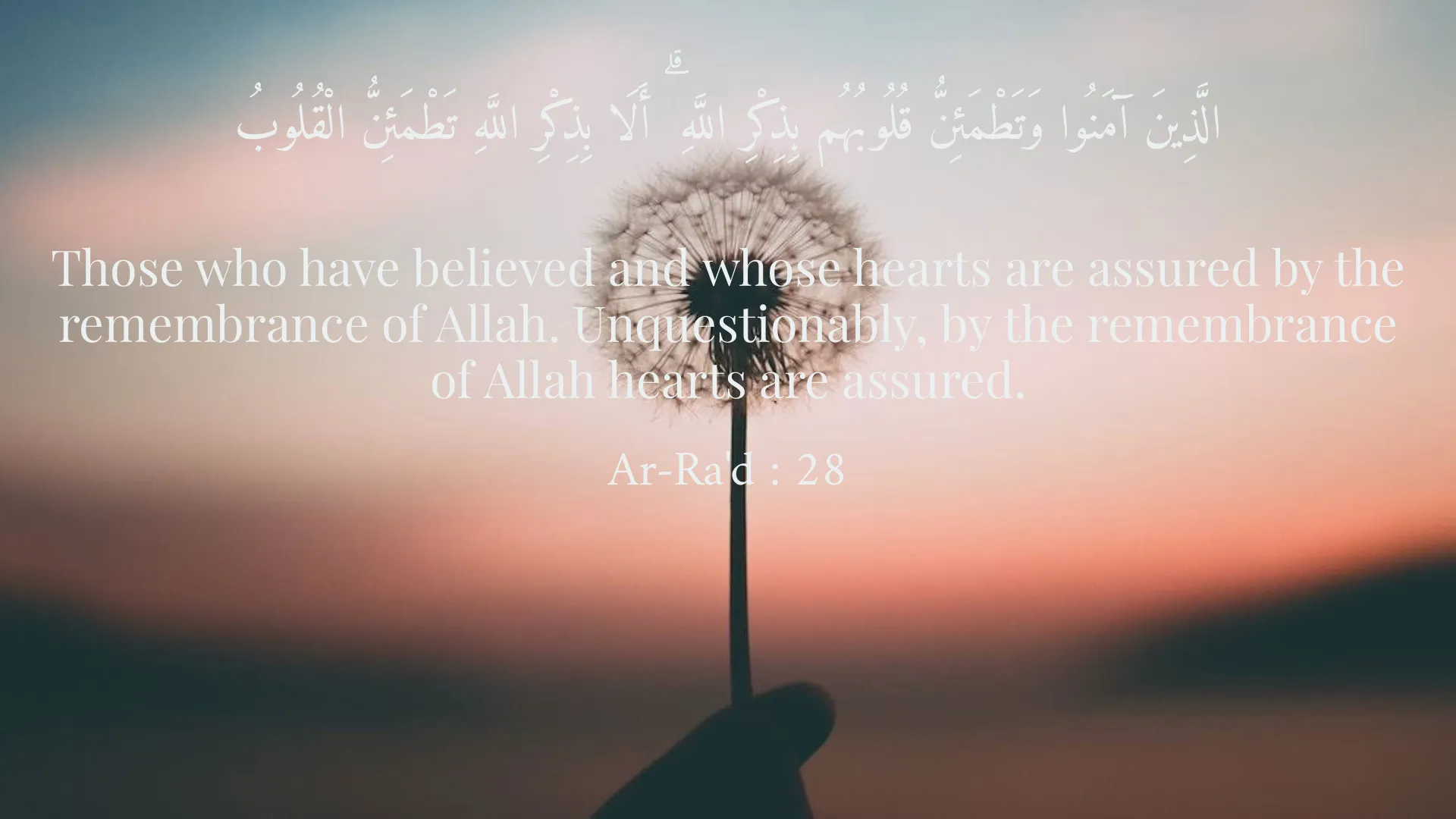
الَّذِينَ آمَنُوا وَتَطْمَئِنُّ قُلُوبُهُم بِذِكْرِ اللَّهِ ۗ أَلَا بِذِكْرِ اللَّهِ تَطْمَئِنُّ الْقُلُوبُ
Those who have believed and whose hearts are assured by the remembrance of Allah. Unquestionably, by the remembrance of Allah hearts are assured.
Ar-Ra'd : 28
يَاأَيُّهَا الَّذِينَ آمَنُوا اسْتَعِينُوا بِالصَّبْرِ وَالصَّلَاةِ ۚ إِنَّ اللَّهَ مَعَ الصَّابِرِينَ
O you who have believed, seek help through patience and prayer. Indeed, Allah is with the patient.
Al-Baqarah : 153
وَالَّذِينَ إِذَا أَنفَقُوا لَمْ يُسْرِفُوا وَلَمْ يَقْتُرُوا وَكَانَ بَيْنَ ذَٰلِكَ قَوَامًا
And [they are] those who, when they spend, do so not excessively or stingily but are ever, between that, [justly] proportionate.
Al-Furqan : 67
Short Story
In a not-so-distant past, in a bustling city, there lived a young man named Faridun who was restless from the relentless pace of life and the heavy burden of responsibilities. Each day was filled with frantic activity, yet there was no peace in his heart. One day, he sought refuge with a wise old scholar who sat quietly in a corner of the serene bazaar, and said, "O wise sage! My life is like a wild horse that has broken free from its reins. How can I find balance and tranquility in this rapid current?" The scholar smiled and said: "My young friend! Your story reminds me of the tale of a wealthy merchant who was constantly traveling and accumulating riches. He had magnificent houses and abundant servants, yet he was never at peace. Day and night, he pursued more profit, believing that if he reached the pinnacle of wealth, he would find serenity. Until one night, he got lost in the desert and, out of fear, sought refuge in God. In the darkness of that night, solely through the remembrance of the Lord, he found such peace that he had never found in all his wealth. When morning came and he found his way, he realized, 'Alas! In my pursuit of the world, I had forgotten the essence.' From then on, he conducted his affairs with order and moderation, allocated time for worship and remembrance of God, and attended to his family and neighbors. Do you see how, through the remembrance of God and moderation, his life found order and he attained eternal peace?" Faridun, deeply moved by the sage's story, bowed his head in respect and said: "I have learned a great lesson, O sage! I have learned that peace and balance depend on returning to the roots and connecting with the One and Only." From that day, Faridun tried to find time for contemplation and remembrance of God amidst the hustle and bustle of life, to manage his affairs with order and moderation, and instead of being enslaved by speed, to take control of his life and cultivate peace in his heart. And how beautiful it was that his life thereafter took on a different hue, and his heart found tranquility.