Quranic Answer
Spiritual distress, sometimes referred to as soul fatigue or inner emptiness, is a profound human experience that can affect anyone on their life journey. This feeling does not stem from material deficiencies but rather from a disconnect from the true source of peace, which is the Lord of the worlds. The Holy Quran, as a book of guidance and healing for the hearts, offers comprehensive and effective solutions for treating this type of spiritual exhaustion. These remedies are founded on strengthening one's connection with the Creator, returning to the divine nature (fitra), and nourishing the soul. To overcome spiritual distress, one must embrace a set of Quranic practices and attitudes that, individually and collectively, illuminate the heart's darkness and bring tranquility. The first and perhaps most crucial remedy is returning to the 'remembrance of Allah' (Dhikr Allah). The Quran explicitly states that hearts find peace only in the remembrance of Allah. In Surah Ar-Ra'd, verse 28, we read: “Those who have believed and whose hearts are assured by the remembrance of Allah. Unquestionably, by the remembrance of Allah hearts are assured.” This verse reveals a fundamental truth: true and lasting peace is found not in worldly possessions or status, but in a heartfelt connection to the Originator of existence. Dhikr Allah encompasses prayer (Salat), recitation of the Quran, supplication (Du'a), glorification (Tasbih), and even contemplation of divine signs and blessings. When a person genuinely and attentively remembers Allah, the veils between them and the Creator are lifted, and the light of divine peace and assurance shines upon their heart. Spiritual distress often results from heedlessness of Allah's remembrance and preoccupation with material pursuits and worldly attachments, which can never truly fill the human soul's void. Persistent remembrance of Allah is like water poured on parched roots, bringing them back to life. The second remedy is 'patience and prayer' (Sabr wa Salat). In Surah Al-Baqarah, verse 153, it is stated: “O you who have believed, seek help through patience and prayer. Indeed, Allah is with the patient.” Spiritual distress often arises in the face of life's challenges, disappointments, and pressures. Patience here means resilience, steadfastness, and submission to divine will. When a person patiently confronts difficulties and views them as part of divine destiny and a test from Allah, the heavy burden of despair is lifted. Prayer, as the pillar of faith and the believer's ascension (mi'raj), is an unparalleled opportunity for direct communication with God. Prayer is not merely an obligation; it is a chance to release worldly anxieties, discharge negative energies, and spiritually recharge. In prayer, one is freed from the constraints of time and space, seeking refuge in their Lord. This direct connection heals the deepest spiritual wounds and brings profound and lasting peace. 'Recitation and contemplation of the Quran' is also one of the most effective treatments. The Quran itself is described as a 'healing' (shifa'). In Surah Yunus, verse 57, Allah says: “O mankind, there has to come to you an admonition from your Lord and a healing for what is in the breasts and guidance and mercy for the believers.” Reciting the Quran with contemplation and understanding its meanings not only articulates God's words but also transfers their profound and fruitful meanings to the human heart and soul. The Quran is light, and wherever there is light, darkness (i.e., spiritual distress and anxiety) recedes. The verses of the Quran correct misconceptions, revive hope, and remind one of life's purpose and meaning. Each verse is a window into divine wisdom that helps a person better understand their place in existence and their relationship with the Creator. When the heart is nourished by the word of God, feelings of emptiness and meaninglessness are replaced by purpose and tranquility. Furthermore, 'reliance on Allah' (Tawakkul) and 'seeking forgiveness' (Istighfar) play vital roles. Tawakkul means entrusting one's affairs to Allah after fulfilling one's duties, with complete trust in His planning. In Surah At-Talaq, verse 3, we read: “And whoever relies upon Allah - He is sufficient for him.” Many spiritual distresses stem from future worries, fear of failure, and inability to control events. Tawakkul frees a person from the heavy burden of these concerns. When one knows that the reins of all affairs are in His hands, and He desires the good and welfare of His servants, one finds peace of mind. Istighfar (seeking forgiveness) also purifies the heart from the dust of sins. Sins are like stains on the mirror of the heart, preventing the divine light from shining through. With sincere Istighfar, the heart is cleansed and becomes more receptive to divine blessings, which are a tremendous source of peace and spiritual vitality. In Surah Nuh, verses 10-12, Allah, through the words of Noah (peace be upon him), promises that through seeking forgiveness, divine blessings will pour upon humanity, transforming their lives. Finally, 'righteous deeds' (Amal Saleh) and serving humanity are also effective in treating spiritual distress. When a person transcends selfishness and thinks of others, practices charity, and helps those in need, feelings of emptiness and meaninglessness are replaced by a sense of worth and purpose. These actions eradicate the roots of spiritual distress and allow one to taste the sweet flavor of connection with society and earning divine pleasure. All these paths lead to one point: deepening the connection with God and accepting Him as the sole refuge and source of peace. By implementing these Quranic teachings in daily life, one can gradually escape the grip of spiritual distress and attain lasting peace and true happiness. This is an inner journey that becomes more illuminated and vibrant with every step taken towards God.
Related Verses
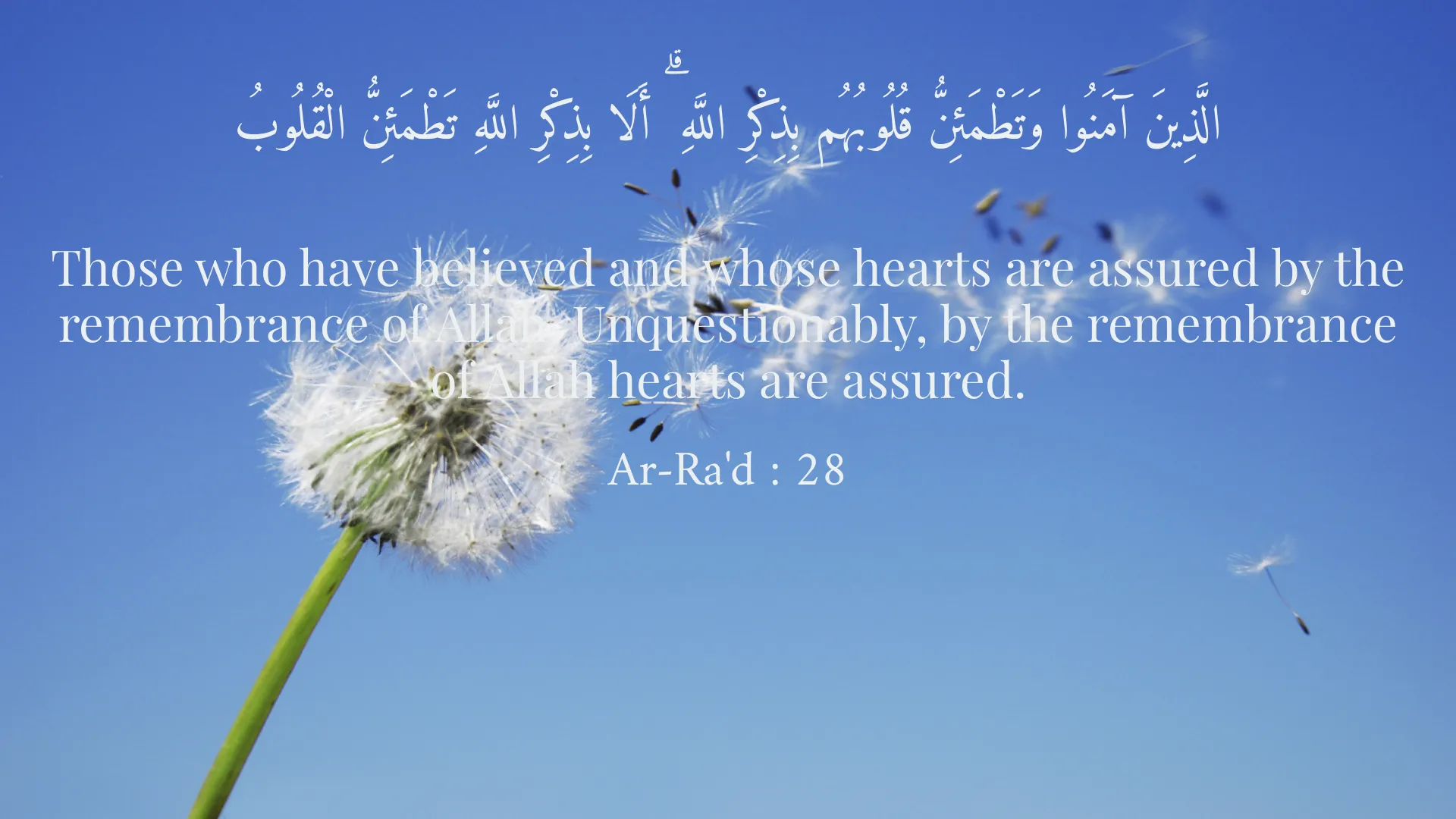
الَّذِينَ آمَنُوا وَتَطْمَئِنُّ قُلُوبُهُم بِذِكْرِ اللَّهِ ۗ أَلَا بِذِكْرِ اللَّهِ تَطْمَئِنُّ الْقُلُوبُ
Those who have believed and whose hearts are assured by the remembrance of Allah. Unquestionably, by the remembrance of Allah hearts are assured.
Ar-Ra'd : 28
يَا أَيُّهَا الَّذِينَ آمَنُوا اسْتَعِينُوا بِالصَّبْرِ وَالصَّلَاةِ ۚ إِنَّ اللَّهَ مَعَ الصَّابِرِينَ
O you who have believed, seek help through patience and prayer. Indeed, Allah is with the patient.
Al-Baqarah : 153
يَا أَيُّهَا النَّاسُ قَدْ جَاءَتْكُم مَّوْعِظَةٌ مِّن رَّبِّكُمْ وَشِفَاءٌ لِّمَا فِي الصُّدُورِ وَهُدًى وَرَحْمَةٌ لِّلْمُؤْمِنِينَ
O mankind, there has to come to you an admonition from your Lord and a healing for what is in the breasts and guidance and mercy for the believers.
Yunus : 57
Short Story
It is narrated that a man of great wealth, yet with a restless and troubled heart, could not sleep at night and found no joy in life. One day, he approached a wise man who sat in a corner of a mosque, utterly at peace. He said, 'O wise one! I possess vast riches and possessions, yet weariness and spiritual distress have robbed me of my peace. What is your secret that, despite your poverty, you sit here so comfortably and with a smile?' The wise man smiled and said, 'My friend! You have placed your treasure in coffers and are constantly in fear that thieves or bandits might steal it, hence your heart is restless. But I have placed my treasure within my heart, that is, in the remembrance and pleasure of God. And a treasure that is in the heart, neither thieves can steal, nor fire can burn, nor floods can carry away. That is why my heart is at peace and my mind is at ease.'