Quranic Answer
Chronic guilt can be an incredibly heavy burden on the human soul. This feeling, sometimes so deep and persistent, can hinder forward progress, prevent experiencing peace, and even impede daily tasks. At first glance, guilt might seem solely negative, but from the perspective of the Holy Quran and Islamic teachings, feelings of remorse and regret for one's mistakes can be a turning point for spiritual growth and a return to God. This is conditional on the feeling not dragging the individual into despair and hopelessness, but rather becoming an impetus for repentance, reform, and moving on the right path. The Quran, with its words full of hope, offers comprehensive and profound solutions to break free from the shackles of this destructive emotion. One of the most fundamental principles for confronting chronic guilt in the Quran is the concept of "Tawbah" (repentance). Tawbah means returning, not just from sin, but returning to Allah. Allah explicitly calls His sinful servants to repentance and promises forgiveness. Verse 53 of Surah Az-Zumar is a clear testament to this vast mercy: "Say, 'O My servants who have transgressed against themselves [by sinning], do not despair of the mercy of Allah. Indeed, Allah forgives all sins. Indeed, it is He who is the Forgiving, the Merciful.'" This verse is a shining light of hope that illuminates the heart of every sinner. Allah clearly states that no sin is too great to be forgiven, provided that His servant returns to Him with sincere regret and a firm resolve to abandon the sin. This verse not only prohibits despair but also assures His servants that the door of divine mercy is always open. Chronic guilt often stems from despair—despair about whether one's sins will be forgiven or if one can ever become a better person. This verse provides a definitive and hopeful answer to these concerns. Tawbah is not merely a word; it is a heartfelt, practical, and behavioral process. For repentance to be accepted and to transform guilt into peace, it involves several essential pillars: 1. Heartfelt Regret: The individual must genuinely regret the sin committed and feel sorrow for it from the bottom of their heart. 2. Cessation of Sin: One must immediately stop committing that sin and not return to it. 3. Firm Resolve Not to Return: A strong determination not to revert to that sin in the future and to avoid it. 4. Making Amends for Rights of Others (Huquq al-Nas): If the sin involved violating the rights of another person, it must be rectified, and the wronged party's satisfaction must be sought. This step is particularly crucial for lifting the heavy burden of sins that have harmed others. The Quran also emphasizes "Istighfar" (seeking forgiveness) as a powerful tool for purifying the soul and heart. Verse 110 of Surah An-Nisa states: "And whoever does evil or wrongs himself but then seeks forgiveness of Allah will find Allah Forgiving and Merciful." This verse shows that the doors of divine mercy are always open, and even if someone has wronged themselves, by seeking forgiveness from Allah, they can return to the embrace of divine mercy. Istighfar is not just a verbal act; it signifies inner remorse and a desire for rectification. Repeatedly reciting "Astaghfirullah Rabbi wa atubu ilaih" (I seek forgiveness from my Lord and I turn to Him in repentance) with presence of mind can gradually lift the weight of sin from one's shoulders and replace anxiety with peace. This supplication is a constant reminder that Allah is always ready to forgive. In addition to Tawbah and Istighfar, the Quran offers another solution for dealing with the consequences of sin and alleviating guilt: "performing good deeds." Verse 114 of Surah Hud states: "And establish prayer at the two ends of the day and at the approach of the night. Indeed, good deeds do away with ill deeds. That is a reminder for those who remember." This verse expresses a profound psychological and spiritual principle: performing righteous and good deeds not only earns reward but can also erase and eliminate the negative effects of past sins. When an individual, after committing a sin, turns to worship, helping the needy, truthfulness, kindness, and other acts of goodness with the intention of making amends and drawing closer to Allah, they are essentially filling the empty space in their heart with light and purity. Gradually, the darkness of the past dissipates. This practical approach saves the individual from drowning in passive regret and propels them towards positive action. This shift from a passive state (guilt) to an active state (performing good deeds) is highly effective. Another crucial point highlighted by the Quran is to avoid "despair" from Allah's mercy. Satan constantly tries to keep humans trapped in their sins and, by injecting despair, prevents them from repenting and returning to Allah. The Quran strongly condemns this state. Prophet Jacob (AS) tells his sons: "And do not despair of the mercy of Allah. Indeed, no one despairs of the mercy of Allah except the disbelieving people." (Surah Yusuf, verse 87). Despair from divine relief and mercy is only characteristic of disbelievers. To combat chronic guilt, one must recognize this satanic whisper and overcome it by relying on Allah and having faith in His boundless mercy. Instead of remaining trapped in a cycle of self-blame and dwelling on the past, the Quran teaches us to learn from past mistakes, repent, reform, and build a fruitful future through good deeds. This approach helps us shift our focus from what we cannot change (the past) to what we can change (the present and future). Ultimately, for dealing with chronic guilt, the Quran offers a comprehensive spiritual approach: * Acknowledgment of Fault and Sincere Remorse: Taking responsibility for the sin and feeling genuine regret. * Nasuha Tawbah (Sincere Repentance): Repentance that comes from the depth of the heart and leads to abandoning the sin and resolving not to return to it. * Continuous Istighfar: Constantly seeking forgiveness from Allah, knowing that we are human and prone to error. * Performing Good Deeds: Prayer, charity, helping others, reciting the Quran, and any act that pleases Allah, erase sins. * Reliance on Allah (Tawakkul) and Hope in His Mercy: Knowing that Allah is the Most Forgiving and His doors of mercy are never closed. * Abandoning Satanic Whispers: Ignoring the whispers of Satan that lead one to despair. * Self-Reform and Making Amends: Striving to compensate for any potential damages and fostering personal and spiritual growth. By implementing these Quranic teachings, chronic guilt can be transformed into an experience that, instead of destroying, elevates the individual towards spiritual growth and closer proximity to Allah. This path not only leads to freedom from the burden of sin but also brings true peace and tranquility of heart. These teachings remind us that even in the darkest moments, the light of divine hope and forgiveness is always present, and we only need to extend our hand for His help. This is a path to healing the soul and rebuilding life, a path that frees one from the bondage of the past and guides them towards a brighter future, with a calm heart and a purified soul. Allah introduces Himself in the Quran as Al-Tawwab (The Accepter of Repentance), Al-Ghaffar (The All-Forgiving), and Ar-Rahim (The Most Merciful) so that there is no reason for despair, and His servants know that whenever they return to Him, His arms of mercy are open. This hope and assurance are the keys to freedom from any chronic guilt and its burden.
Related Verses
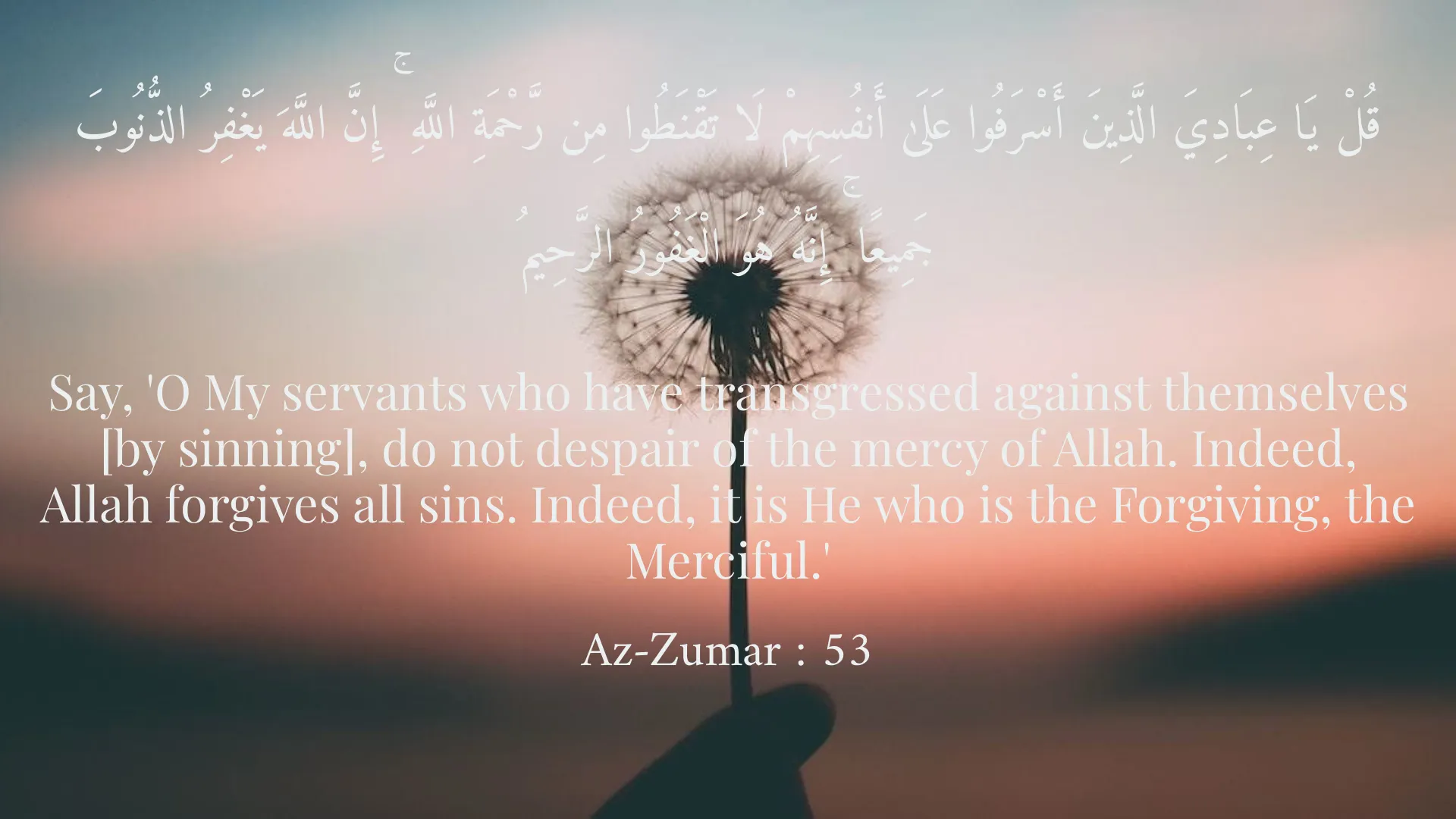
قُلْ يَا عِبَادِيَ الَّذِينَ أَسْرَفُوا عَلَىٰ أَنفُسِهِمْ لَا تَقْنَطُوا مِن رَّحْمَةِ اللَّهِ ۚ إِنَّ اللَّهَ يَغْفِرُ الذُّنُوبَ جَمِيعًا ۚ إِنَّهُ هُوَ الْغَفُورُ الرَّحِيمُ
Say, 'O My servants who have transgressed against themselves [by sinning], do not despair of the mercy of Allah. Indeed, Allah forgives all sins. Indeed, it is He who is the Forgiving, the Merciful.'
Az-Zumar : 53
وَمَن يَعْمَلْ سُوءًا أَوْ يَظْلِمْ نَفْسَهُ ثُمَّ يَسْتَغْفِرِ اللَّهَ يَجِدِ اللَّهَ غَفُورًا رَّحِيمًا
And whoever does evil or wrongs himself but then seeks forgiveness of Allah will find Allah Forgiving and Merciful.
An-Nisa : 110
وَأَقِمِ الصَّلَاةَ طَرَفَیِ النَّهَارِ وَزُلَفًا مِّنَ اللَّیْلِ إِنَّ الْحَسَنَاتِ یُذْهِبْنَ السَّیِّئَاتِ ذَلِكَ ذِكْرَى لِلذَّاكِرِینَ
And establish prayer at the two ends of the day and at the approach of the night. Indeed, good deeds do away with ill deeds. That is a reminder for those who remember.
Hud : 114
Short Story
It is narrated in Saadi's Bustan that a man was deeply remorseful for his past deeds, and the burden of his sins weighed heavily on his heart. Day and night, he would sigh and ask himself, "Is there any way to be free from this bondage of sin?" He was taken to a wise Sheikh. The Sheikh, with an open countenance and a kind heart, said to him: "O brother! The mercy of your Lord is boundless, and His door is never closed. Take strength from your regret and remorse, and water the sapling of repentance with the dew of seeking forgiveness. Wash your hands of sin and step onto the path of goodness. Know that Allah is Most Forgiving and Most Merciful, and good deeds indeed wipe away evil deeds. So, from now on, whenever the whisper of sin falls into your heart, remember His endless mercy, and instead of drowning in past sorrow, begin each day with righteous actions." The man took the Sheikh's advice to heart and reformed himself. With a renewed spirit and firm resolve, he turned to sincere repentance and began performing good deeds daily. It was not long before the darkness in his heart vanished, and divine peace and light settled within him, as if he had never committed a sin and no longer suffered from the heavy burden of chronic guilt. Thus, from the ashes of sin, the phoenix of repentance arose, revitalizing his life with the freshness of faith.