Quranic Answer
The concept of "constructive loneliness" refers to a state where an individual does not suffer from isolation or absence of others, but rather finds this solitude an opportunity for growth, reflection, and deeper connection with themselves and their Creator. While the exact term "constructive loneliness" is not explicitly used in the Holy Quran or the traditions of Prophet Muhammad (peace be upon him), fundamental principles and practical guidance are provided that enable Muslims to transform moments of apparent solitude and isolation into powerful tools for spiritual, intellectual, and psychological advancement. The Quran consistently emphasizes that a true believer is never alone, because Allah Almighty is always present and observant, and closer to a human being than their own jugular vein. This belief forms the basis for transforming any feeling of loneliness into an opportunity for a deeper connection with the divine source of peace and power. One of the most crucial Quranic remedies for making loneliness constructive is "Dhikr Allah," or the remembrance of God. The Holy Quran explicitly states that by the remembrance of Allah, hearts find rest (Surah Ar-Ra'd, Verse 28). In moments of solitude, when others are absent, a unique opportunity arises for complete focus on Dhikr, Tasbih (glorification), Tahlil (declaration of God's oneness), and other forms of remembering God. This constant reminder of the divine presence not only eliminates feelings of loneliness but also fills the heart with peace and assurance. The individual realizes that they have never truly been alone and are always under the protection and presence of their Merciful Creator. This intimate, one-on-one relationship with Allah grants inner strength and frees a person from emotional and psychological dependencies on others. Another approach is "Tafakkur and Tadabbur," which involves contemplation and reflection on the divine verses and signs of creation. The Quran repeatedly invites humanity to ponder the heavens and the earth, their own creation, and natural phenomena. Moments of solitude are the best times for this kind of deep contemplation. When a person, in their solitude, reflects upon the astonishing order of the universe, the infinite wisdom and power of Allah in creating every being, and the purpose of their own existence, new doors of knowledge and insight open up. This constructive reflection not only prevents feelings of emptiness and futility in loneliness but also cultivates a sense of gratitude and humility before the Lord's grandeur, giving deeper meaning to life. This contemplation fosters unparalleled intellectual and spiritual growth that is less likely to occur amidst the clamor of crowds. "Sabr and Tawakkul," meaning patience and reliance on God, are also key Quranic principles for facing any situation, including loneliness. The Quran encourages believers to seek help through patience and prayer (Surah Al-Baqarah, Verse 153). Loneliness, whether chosen or imposed, can be a test that requires patience and perseverance. Relying on Allah, meaning entrusting matters to Him and having full confidence in His divine plan, helps a person to dispel anxiety and worry in moments of solitude and engage in constructive activities with tranquility and submission to the divine will. This reliance brings a sense of security and stability, preventing loneliness from turning into despair, and instead transforming it into an opportunity to strengthen faith and steadfastness. Furthermore, solitude can be an opportunity for "Muḥāsabat an-Nafs" (self-reckoning) and "self-improvement." In seclusion, one can, away from external gazes and judgments, look within, evaluate their actions and intentions, identify weaknesses, and plan for their rectification and improvement. This self-knowledge and self-improvement, which the Quran emphasizes, are best achieved in solitude. Also, these moments can be utilized for sincere "Dua and Munajat" (supplication and intimate prayer). One can, without pretense, share their desires, needs, and pains with their Lord and seek His help and guidance. This deep supplication purifies the soul and elevates the connection with the Creator to its peak. Finally, it is crucial to remember the Quranic verse stating that Allah is closer to man than his jugular vein (Surah Qaf, Verse 16). This verse illustrates that no human being, no matter how outwardly alone they may appear, is truly alone in reality. The constant presence and perpetual care of Allah are the greatest source of peace and strength for a believer. If one truly understands this truth in their heart, loneliness no longer holds a painful meaning for them; instead, it transforms into a sweet seclusion for a deeper connection with the Beloved. Therefore, to deal constructively with loneliness from a Quranic perspective, one must shift focus from the absence of others to the overwhelming and infinite presence of Allah. This change in perspective transforms loneliness from a threat into a golden opportunity for spiritual growth and flourishing, empowering an individual to navigate life with a tranquil heart and a reassured soul, utilizing every moment of solitude for existential elevation. With this approach, loneliness is not only not frightening but can be full of blessings and internal transformations leading to perfection and closeness to God.
Related Verses
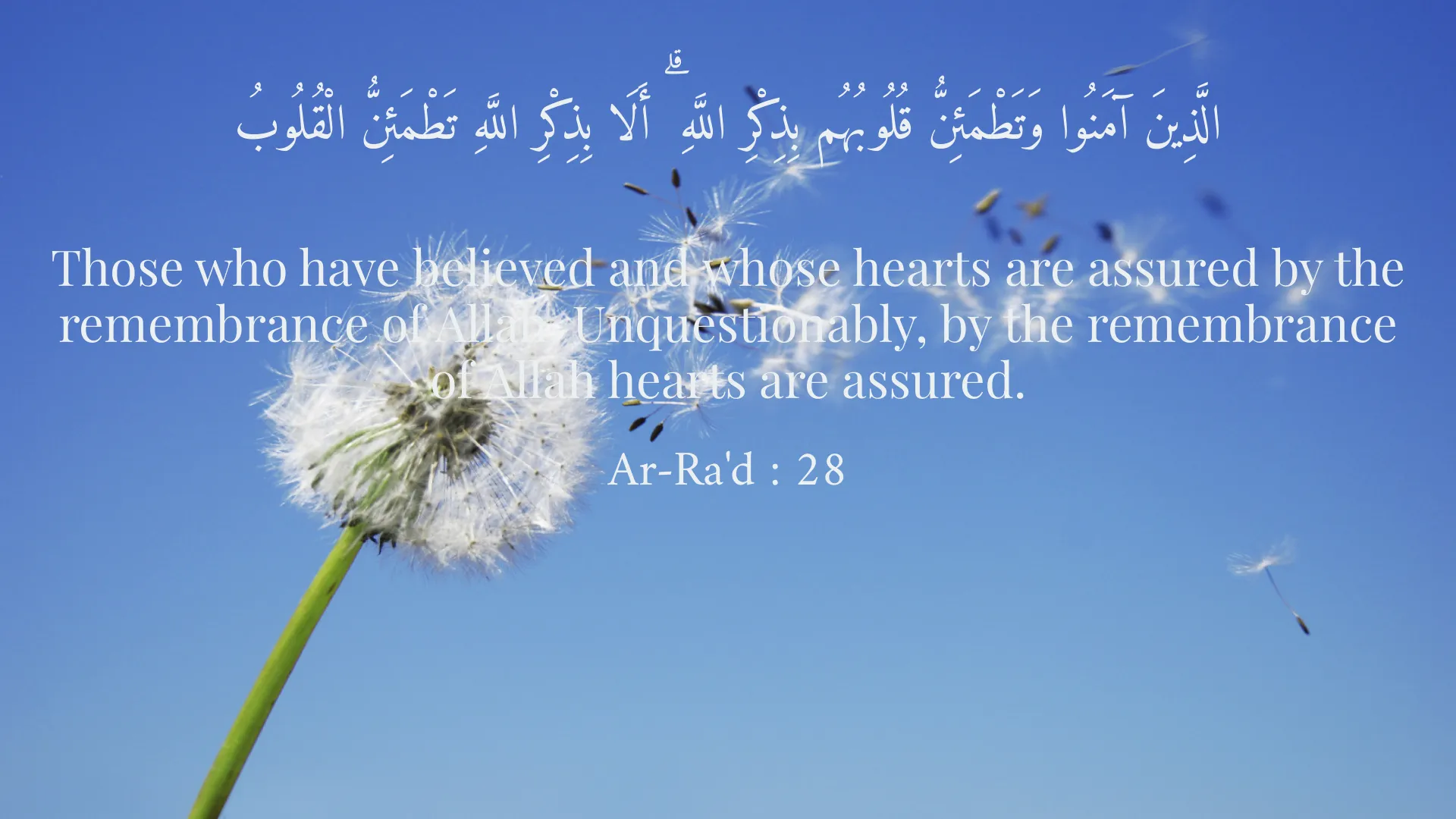
الَّذِينَ آمَنُوا وَتَطْمَئِنُّ قُلُوبُهُم بِذِكْرِ اللَّهِ ۗ أَلَا بِذِكْرِ اللَّهِ تَطْمَئِنُّ الْقُلُوبُ
Those who have believed and whose hearts are assured by the remembrance of Allah. Unquestionably, by the remembrance of Allah hearts are assured.
Ar-Ra'd : 28
يَاأَيُّهَا الَّذِينَ آمَنُوا اسْتَعِينُوا بِالصَّبْرِ وَالصَّلَاةِ ۚ إِنَّ اللَّهَ مَعَ الصَّابِرِينَ
O you who have believed, seek help through patience and prayer. Indeed, Allah is with the patient.
Al-Baqarah : 153
وَلَقَدْ خَلَقْنَا الْإِنسَانَ وَنَعْلَمُ مَا تُوَسْوِسُ بِهِ نَفْسُهُ ۖ وَنَحْنُ أَقْرَبُ إِلَيْهِ مِنْ حَبْلِ الْوَرِيدِ
And We have already created man and know what his soul whispers to him, and We are closer to him than [his] jugular vein.
Qaf : 16
Short Story
It is narrated that in a certain land, there was a king who constantly fled from solitude, his court always filled with companions and flatterers. He believed that joy and peace lay amidst the crowd, yet the more he was among people, the emptier and more restless his soul became, and he would retire to bed at night with a troubled heart. In the same land lived a reclusive dervish whom few people saw, spending most of his time in solitude. People assumed he was sad and deprived in his loneliness, but in his seclusion, he would commune with God, ponder upon creation, and his heart was filled with the remembrance of truth, and a profound peace was visible on his face. One day, the king heard about him and became curious. He asked his ministers to bring the dervish before him. When the dervish arrived and the king saw his tranquility and vitality, he asked with astonishment: "O wise elder, how is it that I, with all my companions, attendants, and overflowing treasuries, always feel lonely and restless, yet you, in this secluded corner and with empty hands, appear so serene and rich?" The dervish replied with a warm smile and a gaze full of wisdom: "O King, you perceive distance from God as loneliness, and I perceive closeness to God as solitude. You flee from not having anyone with you, while I seek to be alone with Him. Whoever distances himself from Him, will be lonely even amidst thousands and their heart will not find rest. And whoever draws near to Him, even in their solitude, is self-sufficient from the world and its people, and their heart is filled with His presence. True peace is not in the multitude of creation, but in unity with the Creator." This statement shook the king's heart and made him ponder deeply.