Quranic Answer
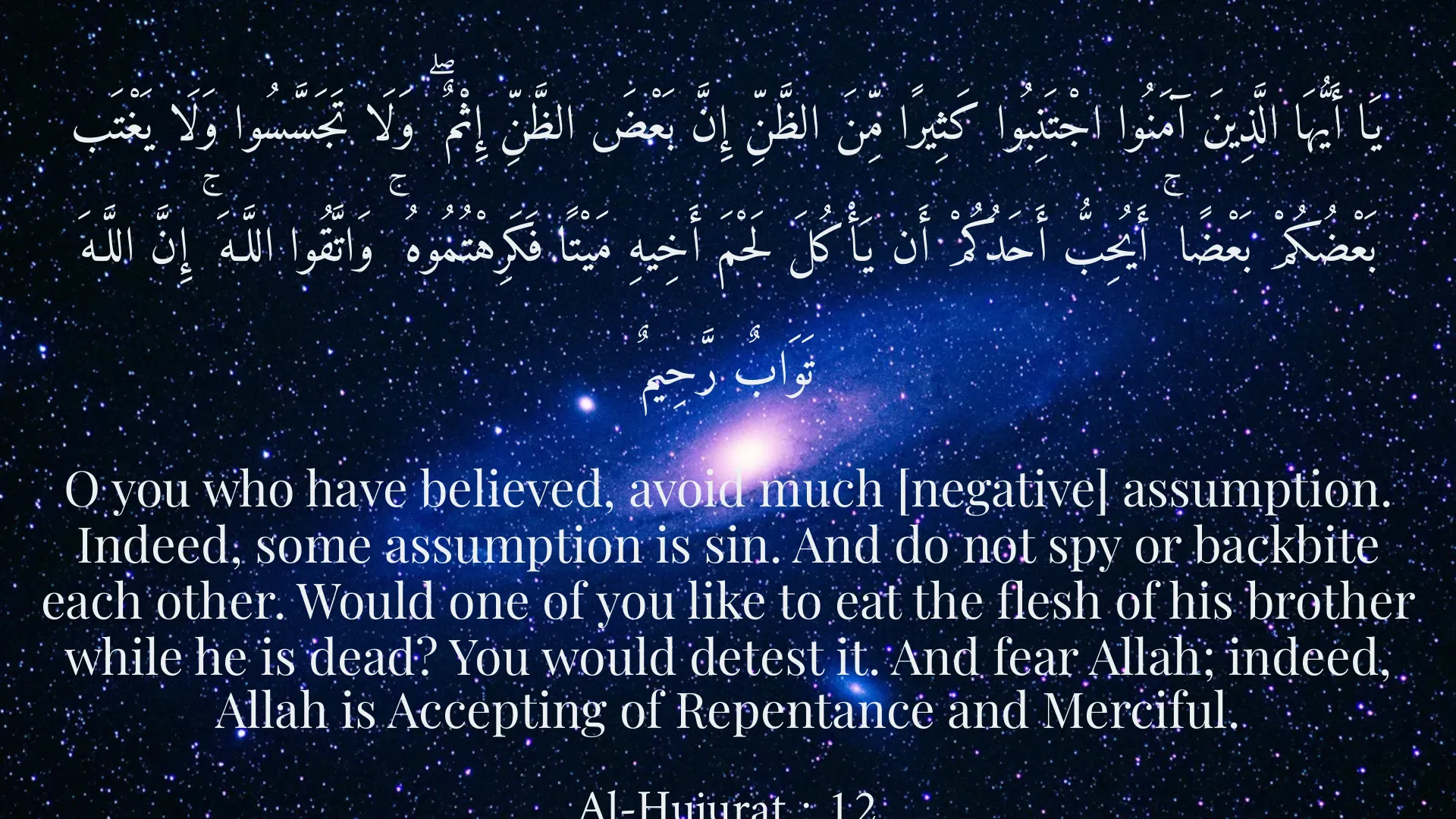
Gossip and backbiting are issues that have been given significant attention in the Holy Quran. As believers, it is imperative to understand that engaging in gossip is not merely a social faux pas but a toxic behavior that can have damaging consequences for individuals and communities alike. The Quran provides us with clear guidance on how to navigate our interactions and social relationships without falling into the trap of maligning others through word-of-mouth comments that may be harmful. One of the most explicit references to the abhorrence of gossip can be found in Surah Al-Hujurat (Chapter 49), verse 12, which states: "O you who have believed, avoid much [negative] assumption. Indeed, some assumption is sin. And do not spy or backbite each other. Would one of you like to eat the flesh of his brother while he is dead?" The gravity of this verse cannot be overstated; it highlights not only the act of backbiting but also encourages believers to refrain from harboring ill thoughts about one another. The act of backbiting (ghibah) inherently involves spreading negativity, and it can have a ripple effect on relationships, leading to mistrust, hatred, and division. Moreover, the Quran explicitly states that such behavior is sinful. The analogy of eating the flesh of one's dead brother serves as a stark reminder of the severity and disgust associated with gossiping about others. How can any person consider such an act acceptable? It is vital for us to recognize the dire implications this behavior can have on community bonds and personal integrity. The first step in combating gossip is to cultivate mindfulness about what is said—both by ourselves and in our presence. Believers are urged not only to avoid speaking ill of others but also to disengage from conversations that promote this harmful behavior. This can often mean stepping away from groups or forums where gossip is prevalent. Surrounding oneself with people who reinforce positive conversation and goodwill can greatly diminish the temptation to speak of others negatively. Furthermore, in Surah An-Nisa (Chapter 4), verse 148 reiterates this theme, stating: "Allah does not like the public mention of evil except by one who has been wronged. And ever is Allah Hearing and Knowing." This verse emphasizes the importance of controlling our tongues and remaining vigilant about the power of words. Our speech has the potential to either uplift and encourage or to tear down and destroy. In this context, being mindful of how we communicate is paramount. Engaging in constructive dialogue is a powerful tool for building a positive community. Instead of indulging in gossip when others are speaking unkindly, it is essential to find respectful and friendly ways to redirect the conversation. One effective method is to highlight the positive qualities of the person being discussed, fostering an environment where gratitude and appreciation overshadow negativity. By doing so, we can help nurture a culture of positivity that ultimately discourages gossip. To further promote virtuous ethical values, believers should actively engage in discussions about moral behavior, guiding each other towards better paths of communication and interaction. Community leaders, educators, and influential members of society must emphasize the importance of speaking well of others and share narratives that encourage positive discourse. When leaders model this behavior, it becomes easier for others to adopt similar practices, creating a ripple effect that permeates the greater community. Additionally, the potential consequences of gossip should not be overlooked. Distrust and division can arise from even minor remarks made carelessly. A single gossip session can lead to long-lasting rifts in friendships, families, and even workplaces. The lessons drawn from the Quran illuminate the importance of fostering kindness and respect. By choosing positive communication, individuals can help build stronger relationships founded on trust and mutual respect. Moreover, it is crucial to cultivate a personal commitment to ethical communication. This involves self-reflection on how our words affect others and taking ownership of our speech. Regularly asking whether our words contribute to uplifting the community can serve as a guiding principle, helping us navigate conversations with greater care. This self-regulation not only enhances our character but also strengthens our relationships with others. In conclusion, the teachings within the Quran serve as both a warning and a guide toward better interpersonal conduct. Gossip and backbiting are not just trivial matters; they are serious infractions against the spirit of community and brotherhood that Islam espouses. As believers, we are called to uphold the values of sincerity, love, and respect in our words and deeds. The journey toward reducing gossip and promoting positive dialogue begins with each individual. By practicing mindfulness, choosing our conversations wisely, and fostering a culture of positivity, we collectively contribute to a society free of the corrosive effects of gossip. In summary, the moral and ethical standards that the Quran establishes regarding gossip underscore its intrinsic negativity. Avoiding gossip, fostering positive communication, and advocating for ethical values lay the foundation for a strong, united community that thrives on mutual respect and understanding. May we all strive to adhere to these principles and cultivate a better world for ourselves and future generations.
Related Verses
يَا أَيُّهَا الَّذِينَ آمَنُوا اجْتَنِبُوا كَثِيرًا مِّنَ الظَّنِّ إِنَّ بَعْضَ الظَّنِّ إِثْمٌ ۖ وَلَا تَجَسَّسُوا وَلَا يَغْتَب بَعْضُكُمْ بَعْضًا ۚ أَيُحِبُّ أَحَدُكُمْ أَن يَأْكُلَ لَحْمَ أَخِيهِ مَيْتًا فَكَرِهْتُمُوهُ ۚ وَاتَّقُوا اللَّـهَ ۚ إِنَّ اللَّـهَ تَوَابٌ رَّحِيمٌ
O you who have believed, avoid much [negative] assumption. Indeed, some assumption is sin. And do not spy or backbite each other. Would one of you like to eat the flesh of his brother while he is dead? You would detest it. And fear Allah; indeed, Allah is Accepting of Repentance and Merciful.
Al-Hujurat : 12
لَا يُحِبُّ اللَّهُ الجَهْرَ بِالسُّوءِ مِنَ الْقَوْلِ إِلَّا مَن ظُلِمَ ۚ وَكَانَ اللَّهُ سَمِيعًا عَلِيمًا
Allah does not like the public mention of evil except for one who has been wronged. And ever is Allah Hearing and Knowing.
An-Nisa : 148
Short Story
One day, two friends were chatting when one of them started gossiping about another. The other friend gently said, 'My friend, why are you speaking about him? Let’s focus on his positive traits and uplift the spirit of friendship.' This statement created a positive and friendly atmosphere, and they ultimately agreed to speak only of the good from then on.