Quranic Answer
Inner fears are a universal human experience, often stemming from uncertainty, past traumas, or anxieties about the future. While these feelings can be debilitating, the Holy Quran offers profound and comprehensive guidance on how to confront and overcome them, transforming fear into strength, tranquility, and reliance on the Divine. The Quran acknowledges the presence of fear in human life but provides spiritual tools and a profound perspective that can liberate the heart from its grip. At the very core of the Quranic approach to overcoming inner fears lies the concept of Tawakkul (Trust and Reliance on Allah). The Quran repeatedly emphasizes that Allah is the ultimate controller of all affairs, the All-Powerful, the All-Knowing, and the All-Merciful. When a believer internalizes this truth, their fears about worldly outcomes diminish significantly. If one truly believes that nothing can befall them except what Allah has decreed, and that Allah’s decree is always rooted in wisdom and ultimate good, then the paralyzing grip of fear loosens. Allah says in Surah At-Tawbah (9:51): “Say, 'Nothing will ever befall us except what Allah has decreed for us. He is our Protector.' And upon Allah let the believers rely.” This verse is a powerful antidote to fear, teaching absolute surrender and trust in God's plan. It transforms the feeling of helplessness into a sense of being divinely cared for and protected. The believer understands that their fate is not in their own limited hands, nor in the hands of others, but with the One who is infinitely capable and just. This realization cultivates a deep sense of inner peace, knowing that regardless of the outcome, it is ultimately from Allah and for one's ultimate good. Another fundamental strategy is Dhikr (Remembrance of Allah) and Salat (Prayer). The Quran states explicitly in Surah Ar-Ra'd (13:28): “Those who have believed and whose hearts are assured by the remembrance of Allah. Unquestionably, by the remembrance of Allah hearts are assured.” This verse provides a direct path to inner tranquility. When a person is overwhelmed by fear, engaging in the remembrance of Allah – through prayer, recitation of the Quran, supplication (du'a), or simply reflecting on His attributes – brings the heart back to its natural state of peace. Prayer, in particular, serves as a direct line of communication with the Creator. It is a moment of surrender, seeking solace, guidance, and strength from the Almighty. In Surah Al-Baqarah (2:153), Allah commands: “O you who have believed, seek help through patience and prayer. Indeed, Allah is with the patient.” This highlights prayer as a primary means of seeking divine assistance and cultivating inner resilience against distress and fear. The repetitive nature of Dhikr and the structured devotion of Salat provide a spiritual anchor, diverting attention from the sources of fear and redirecting it towards the infinite power and mercy of Allah. It helps to re-center the mind and soul, reminding the individual of their true purpose and connection to the Divine, thereby diminishing the perceived magnitude of worldly fears. The Quran also addresses the source of irrational fears: Satan. In Surah Al-Imran (3:175), Allah reveals: “It is only Shaitan who frightens [you with] his allies. So do not fear them but fear Me, if you are [true] believers.” This verse teaches that many fears are instilled by Satan (Shaitan) to weaken faith and deter believers from noble actions. Recognizing this external influence empowers individuals to resist these whispers of fear. By understanding that these fears are not always rational or divinely ordained, but rather a psychological tactic from an adversary, one can actively reject them and turn to Allah for protection. This insight helps differentiate between healthy caution and debilitating anxiety, allowing the believer to consciously choose trust in Allah over baseless apprehension. Furthermore, the Quran emphasizes Sabr (Patience and Perseverance). Life is inherently filled with trials, and fear often arises in the face of these challenges. The Quran teaches that patience is not merely passive endurance but an active, steadfast resolve to remain firm in faith despite adversity. It involves accepting Allah's decree while actively striving for solutions. When one exercises patience, relying on Allah, the temporary nature of worldly difficulties becomes apparent, and the ultimate reward in the Hereafter provides immense motivation and comfort. This perspective transforms fear of failure or suffering into an opportunity for spiritual growth and earning divine reward. Finally, a strong focus on the Akhirah (Hereafter) serves as a powerful means to diminish worldly fears. The Quran consistently reminds believers that this life is temporary, a mere passing stage leading to an eternal abode. When a person’s ultimate goal is Paradise and attaining Allah's pleasure, the perceived significance of worldly losses, failures, or social anxieties diminishes. The true fear then becomes the fear of displeasing Allah or losing His mercy, which in itself is a healthy fear that motivates righteous action, rather than a paralyzing fear of worldly outcomes. This shift in perspective provides a profound sense of liberation from the pressures and uncertainties of worldly life, as the true destination and reward lie beyond this temporary existence. In conclusion, the Quran offers a holistic framework for dealing with inner fears. It is not about denying fear, but about transforming it through: unwavering Tawakkul (trust) in Allah's ultimate plan; consistent Dhikr and Salat (remembrance and prayer) to soothe the heart; recognizing and resisting the whispers of Shaitan; cultivating Sabr (patience) through trials; and maintaining a strong focus on the Akhirah (Hereafter). By integrating these principles into daily life, believers can cultivate a profound sense of inner peace, security, and resilience, allowing them to navigate life's challenges with faith and courage, rather than being paralyzed by fear. This spiritual journey liberates the soul, empowering individuals to live a life of purpose, confident in Allah’s boundless mercy and protection.
Related Verses
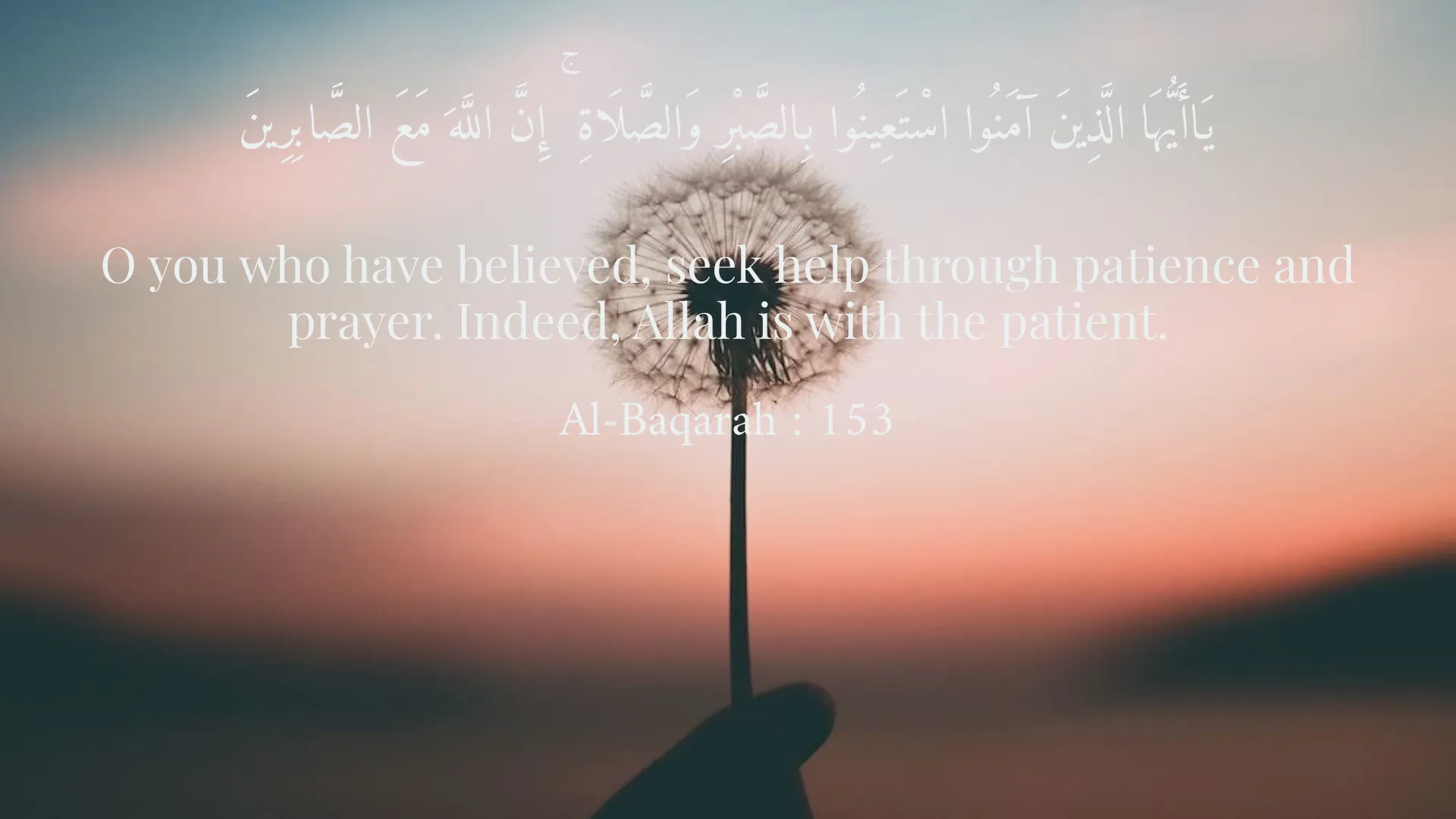
يَاأَيُّهَا الَّذِينَ آمَنُوا اسْتَعِينُوا بِالصَّبْرِ وَالصَّلَاةِ ۚ إِنَّ اللَّهَ مَعَ الصَّابِرِينَ
O you who have believed, seek help through patience and prayer. Indeed, Allah is with the patient.
Al-Baqarah : 153
الَّذِينَ آمَنُوا وَتَطْمَئِنُّ قُلُوبُهُم بِذِكْرِ اللَّهِ ۗ أَلَا بِذِكْرِ اللَّهِ تَطْمَئِنُّ الْقُلُوبُ
Those who have believed and whose hearts are assured by the remembrance of Allah. Unquestionably, by the remembrance of Allah hearts are assured.
Ar-Ra'd : 28
إِنَّمَا ذَٰلِكُمُ الشَّيْطَانُ يُخَوِّفُ أَوْلِيَاءَهُ فَلَا تَخَافُوهُمْ وَخَافُونِ إِن كُنتُم مُّؤْمِنِينَ
It is only Shaitan who frightens [you with] his allies. So do not fear them but fear Me, if you are [true] believers.
Al-Imran : 175
أَلَا إِنَّ أَوْلِيَاءَ اللَّهِ لَا خَوْفٌ عَلَيْهِمْ وَلَا هُمْ يَحْزَنُونَ
Unquestionably, [for] the allies of Allah there will be no fear concerning them, nor will they grieve.
Yunus : 62
Short Story
In the city of Shiraz, there lived a wealthy merchant named Sa'adat, who possessed immense riches. However, fate took a turn, and Sa'adat lost all his fortune in a grand trade. He became deeply saddened and despairing, and fear of poverty and an unknown future consumed him. He could not sleep at night, and during the day, he had no escape from worry. One day, while passing through a marketplace, he saw an old Dervish who, despite his simple appearance, had a serene face and a peaceful heart. Sa'adat, exasperated by his situation, approached the Dervish, recounted his sorrowful tale, and spoke of his fears. The Dervish, with a kind smile, said: "O Sa'adat, I know this affliction is difficult for you, but is there anything in this world that remains? Neither wealth nor status. Place your trust in God, who provides for everyone. Remember that He is always with you and will provide for you. If you entrust your heart to Him, you will have no fear." Sa'adat listened carefully to the Dervish's words. His words were like water on the fire of his heart. He realized how he had neglected the remembrance of God and clung only to worldly possessions. From that day forward, Sa'adat began to engage in remembrance (Dhikr) and prayer, entrusting his heart to God. His fears gradually diminished, and a deep peace enveloped his being. Despite his apparent poverty, he achieved inner richness, and with a renewed will, he started working again, this time not out of greed or fear, but with tranquility and reliance on God. And he saw how the doors of divine mercy opened for him. Sa'adat's story shows that even at the peak of fear and despair, the remembrance of God and reliance on Him can be a guiding light and a source of peace.